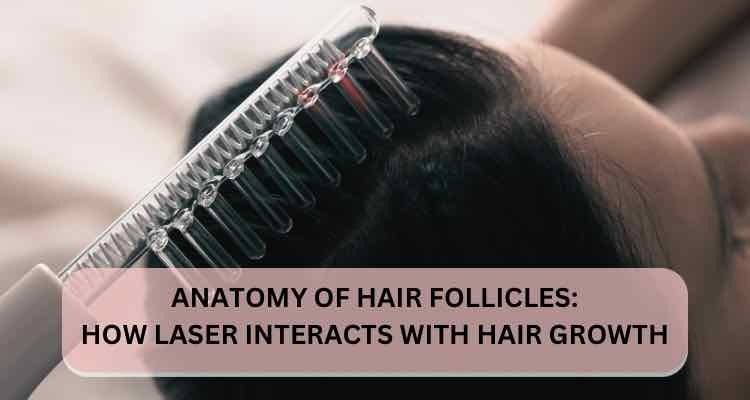
Hair follicles, the dynamic structures responsible for hair growth, play a pivotal role in defining the appearance and health of our hair. These small yet complex organs continually cycle through periods of growth, rest, and renewal. In recent years, Low-Level Laser Therapy (LLLT) has emerged as a non-invasive approach to combating hair loss. By targeting follicles at various stages of their cycle, laser light can stimulate regrowth and bolster follicular health.
This article examines hair follicles' anatomy, the hair growth cycle phases, and how laser light interacts with these biological systems. We’ll also discuss scientific evidence supporting laser therapy, practical considerations for selecting a device, and how to ensure safe, effective treatment.
Jump to:
- Anatomy of Hair Follicles
- The Hair Growth Cycle: Phases and Processes
- Laser Light and Its Biological Interaction with Hair Follicles
- Mechanisms of Hair Regrowth through Laser Therapy
- Benefits of Laser Light in Hair Restoration
- Limitations and Challenges
- Frequently Asked Questions
- Conclusion
Anatomy of Hair Follicles
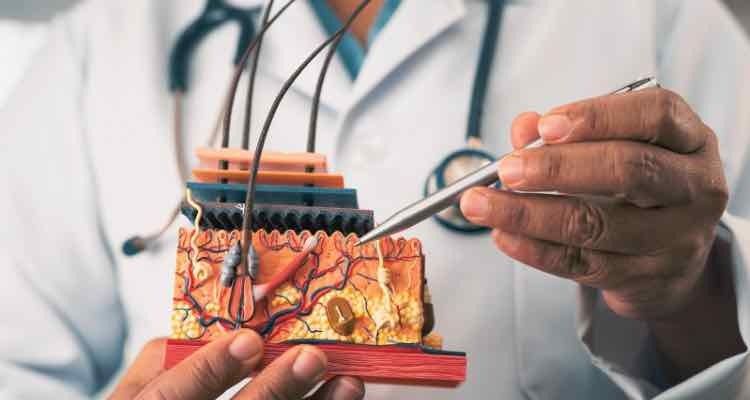
Hair follicles are tunnel-shaped structures embedded in the dermis. Each follicle functions as a tiny organ, equipped with its own blood supply, nerves, and glands.
A. Key Components of the Hair Follicle
- Hair Bulb: Located at the base, it houses the dermal papilla and hair matrix cells responsible for producing new hair.
- Dermal Papilla: Contains connective tissue and capillaries that supply nutrients and oxygen to growing hair.
- Outer Root Sheath: Encases the follicle, providing structural support.
- Inner Root Sheath: Shapes and guides the developing hair shaft.
- Sebaceous Glands: Produce sebum, which conditions the hair and scalp.
- Arrector Pili Muscle: A small muscle that, when contracted, causes the hair to stand up (“goosebumps”).
The Hair Growth Cycle: Phases and Processes
Hair growth occurs in distinct phases: anagen (growth), catagen (transition), and telogen (rest). Understanding these phases clarifies how laser therapy can encourage healthier, denser hair.
A. Anagen (Growth Phase)
- Duration: 2–6 years
- Characteristics: Rapid cell division in the hair matrix produces active hair.
- Laser Impact: During anagen, laser light can enhance cellular activity, prolonging growth and promoting thicker strands.
B. Catagen (Transition Phase)
- Duration: 2–3 weeks
- Characteristics: Follicle activity declines, and the hair shaft stops growing.
- Laser Impact: Timely laser application may help delay the onset of catagen, maintaining follicles in a productive state.
C. Telogen (Resting Phase)
- Duration: 2–4 months
- Characteristics: The follicle rests, and hair may eventually shed.
- Laser Impact: Laser therapy can encourage dormant follicles to re-enter the anagen phase more quickly, reducing shedding and improving overall density.
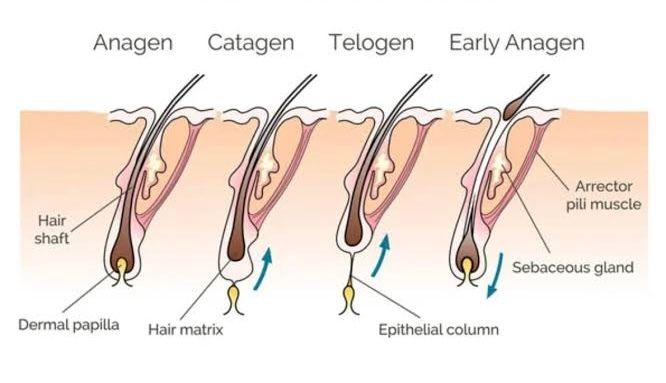 Hair Growth Cycle
Laser Light and Its Biological Interaction with Hair Follicles
A. Photobiomodulation: The Science Behind Laser Therapy
Laser therapy for hair is based on the principle of photobiomodulation, where specific wavelengths of light are absorbed by cellular components—particularly the mitochondria—resulting in increased energy (ATP) production. This boosts cell metabolism, enhances tissue repair, and supports healthier hair growth.
B. Scientific Evidence
A randomized, double-blind, sham device–controlled study published in Lasers in Surgery and Medicine (2014) demonstrated that individuals using low-level laser therapy experienced significant increases in hair density compared to those using a placebo device. This and other studies support laser treatment's biological plausibility and efficacy for certain types of hair loss.
C. Enhancing Blood Circulation
Laser light also promotes vasodilation and improved microcirculation. Better blood flow delivers nutrients and oxygen to the follicle, nourishing it for robust, healthy growth.
Mechanisms of Hair Regrowth through Laser Therapy
A. Cellular Stimulation
Laser light encourages protein synthesis and cell division by boosting ATP production, fostering stronger hair strands.
B. Reducing Follicular Inflammation
Chronic inflammation can inhibit growth. Laser therapy’s anti-inflammatory effects help create a healthier environment for the follicle to thrive.
C. Extending the Anagen Phase
Prolonging the growth phase increases hair density and thickness over time, an essential factor in reversing thinning patterns.
Benefits of Laser Light in Hair Restoration
A. Non-Invasive Treatment
Laser therapy is painless, non-surgical, and requires no downtime, appealing to those reluctant to undergo more invasive procedures.
B. Promoting Natural Hair Growth
Unlike topical solutions or medications that alter hormonal or biochemical pathways, lasers enhance the follicle’s inherent biology.
C. Suitable for Various Hair Loss Types
Though most effective for androgenetic alopecia, laser therapy can benefit individuals with other forms of thinning, provided active follicles remain.
Limitations and Challenges
A. Variability in Results
Response can vary based on hair loss cause, severity, and individual biology. Some may see substantial improvements, while others notice only modest gains.
B. Need for Consistency
Regular treatment sessions over several months are often necessary before improvements become noticeable.
C. Cost and Device Quality
While effective, laser devices can be expensive. Choose FDA-cleared products to ensure safety and efficacy. Consulting a dermatologist or trichologist before starting therapy is advisable, especially if you have a scalp condition or severe hair loss. Those with completely inactive (scarred) follicles may not experience significant benefits.
Frequently Asked Questions
1. How does laser light promote hair growth?
Laser therapy increases ATP production in the follicle’s cells, reduces inflammation, and improves blood flow, collectively encouraging healthier growth.
2. Is laser therapy effective for all types of hair loss?
It’s most effective for androgenetic alopecia but can help with other types of thinning if some follicular activity remains. Consult a professional if unsure.
3. How long does it take to see results?
Most users notice an improvement in hair thickness and density within 3–6 months of consistent, regular use.
4. Are there any side effects?
Side effects are rare. Some users report mild scalp irritation or a warming sensation during treatment.
5. Can laser therapy be combined with other treatments?
Yes. Combining laser therapy with treatments like minoxidil or finasteride may enhance overall outcomes.
Conclusion
Understanding the anatomy of hair follicles and the intricacies of the hair growth cycle is key to appreciating how laser therapy promotes hair regrowth. By harnessing photobiomodulation and improving follicular conditions, laser light offers a non-invasive, research-supported method to combat hair loss.
While individual results vary, consistent use of a reputable, FDA-cleared device—potentially combined with other proven treatments—can lead to noticeable improvements in hair health. For those exploring innovative hair restoration options, laser therapy is a promising, science-backed approach to revitalizing the scalp and restoring confidence.
Always consult a healthcare professional before beginning any hair loss treatment to ensure it’s appropriate for your specific condition.