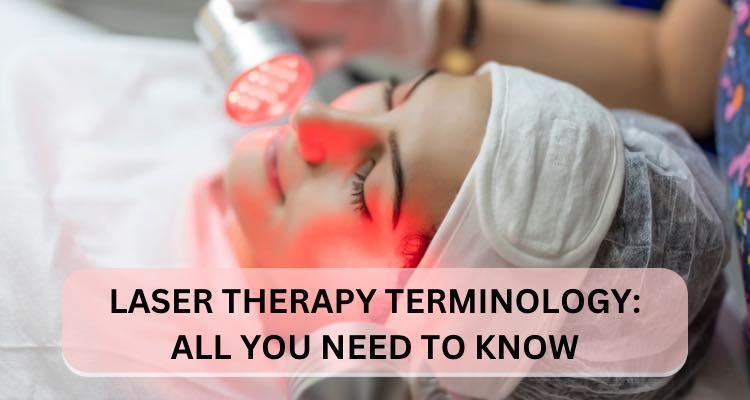
Picture this: You’re researching laser therapy devices, whether for hair regrowth or skin rejuvenation, and you’re bombarded with technical terms like "wavelengths," "joules," and "light output." It’s easy to feel overwhelmed by the jargon. These terms, however, are key to understanding how laser therapy works and selecting the right device for your needs.
Understanding these terms empowers you to make informed choices, ensuring you select a device that meets your treatment goals while prioritizing safety and effectiveness.
Key Takeaways:
|
Why Terminology Matters in Laser Therapy
Knowing the meaning of terms like "wavelength" and "joules" helps you identify high-quality devices and avoid marketing gimmicks.
Proper understanding ensures correct device usage, preventing overuse, discomfort, or lackluster results.
These terms frequently arise in laser hair growth devices, at-home skincare lasers, and professional dermatology treatments, making them essential to comprehend.
Core Concepts: The Building Blocks of Laser Therapy Terminology
A. Wavelength
Definition:
Wavelength refers to the distance between peaks of light waves measured in nanometers (nm). It determines how deeply light penetrates the skin or scalp and which tissues it targets.
Significance:
- Hair Growth: Wavelengths between 650 nm and 680 nm are optimal for stimulating hair follicles.
- Skin Treatments: Longer wavelengths, such as 800 nm or above, can penetrate deeper for collagen remodeling or acne treatment.
Real-World Example:
A device with a wavelength of 670 nm may be better suited for hair regrowth, while one with 810 nm might excel in skin rejuvenation.
B. Joules (Energy Measurement)
Definition:
A joule is a unit of energy. In laser therapy, it represents the total energy delivered during a session.
Significance:
Higher joules don’t always mean better results. The energy must match the treatment goal and the user’s comfort level.
Analogy:
Think of joules as the "fuel" for your treatment. Enough will drive effective results, but too much can cause discomfort or irritation.
Practical Guidance:
When comparing devices, look for joule ratings backed by clinical studies. A hair regrowth device may recommend delivering 5-10 joules per session for optimal results.
C. Light Output and Power Density
Definition:
Light output refers to the intensity of the laser light, often measured in milliwatts (mW). Power density (irradiance), expressed in mW/cm², indicates how concentrated the light is over a specific area.
Impact on Treatment Duration:
Higher light output may reduce treatment time, but only if balanced with the correct wavelength and energy levels.
Example:
A device with a power density of 100 mW/cm² might require a shorter session than one with 50 mW/cm² to achieve the same energy dose.
D. Low-Level Light Therapy (LLLT)
Definition:
LLLT is a non-invasive treatment that uses low-powered red or near-infrared light to stimulate cellular activity, promoting hair follicle growth and improving scalp blood flow.
Significance:
- Hair Growth: LLLT encourages follicles in the telogen (resting) phase to enter the anagen (growth) phase.
- Safety: Its low power ensures it doesn’t cause tissue damage or discomfort.
Analogy:
Think of LLLT as a gentle wake-up call for dormant hair follicles, encouraging them to grow without causing stress.
Practical Guidance:
Look for devices that are FDA-cleared for LLLT, ensuring safety and effectiveness for hair regrowth. Sessions typically last 10-30 minutes, 2-3 times a week.
E. Medical-Grade Lasers and LEDs
Definition:
These are high-quality light-emitting sources used in laser caps. Lasers produce focused beams of coherent light, while LEDs emit broader, non-coherent light.
Significance:
- Lasers: Deliver precise, deep penetration ideal for targeted stimulation of hair follicles.
- LEDs: Provide even scalp coverage, ensuring larger treatment areas receive adequate light energy.
Comparison:
Lasers are like spotlights—precise and focused—while LEDs are like floodlights, covering a broader area.
Practical Guidance:
Combining medical-grade lasers and LEDs often offers the best results, combining precision and coverage. Ensure the device uses high-quality components for consistent performance.
Understanding Device Specifications: A Step-by-Step Guide
A. Reading the Label
Learn to decode product specs such as:
- Wavelength: Match it to your treatment goal (e.g., hair growth or wrinkle reduction).
- Output Power: Indicates intensity (e.g., 100 mW).
- Total Energy: Stated in joules per session.
B. Questions to Ask Before Buying
- Does the device's wavelength suit my needs?
- Does clinical research back the joule output?
- Can the device's intensity or duration be adjusted?
Practical Tips for Safe and Effective Use
- Start Low and Slow: Begin with shorter sessions at lower intensities to gauge comfort.
- Follow Manufacturer Instructions: Stick to recommended treatment durations and frequencies.
- Monitor Progress: Track changes in hair density or skin texture to adjust your routine.
FAQs
1. Is a Higher Joule Count Always Better?
No, effectiveness depends on balancing energy levels with comfort and safety.
2. Can Any Wavelength Work for Any Condition?
No, specific wavelengths target specific tissues. Choose based on your treatment goals.
3. Does More Light Output Mean Faster Results?
Not necessarily. Overexposure can lead to diminishing returns or discomfort.