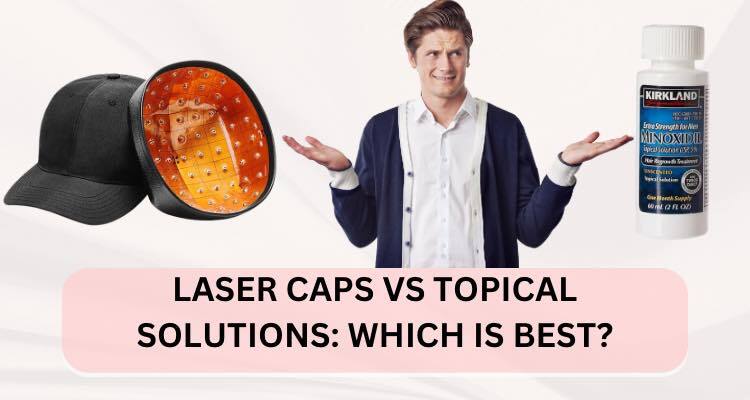
Hair loss affects millions of individuals, prompting the search for effective treatments. Among the most popular non-surgical options are laser caps, which use cutting-edge technology to stimulate hair growth, and topical solutions, such as minoxidil, which have decades of proven clinical use. But how do these options compare, and which one is right for you?
This comprehensive guide will explore the differences, pros, and cons of laser caps and topical solutions, helping you decide which approach best suits your needs.
Jump Ahead To:
- Understanding the Basics of Hair Loss
- What Are Laser Caps?
- What Are Topical Solutions (Minoxidil)?
- Comparing Laser Caps and Topicals: Key Factors
- Who Might Prefer Laser Caps?
- Who Might Prefer Topical Solutions?
- Combining Both Approaches
- Practical Tips for Decision-Making
- FAQs
- Conclusion
Understanding the Basics of Hair Loss
Common Causes and Patterns of Hair Loss
Hair loss can occur for various reasons, with some of the most common being:
- Androgenetic Alopecia: Male and female pattern baldness, often hereditary and hormone-driven.
- Stress-Related Hair Loss: Triggered by physical or emotional stress.
- Nutritional Deficiencies: Inadequate levels of iron, biotin, or other nutrients.
- Medical Conditions: Thyroid disorders, autoimmune diseases, or infections.
Importance of Early Intervention
Starting treatment early is crucial for better outcomes. Hair follicles that become dormant or damaged over time may not respond to treatments as effectively, making early action key to preserving hair density.
What Are Laser Caps?
Definition and Technology
Laser caps utilize Low-Level Laser Therapy (LLLT), which involves emitting red or near-infrared light to penetrate the scalp. This process, known as photobiomodulation, energizes hair follicle cells, improving their function and encouraging growth.
FDA Clearance and Safety
Reputable laser cap brands are FDA-cleared, ensuring their safety and efficacy for treating androgenetic alopecia. Look for trusted brands that meet these standards.
Treatment Process and Expectations
- Typical usage involves wearing the cap 3–4 times per week for 20–30 minutes per session.
- Results may begin to show after 3–6 months of consistent use, with maximum benefits visible after a year or more.
Pros of Laser Caps
- Non-invasive and painless.
- Hands-free design allows for multitasking.
- Improves overall scalp health and circulation.
Cons of Laser Caps
- High upfront cost.
- Requires consistent use for optimal results.
- Results may vary depending on the severity of hair loss.
What Are Topical Solutions (Minoxidil)?
Overview of Minoxidil and Other Topicals
Minoxidil, an FDA-approved topical solution, works by dilating blood vessels in the scalp and extending the growth phase of hair follicles. It is available in different concentrations (e.g., 2% for women, 5% for men) and can be used as a foam or liquid.
Usage Guidelines
- Minoxidil is typically applied once or twice daily to the affected areas of the scalp.
- Results often appear after 3–6 months of consistent use.
Pros of Minoxidil
- Widely studied and proven to be effective.
- Affordable and accessible without a prescription.
- Easy to incorporate into daily routines.
Cons of Minoxidil
- It may cause scalp irritation or dryness.
- Initial shedding is common as stronger ones replace weaker hairs.
- Requires ongoing use to maintain results.
Comparing Laser Caps and Topicals: Key Factors
Mechanism of Action
- Laser Caps: Improve cellular energy and blood flow to follicles.
- Minoxidil: Extends the growth phase of hair follicles by increasing blood supply.
Ease of Use and Convenience
- Laser Caps: Hands-free and easy to use during daily activities.
- Minoxidil: Quick application but requires daily consistency.
Cost and Accessibility
- Laser Caps: Higher initial cost but cost-effective over the long term.
- Minoxidil: Affordable upfront but requires ongoing purchases.
Side Effects and Tolerability
- Laser Caps: Minimal side effects, such as slight scalp warmth.
- Minoxidil: Potential for irritation, dryness, and initial shedding.
Who Might Prefer Laser Caps?
- Those seeking a non-topical, hands-free option.
- Individuals with sensitive scalps.
- People who don't like the feel of minoxidil on the scalp
Who Might Prefer Topical Solutions?
- Budget-conscious users.
- Individuals comfortable with daily application.
Combining Both Approaches
Potential Synergy of Using Laser Caps and Minoxidil Together
Combining these methods can enhance results by improving blood flow while targeting follicle activity.
Consulting a Professional for Personalized Advice
A dermatologist or trichologist can tailor a regimen based on your hair loss pattern and lifestyle.
Practical Tips for Decision-Making
- Assess your hair loss stage and severity.
- Consider your lifestyle and willingness to commit.
- Evaluate your budget and long-term goals.
- Seek professional guidance for a personalized plan.
FAQs
Can I use laser caps and minoxidil together?
Yes, these treatments are often complementary.
How long before I see results?
Both options typically require 3–6 months for noticeable improvement.
Conclusion
Laser caps and topical solutions like minoxidil are effective non-surgical hair loss treatments. Choosing between them depends on your preferences, budget, and hair loss stage. Combining both can yield even better results, especially when a professional guides.