
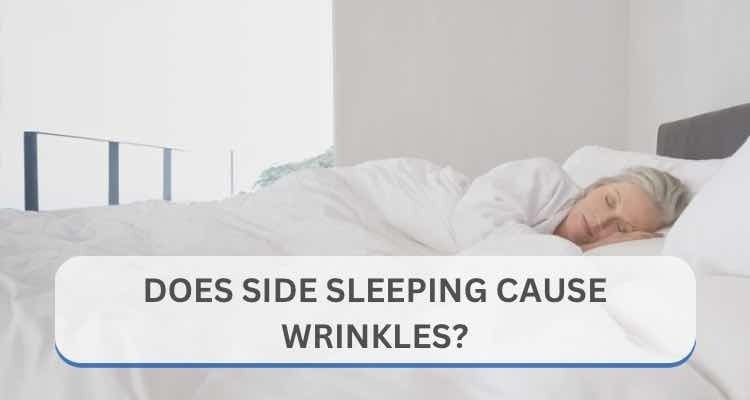
When we think about preventing wrinkles, we usually focus on sunscreen, moisturizers, and healthy habits. But one factor many people overlook is how they sleep.
Could simply sleeping on your sides cause wrinkles on your face, neck, or chest?
In this guide, we’ll break down what science says about side sleeping and wrinkles, how it happens, which areas are most affected, and what you can do to protect your skin—without sacrificing a good night’s rest.
But first, let's understand how wrinkles form.
How Wrinkles Form: The Science of Skin Aging
Wrinkles develop due to a mix of natural aging and external stressors. As we age, our skin produces less collagen and elastin—the proteins that keep it firm and elastic. Over time, the skin becomes thinner and less able to bounce back from repetitive movements or pressure.
External factors, such as sun exposure, smoking, poor nutrition, and even sleep habits, can accelerate the breakdown of these critical proteins, leading to earlier and deeper wrinkles.
In short, aging is natural, but how quickly and where wrinkles form can be influenced by lifestyle choices—including how you sleep.
Does Side Sleeping Cause Wrinkles?
Yes, side sleeping can contribute to wrinkles over time. When you sleep on your side, the skin on your face, jawline, and chest is compressed against the pillow, creating mechanical creases and folds. If you've been sleeping repeatedly on your sides for years, these lines can eventually become permanent wrinkles.
Key areas affected by side sleeping include:
- Cheeks and temples (due to pillow pressure)
- Jawline and nasolabial folds
- Upper chest and décolletage
Unlike expression wrinkles, which result from muscle movements like smiling or frowning, sleep wrinkles form from mechanical distortion of the skin. They tend to run vertically, especially across the cheeks and chest.
Scientific Evidence Linking Side Sleeping and Wrinkles: Several dermatology studies and clinical observations support the link between sleep position and wrinkle development:
Although sleep wrinkles are just one factor in skin aging, the evidence is strong enough that many dermatologists now include "sleep position advice" in their anti-aging recommendations. |
Which Types of Wrinkles Are Worsened by Side Sleeping?
Side sleeping tends to deepen:
- Sleep lines: Fine vertical lines across the cheeks and forehead
- Nasolabial folds: Smile lines from nose to mouth
- Marionette lines: Lines from the mouth corners downward
- Chest wrinkles: Vertical creases across the décolletage
Does Sleeping on Your Side Cause Wrinkles on Your Chest?
Sleeping on your side can gradually cause or worsen chest wrinkles. When you lie on your side, the weight of your upper body compresses the skin on the chest, leading to deep vertical folds between the breasts or across the décolletage. Over time, these folds can turn into visible wrinkles that are difficult to smooth out without cosmetic treatments.
Does Sleeping on Your Face Cause Asymmetry?
There is no strong scientific evidence to prove that side sleeping causes facial asymmetry. While face-to-pillow pressure from side sleeping might contribute to wrinkles or fine lines on one side of the face over many years, experts agree that it’s unlikely to cause actual structural changes to the bones or create significant asymmetry. Not to mention that most side sleepers don't stay still during their night's sleep, the chances of turning and tossing are high.
Do Side Sleepers Age Faster?
Side sleepers don’t necessarily "age faster" overall, but they may develop sleep-related wrinkles earlier than back sleepers. Specifically:
- Cheek wrinkles
- Marionette lines
- Chest lines
However, other aging factors, such as sun damage, genetics, and lifestyle habits (smoking, stress, diet), have a much greater impact. Good skincare, hydration, and preventive measures can greatly reduce the risk of visible side-sleeping wrinkles.
Factors That Increase the Risk of Sleep Wrinkles
Several factors make side sleeping more likely to cause wrinkles:
- Age: Skin naturally loses elasticity.
- Consistently sleeping on the same side: Increases mechanical folding.
- Pillow material: Cotton pillowcases create more friction than silk or satin.
- Skin dehydration: Dry skin folds more easily and has less resilience overnight.
Is Left-Side vs. Right-Side Sleeping Worse for Wrinkles?
There is no significant evidence that sleeping on the left or right side is generally worse for wrinkle formation. However, if you favor one side heavily over the years, that side may show deeper lines or more drooping simply due to more cumulative pressure.
| Pro tip: If you can't switch to back sleeping, at least alternate sides regularly and use a smoother silk or satin pillow surface. |
What Is the Best Sleep Position to Avoid Wrinkles?
Sleeping on your back is the best position to minimize wrinkles. When you sleep on your back:
- Your face isn’t pressed against anything.
- Gravity distributes your skin's weight evenly.
- There’s minimal compression and friction.
Training yourself to sleep on your back can be tricky, but using supportive pillows under your knees and a pillow cradle around your head can make it easier and more comfortable.
How to Prevent Wrinkles from Side Sleeping?
1. Sleep on Your Back
- Place a pillow under your knees for lower back support.
- Use a U-shaped or contour pillow to stabilize your head.
- Practice during short naps to build the habit.
2. Use a Silk or Satin Pillowcase
- Reduces friction and pulling on your skin.
- Silk also helps maintain skin hydration overnight.
- Satin is a budget-friendly alternative.
3. Invest in Anti-Wrinkle Pillows
- Special pillows have cutouts or contoured designs that reduce pressure on the face.
- Memory foam models gently cradle the head and reduce skin compression.
4. Optimize Your Nighttime Skincare Routine
- Moisturizers with hyaluronic acid, peptides, and ceramides reinforce skin hydration and resilience.
- Antioxidants like Vitamin C and E protect against oxidative stress.
- Retinoids help stimulate collagen production and repair skin texture.
5. Stay Hydrated
- Dehydrated skin is less elastic and more prone to forming lines.
- Drink enough water daily and use hydrating serums or sleeping masks.
Anti-Wrinkle Sleep Products to Consider
- Silk pillowcases
- Anti-aging pillows
- Night creams with retinol, peptides, or hyaluronic acid
Can You Reverse Sleep Wrinkles?
Early sleep wrinkles (fine lines) can improve with consistent skincare and lifestyle changes:
- Retinoid creams boost collagen regeneration.
- Microneedling can stimulate skin remodeling.
- Chemical peels and laser resurfacing can smooth surface lines.
- Fillers (hyaluronic acid) can temporarily plump deeper creases.
However, once wrinkles become deep static lines, they are harder to reverse completely without cosmetic intervention.
Final Thoughts:If preventing wrinkles is a priority for you, adjusting your sleep habits is a smart move. You don't have to overhaul your life overnight—small changes like using silk pillowcases, hydrating your skin properly, and training yourself to sleep on your back can make a big difference over time. Combining these strategies with a healthy lifestyle will keep your skin looking youthful for as long as possible. |