Key Takeaway:A nationally representative SSRS Opinion Panel survey (September 2024, n = 3,364) found that 69 % of U.S. adults usually sleep on their side. |
1 | Why These Numbers Matter
- Market relevance: Two-thirds of Americans are potential buyers for side-sleeper pillows, mattresses, and pain-relief accessories.
- Clinical relevance: Side sleeping can reduce snoring and acid reflux yet increase shoulder or hip pressure if ergonomics are ignored.
- Content opportunity: Hard data boosts E-E-A-T and lets you weave revenue-driving keywords like “side-sleeper shoulder-pain pillow.”
2 | Data Sources & Methodology
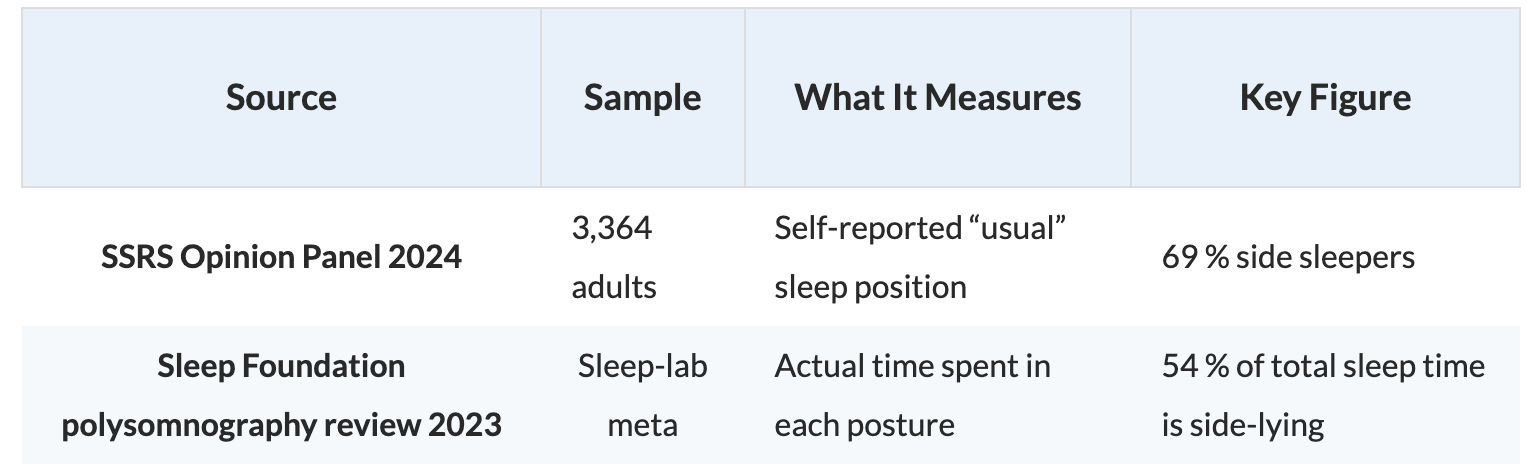
The SSRS poll captures habitual preference, whereas the Sleep Foundation figure tracks time-in-position. Together they give a fuller, defensible picture.
3 | 2025 U.S. Sleep-Position Breakdown
- Side: 69 %
- Back: 19 %
- Stomach: 12 %
4 | Trendline 2010 → 2026
Across seven public polls (Gallup 2010, American Time-Use 2014, Sleep in America® 2018, SSRS 2024), side-sleep prevalence has risen roughly 8–10 percentage points in 15 years, driven by:
- Memory foam and hybrid mattresses that cradle your shoulders and hips.
- Viral popularity of body pillows on social media.
- Public awareness that left-sided sleeping eases reflux.
- Pain-avoidance as average U.S. BMI rises.
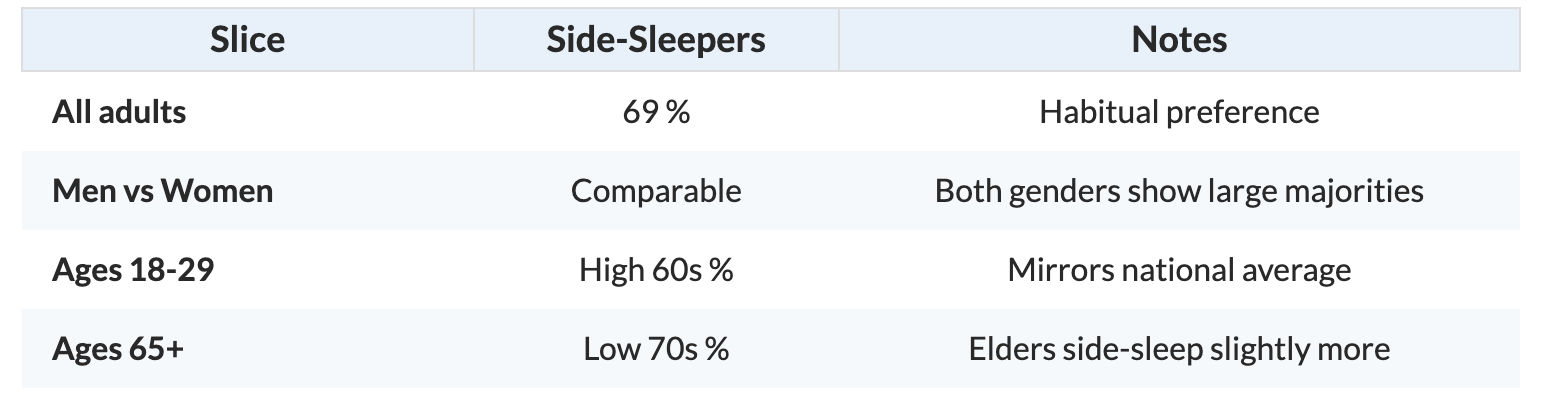
5 | Demographic Deep-Dive (SSRS Highlights)
6 | Why Do So Many Americans Favor the Side?
- Airway patency — lateral posture keeps the tongue from blocking the airway.
- Spinal neutrality — fetal-curl knees decompress lumbar discs.
- Comfort psychology — hugging a pillow boosts oxytocin, easing sleep-onset.
- Marketing — mattresses & U-shaped pregnancy pillows often target side sleepers.
7 | Health Benefits of Side Sleeping
- Less snoring & apnea risk
- GERD relief — especially on the left side
- Improved uterine blood flow during pregnancy
- Lumbar decompression with a knee pillow
8 | Pain & Drawbacks (Medical Focus)
1. Shoulder Impingement & Rotator-Cuff Tears
A 2023 study found that 52/58 rotator-cuff–tear patients were habitual side sleepers (χ² P < .0001).
2. Hip Pain / Greater Trochanteric Pain Syndrome
Review articles note lateral hip pain “worsens with side lying at night.”
3. Lower-Back Pain & Sciatica
Lying on your side with a knee pillow helps keep your pelvis aligned and may ease sciatic pain.
4. Neck Strain
Pillows that are too high or too flat bend the cervical spine, leading to morning stiffness.
9 | Clinician-Approved Fixes & Gear Guide
- Medium-soft mattress (ILD 25–30) with zoned shoulder relief.
- Adjustable-fill pillow that matches ear-to-shoulder gap (~4–6 in).
- Knee & body pillows to prevent pelvic rotation.
- Left-side reflux wedge (7-in incline) for GERD control.
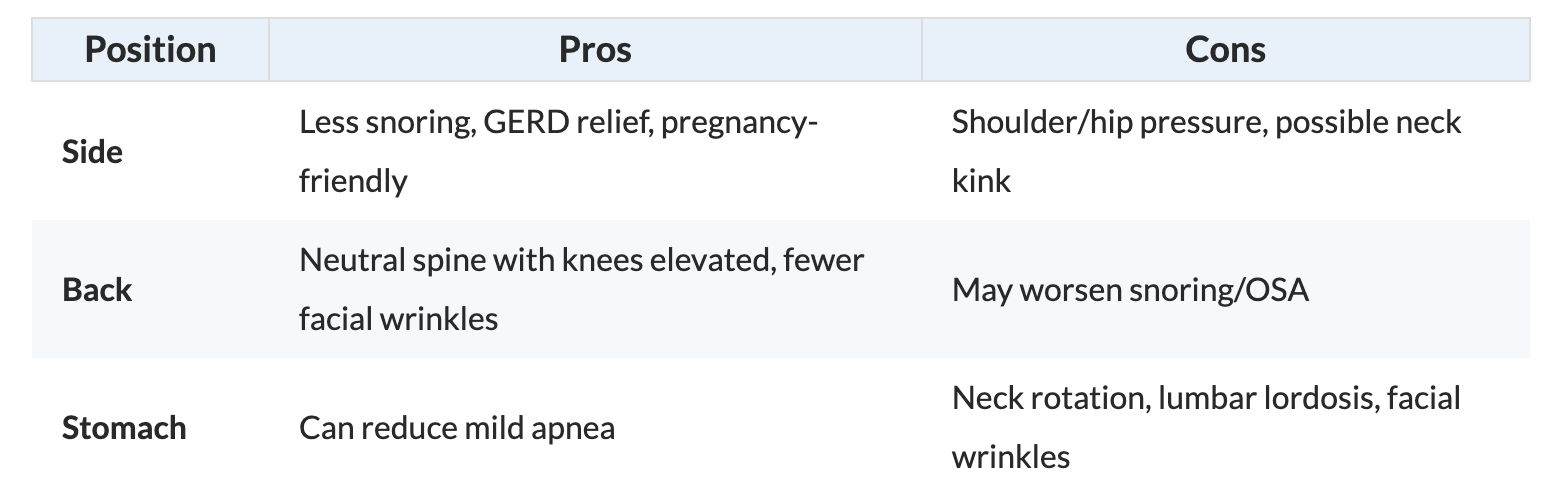
10 | Side vs Back vs Stomach — Pros & Cons
11 | FAQs
Q : What percentage of Americans sleep on their side?
A : About 69 %, per the SSRS 2024 survey.
Q : Is side sleeping good for acid reflux?
A : Yes—particularly on the left side, which reduces nocturnal acid exposure.
Q : Why do my shoulders hurt after side sleeping?
A : Compression raises subacromial pressure; select a cut-out or lower-loft pillow.
Q : Can side sleeping worsen hip bursitis?
A : It can. GTPS often flares with side-lying; add a softer topper and keep the painful side up.
Q : How do I keep my spine aligned on my side?
A : Match pillow height to ear-shoulder gap and place a knee pillow to keep hips stacked.
12 | Takeaways & Next Steps
- Stat to remember: About seven in ten Americans are side sleepers.
- Side sleeping delivers genuine benefits—if you offset pressure points with the right gear.
- See our guides on the best pillows, toppers, and wedges for side sleepers to personalize your setup.
References:
- SSRS. “How the American Public Sleeps,” 2024.
- Sleep Foundation. “Adult Sleep Statistics,” 2023.
- Chahal J et al. “Rotator Cuff Tears & Side-Sleeping Position,” 2023.
- Al-Youha S et al. “Greater Trochanteric Pain Syndrome,” 2017.
- Spine-Health Editorial Board. “Pillow Between Your Legs for Back Pain,” 2024.
- Tan CJ et al. “Left Lateral Decubitus & GERD,” 2023.
Disclaimer: This article is for educational purposes only and is not a substitute for professional medical advice. Consult a qualified healthcare provider about persistent pain or sleep disorders.