Manuka honey consistently commands some of the highest prices in the world of honeys. This premium cost reflects more than its health reputation—it’s about rarity, quality control, certification expenses, ethical sourcing, and global demand. Let’s explore why Manuka honey is so expensive and why its price tag is justified.
How Much Does Mānuka Honey Cost?
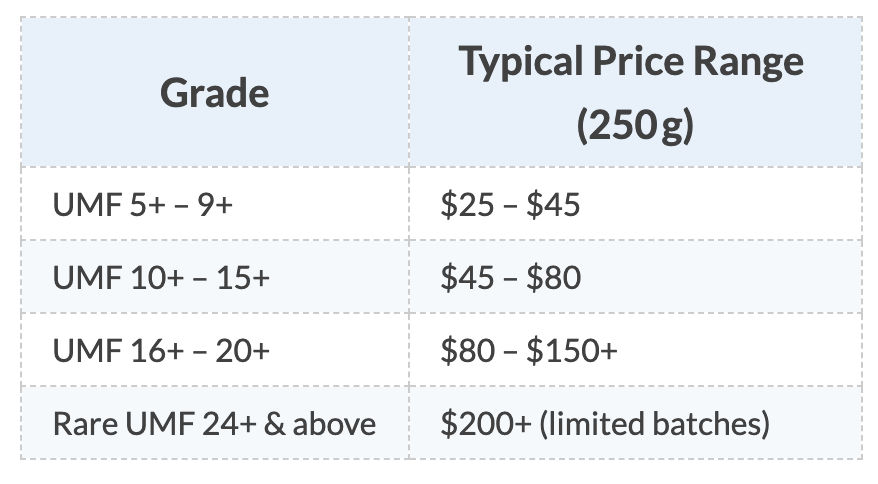
Mānuka honey prices vary significantly depending on the UMF or MGO grade, brand reputation, and authenticity certification. Entry-level Mānuka with low UMF ratings (5+ or MGO 83+) may start around $25–$35 per 250 g jar, while therapeutic-grade Mānuka (UMF 10–15+) typically ranges from $45–$80.
For high-potency or premium batches (UMF 20+ or MGO 829+), prices can exceed $150 or more per 250 g. Larger jars (500 g and up) offer better value per gram but still reflect the grade and batch-specific rarity. Always check for UMF certification and batch test results to ensure you're paying for genuine, lab-verified Mānuka—not just a high price tag.
Prices also fluctuate based on harvest year, packaging, and origin labeling (e.g. monofloral vs multifloral). Be wary of brands that market “Mānuka” without valid grading or test transparency—it could indicate lower-quality or even counterfeit product.
Why is Manuka Honey so Expensive?
Manuka honey is known for its high price not only for its unique taste and benefits, but also due to several factors:
Limited Supply & Geographic Constraints
Mānuka honey is sourced from the nectar of the mānuka tree (Leptospermum scoparium), native to specific regions in New Zealand and parts of southeastern Australia. Commercial harvest is largely limited to New Zealand’s "Golden Triangle." The narrow 2–6 week flowering season, combined with relatively low yields per hive (typically 15–50 kg annually), creates significant scarcity that drives up the price.
Higher Production Costs & Complex Logistics
Producing genuine Manuka honey requires beekeeping in remote, often inaccessible terrain. Many beekeepers must transport hives using helicopters or rugged vehicles. Regulations like exterior hive registration, inspections, and biosecurity add complexity. Additionally, Mānuka honey is often aged for up to 24 months to increase methylglyoxal content (MGO), which raises storage expenses.
Rigorous Testing & Certification Costs
Authentic Mānuka honey must meet strict testing under New Zealand’s Ministry for Primary Industries (MPI), including chemical markers and DNA verification. UMF Licensing, aligning with MPI standards, adds third-party auditing costs. These layers of quality assurance, while critical to fighting counterfeits, contribute significantly to product cost.
Intense Global Demand
Global awareness of Mānuka’s antibacterial, anti-inflammatory, and antioxidant properties has sparked massive demand. Annual global sales now approach $780 million and are projected to rise. Demand spans health, beauty, and culinary markets—further elevated by celebrity endorsements and wellness trends—pressuring limited supply and pushing prices higher.
Unique Biochemical Profile & Health Reputation
Mānuka honey’s signature components, such as MGO and non-peroxide antibacterial activity, distinguish it from traditional honeys. These compounds retain their strength over time, supporting medical and therapeutic uses that add value. The combination of flavor, texture, and scientifically proven potency makes it a rare commodity.
Ethical Production & Sustainability
Ethical production practices—such as protecting bee populations, safeguarding native flora, and involving Māori land-holding communities—come with additional costs. As climate change and habitat loss threaten supply, maintaining sustainable practices becomes both necessary and expensive. Certifications like “Bee Better” and organic labeling provide assurance but also raise the price.
Pricing Snapshot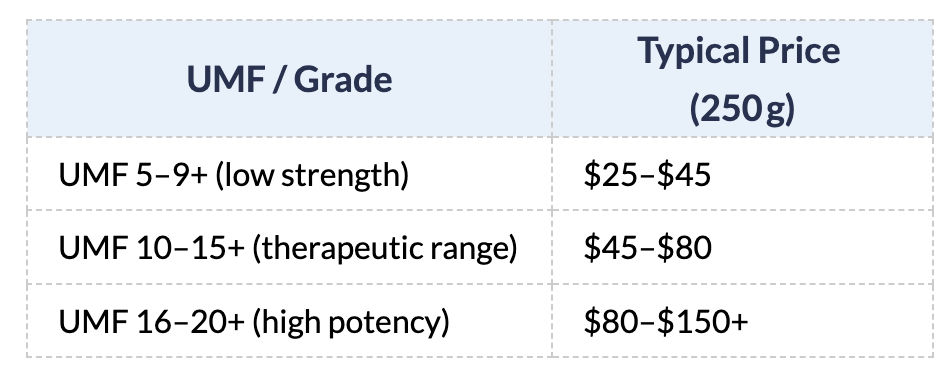
These prices reflect the combined impact of limited production, rigorous certification, and strong consumer demand.
ConclusionThe high cost of genuine Mānuka honey is not arbitrary—it's the natural result of scarcity, careful regulation, and high-quality sourcing. Its unique molecular profile, standardized grading systems (MPI, UMF), and global demand make it one of the most valuable natural products today. When choosing Mānuka, it’s essential to verify authenticity and match your purchase to your intent—whether for daily wellness or therapeutic purposes |