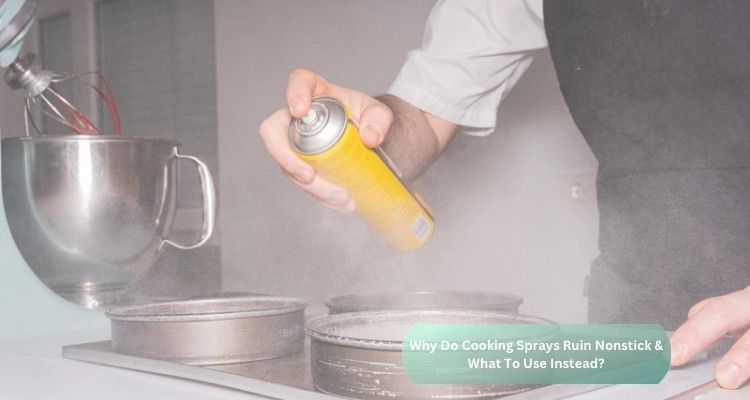
Cooking sprays feel like the perfect nonstick partner. They are quick, low-calorie, and mess-free. But if you’ve ever owned a nonstick pan that slowly became sticky and disappointing, there’s a good chance cooking spray played a role.
Here’s the key idea: most cooking sprays don’t ruin nonstick by instantly destroying the coating. What they usually do is create a thin film that builds up on the surface over time, making the pan feel less slippery and more grabby. Because nonstick coatings can’t be scrubbed aggressively, that film can become stubborn and hard to remove, so the pan seems worn out long before it truly is.
This guide explains why that happens, how to tell if your problem is spray buildup (not coating failure), how to clean it safely, and what to use instead if you want your nonstick pans to last longer.
Do cooking sprays damage nonstick pans?
Cooking sprays can make nonstick pans feel sticky and less nonstick because they leave a thin residue that can bake onto the surface over repeated use, especially at higher temperatures. The buildup doesn’t always come off with normal dish soap, so it accumulates and reduces food release. This is usually a performance problem caused by residue, not immediate coating failure.
Most often, residue buildup changes the surface feel. This is when the pan still looks intact — no peeling or flaking — but:
- Eggs start sticking in certain spots
- The surface feels slightly tacky even after washing
- The pan needs more and more oil to behave normally
- There’s a dull film that won’t rinse away
In this case, the pan may not be worn out but it may be coated in a baked-on film.
Why does cooking spray build up on nonstick?
Cooking spray builds up on a nonstick pan due to several reasons:
Most cooking sprays are a mix of:
- oil
- propellants (to push it out of the can)
- emulsifiers or anti-foaming ingredients
- often lecithin or other ingredients meant to improve spraying and coverage
That blend is designed to coat surfaces quickly and evenly.
Spray applies an ultra-thin layer that “sets” faster
Aerosol spray goes on in tiny droplets. Because the layer is extremely thin, it heats up very quickly. Thin oil layers plus heat can turn into a dry, stubborn film faster than a small spoonful of regular oil.
If you’ve ever seen a sticky “varnish-like” coating on a pan, you’ve seen what happens when oil residue is repeatedly heated and allowed to build.
Heat + repetition = baked-on film (the real culprit)
Over time, repeated spray use can create a film that:
resists normal dish soap
becomes patchy (worse in the center hot zone)
changes how food interacts with the surface
That film makes the pan feel less nonstick even if the underlying coating is still intact.
Biggest factors that make spray buildup worse
Cooking spray doesn’t ruin a pan automatically. The buildup problem gets worse under certain conditions.
High heat and empty preheating
Nonstick pans don’t need high heat for most foods. When you heat a sprayed pan on high, especially if it’s empty, the spray layer can bake on quickly. This is one of the fastest ways to create sticky film.
Using light spray often
This is why spray buildup surprises people. A little spray seems harmless but thin layers accumulate over many cooks. You don’t notice it until the pan starts behaving differently.
Dishwasher cycles
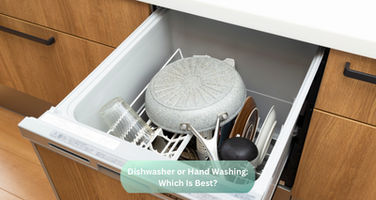
Dishwasher detergent and heat drying can contribute to residue setting and to general nonstick wear. If you spray often and dishwash nonstick frequently, performance tends to drop faster.
Waiting too long to clean
Residue is easier to remove when it’s fresh. If sprayed residue cools and sits, it can become harder and more stubborn.
How to tell if your nonstick pan has spray buildup?
Before you throw away a pan, it’s worth checking whether you’re dealing with buildup or true coating wear.
The feel test
If the pan feels slightly tacky or grabby, buildup is likely. Worn coatings can also stick, but they often feel uniformly “less slick” rather than sticky-film tacky.
The water behavior clue
On a clean nonstick pan, water often beads and moves smoothly. On a pan with baked-on film, water may cling strangely, spread unevenly, or behave differently in the center than at the edges.
The “patchy egg” sign
When spray buildup is the issue, eggs often stick in specific zones first (often the center hot ring), while other areas still release fairly well.
Look for some visual clues:
- Dull areas that won’t rinse away
- A slightly brown or amber tint in the cooking zone
- A sheen that looks more like film than clean coating
How to remove cooking spray residue safely?
The goal is to remove film without damaging the coating. Think gentle first, then slightly stronger but never abrasive.
Step 1: Hot soak and mild soap
Soak the pan in warm-to-hot soapy water and let it sit long enough to soften the film. Then wash with a soft sponge. Many times, this alone improves the surface.
Step 2: Baking soda paste
If the film persists, baking soda can help lift residue gently. Make a paste with baking soda and a little water, spread it over the surface, and rub lightly with a soft sponge. Rinse thoroughly and dry.
This is often the best middle step because it’s effective without harsh abrasion if used gently.
Step 3: Gentle warm-water softening
If residue is stubborn, warming water in the pan briefly can help loosen it. The point is softening, not overheating. Avoid high heat and don’t leave the pan empty on the burner.
To protect the coating, avoid:
- Steel wool
- Abrasive scouring pads
- Harsh powdered abrasives used aggressively
- Oven cleaner
- Metal scraping tools
If you feel like you need aggressive tools, that’s often a sign the pan is either heavily coated in film or truly worn out.
If the coating is peeling, flaking, bubbling, or feels rough, the pan is at end-of-life and should be replaced. Spray buildup can make performance worse, but it can’t cause peeling that isn’t already wear-related.
How to prevent spray buildup?
If you love the convenience of sprays, you don’t have to abandon low-oil cooking. You just need a method that doesn’t build stubborn film.
Use a small amount of liquid oil instead
A teaspoon of oil spread thinly with a paper towel often gives you the same effect as spray without the same buildup pattern. It also helps with even browning and reduces dry friction on the coating.
Keep heat moderate
Nonstick performs best on low-to-medium heat. Most spray film problems accelerate when heat is too high. If you’re cooking hot enough to smoke oil regularly, you’re usually beyond the ideal zone for nonstick anyway.
Clean promptly
Washing soon after cooking prevents residue from hardening. This is especially important if you used spray and cooked at higher heat than usual.
Don’t use the dishwasher as the default for nonstick
Dishwashing nonstick frequently often shortens its best performance window. Hand washing is one of the easiest ways to extend lifespan.
Best alternatives to cooking spray
You can get the convenience of thin coating without the aerosol film problem.
Pourable oils
A small amount of oil, spread thin, works well for eggs, pancakes, and sautéing. The trick is using just enough to coat the surface, not flood it.
Refillable oil mister
A refillable mister lets you spray oil without many aerosol can additives. It still creates a fine coating, but often with less buildup.
Butter or ghee
Butter is excellent for eggs and pancakes, and it often leaves less sticky varnish than repeated spray use. Ghee handles higher heat than butter and can be useful when you want butter-like behavior without burning as quickly.
Liners and parchment
For baking sheets, parchment can replace spray entirely. This doesn’t apply to nonstick pans on the stovetop, but it’s a good no-spray strategy in the oven.
When to replace your nonstick pan?
Cooking spray buildup can be cleaned but coating failure can’t. Replace your nonstick pan if you see:
- Peeling or flaking
- Bubbling or blistering
- Rough patches that feel like the coating is breaking down
- Severe warping that causes wobbling and uneven heating
If the coating looks intact and the issue is stickiness or patchy performance, try cleaning for residue first.
Bottom lineCooking sprays most often ruin nonstick surfaces by slowly building a baked-on film that makes the surface feel sticky and less slippery. It’s not always permanent damage, but it can lead to frustration and early replacement if you don’t recognize what’s happening. If you want your nonstick pans to last longer, use moderate heat, clean promptly, and consider switching from aerosol spray to a thin layer of pourable oil or a refillable mister. |
FAQs: Why Do Cooking Sprays Ruin Nonstick?
Can I use cooking spray on nonstick pans?
You can, but frequent use may create a baked-on film that makes the pan sticky and less nonstick over time. If you use spray, keep the heat moderate, clean promptly, and consider switching to a small amount of pourable oil to extend the pan's lifespan.
Why is my nonstick pan sticky?
Sticky nonstick is often caused by residue buildup from cooking sprays or overheated oils. It can also be from coating wear. If the coating is intact and stickiness is patchy, residue is likely and may improve with soaking and gentle cleaning.
How do I remove cooking spray buildup from a nonstick surface?
Start with a warm, soapy soak and gentle washing. If residue persists, use a baking soda paste with light pressure, then rinse thoroughly. Avoid abrasive pads or harsh cleaners, as they can damage the coating.
Does PAM ruin nonstick pans?
It doesn’t usually ruin them instantly, but frequent use can leave a film that bakes onto the surface, reducing nonstick performance. Combined with high heat and dishwasher use, the decline can occur more quickly.
Is cooking spray worse than oil?
For nonstick longevity, often yes, because sprays can leave stubborn residue that’s hard to remove with gentle cleaning. A small amount of pourable oil spread thinly usually performs just as well without the same buildup problem.
Are oil misters better than aerosol sprays?
Often, yes. Refillable misters usually contain just oil and can reduce residue issues. Aerosol sprays may include added ingredients to improve spray consistency, which can contribute to buildup over time.