Medical & Affiliate Disclaimer: The information provided is for general informational purposes and does not constitute professional advice. Read full disclaimer.
×

The information provided in this article is for general informational purposes only and does not constitute professional, medical, or legal advice. The statements made in this article have not been evaluated by any regulatory authority. While efforts have been made to ensure the accuracy of the information presented, no warranty or guarantee, expressed or implied, is provided regarding the completeness, accuracy, reliability, or suitability of the information. Readers are advised to consult with a qualified healthcare provider or dermatologist for specific advice regarding skincare products and personal health conditions, especially if pregnant, nursing, or having underlying medical conditions. The mention of specific brands or products does not imply endorsement, nor should it be considered a recommendation. Please review product labels, ingredients, and safety instructions before using any skincare products, and always follow regulatory guidelines in your country. The article does not intend to defame or harm any brand or product, and no liability is assumed by the author or publisher for any damages or adverse effects that may arise from the use of information contained herein. This post may also contain affiliate links. If you use these links to buy something, we may earn a small commission at no additional cost to you.

What Causes Androgenetic Alopecia in Women?


What Causes Androgenetic Alopecia in Women?

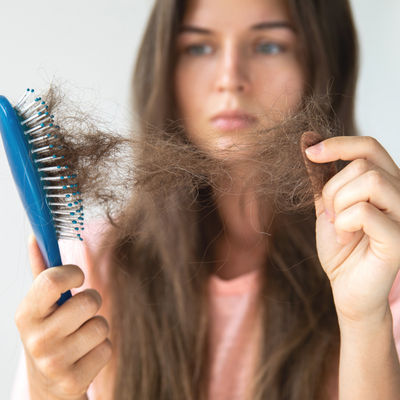
We are all at risk of being affected by the phenomenon of hair loss in the course of our lifetime. Main culprits: the hormones to which they are particularly sensitive. For you, Clinicadvisor® takes stock of the influence of hormones on our hair.


Hormonal changes and hair loss in women: 

Alopecia is the generic medical term for hair loss on part or all of the scalp. This term comes from the Greek “alopex”, which means fox. This animal loses indeed, once a year, its hair in a dramatic way.


Hereditary androgenetic alopecia, the most common, mainly affects men (70% of cases). Acute alopecia, for its part, leads to faster and more consistent hair loss.


What causes androgenetic alopecia in women?


First cause of alopecia in women: hormonal imbalances related to different periods of life, following treatment or endocrine disorders. This is called androgenic alopecia.


In the event of significant and unexplained hair loss, it is then advisable to consult a dermatologist who will sort out among the various factors usually incriminated:


Endocrinological disorders concern the main hormone-producing glands, such as the thyroid (hyper or hypothyroidism). In addition, more rarely the pituitary gland which then begins to function in slow motion (we then speak of hypopituitarism) or, on the contrary, to produce too much prolactin (hormone allowing the start and the maintenance of lactation).

It can also be an excess of androgens (male hormones secreted by the ovaries and the adrenal glands) induced by the presence of micro-polycystic ovaries, by menopause or childbirth. The associated drop in female hormones then causes an impoverishment of the scalp and therefore hair loss, sensitized by too many male hormones.

Alopecia can also come from a genetically programmed hypersensitivity of the hair follicle (hair bulb) to androgens without these being produced excessively. This is called hyperandrogenism.


Need medical advice quickly? 

Consult a doctor online for your hair loss

Simply fill out this form and we'll get in touch with you.


Start here


Author: ClinicAdvisor® Research Team

Medically reviewed by: Dr. Semra Akinturk


References:

https://www.sciencedirect.com/science/article/pii/S0022202X15529369

https://pubmed.ncbi.nlm.nih.gov/12894991/ 

https://www.webmd.com/skin-problems-and-treatments/hair-loss/hair-loss-types


x


Share your Feeling

  • 0
    SHOW OFF
  • 0
    I DO NOT LIKE
  • 0
    FINGERS CROSSED
  • 0
    I LIKED
  • 0
    APPLAUSE
  • 0
    I LOVED
  • 0
    SUSPICIOUS
  • 0
    UNBELIEVABLE
0 Comment(s)

Share Your Opinion, Please


Related Posts


A thorough guide into hair transplant in Mexico
Are Numbness After Hair Transplant and Nerve Damage Permanent? Here is the Answer
When and How to Get Rid of Scabs After Hair Transplant?
Hair Loss Consultation: is it time to see a doctor?
What Causes Hair Transplant Infection and How to Prevent it?