
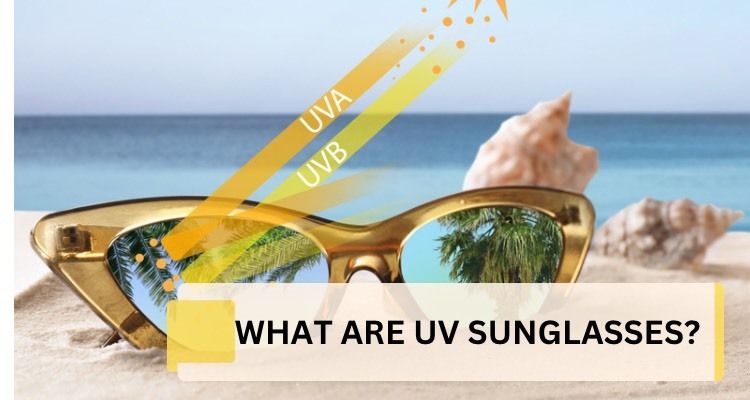
UV sunglasses have become an essential accessory for those who prioritize eye health and protection from the harmful effects of ultraviolet (UV) radiation. In this article, we will delve into the basics of UV sunglasses, exploring their purpose, the level of protection they offer, the distinction between UV and polarized sunglasses, the best UV sunglasses, and the situations in which wearing UV sunglasses is crucial.
What are UV Sunglasses?
UV sunglasses, also known as ultraviolet protection sunglasses, are specially designed eyewear that shield your eyes from ultraviolet rays emitted by the sun. These sunglasses feature lenses that filter out or block a significant portion of UVA and UVB rays, offering reliable protection against potential eye damage.
| Tip : When buying UV sunglasses, look for the label "UV 400," which signifies that the lenses block UV rays up to 400 nanometers, covering both UVA and UVB |
How much protection do UV Sunglasses provide?
The effectiveness of UV sunglasses is measured by their ability to block UV radiation. High-quality UV sunglasses typically block 100% of UVA and UVB rays, providing comprehensive eye protection. Opting for sunglasses with proper UV protection helps reduce the risk of various eye conditions, including cataracts, macular degeneration, and photokeratitis (sunburn of the cornea).
Which Sun Protection Index To Choose For Your Sunglasses?
The sun protection factor indicates the level of protection provided by the tinted lenses in your sunglasses. The lenses protect your eyes by filtering the sun's harmful rays, particularly ultraviolet rays. Depending on the lens tint, a CE marking or standard must be affixed to the glasses to indicate the level of protection your pair of sunglasses will provide.
Guide to Sun Protection Indexes
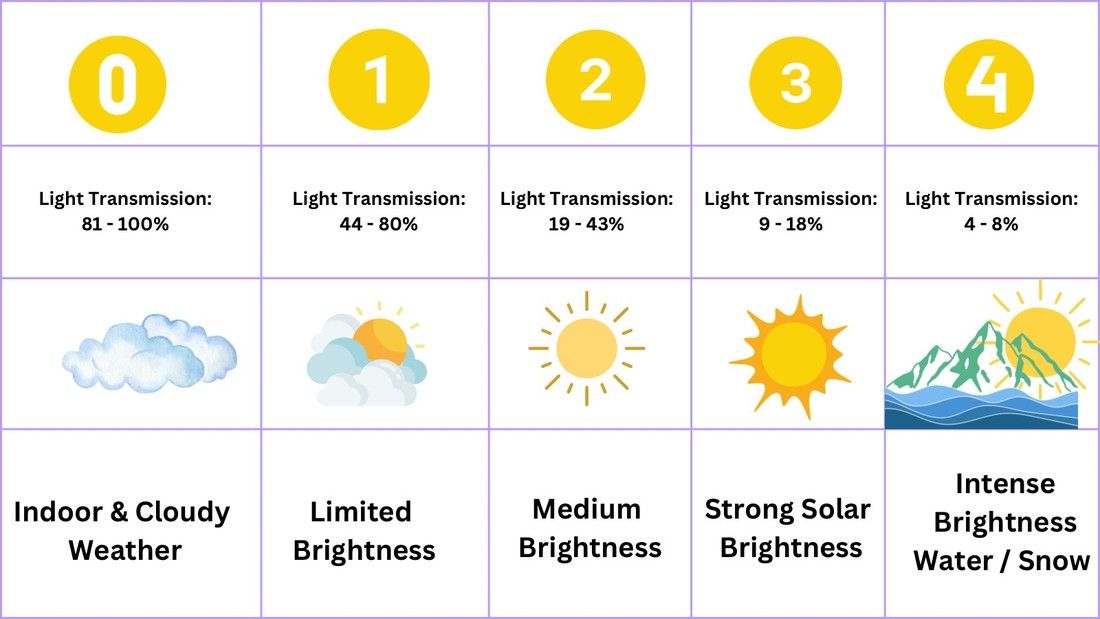
- Category 0 - S0 Protection Index:
These lightly tinted spectacle lenses filter only up to 19% of sunlight. This category of protection is the lowest and is not suitable for prolonged exposure to strong sunlight.
- Category 1 - S1 Protection Index:
These lightly tinted lenses filter between 20 and 57% of solar light. They lend themselves well to conditions of limited sunlight, such as gray or hazy skies. However, if you plan to go to the mountains during the ski season, where glare is constant, it is not recommended to use this lens category.
- Category 2 - S2 Protection Index:
Category 2 filters between 58% and 82% of sunlight. It is valid for average sunshine outside the summer when ambient brightness is generally at its maximum.
- Category 3 - S3 Protection Index:
Recommended: Category 3 is the most common for sunglasses, and we understand why. These solar lenses filter between 83% and 92% of the sun's rays and are perfectly suited to high-sunlight environments, whether in summer (beach, sea) or winter (mountains, skiing).
- Category 4 - S4 Protection Index:
These category 4 glasses are extremely efficient. They filter up to 97% of sunlight. They are used in extreme conditions such as mountaineering in high mountains or on glaciers, where the reverberation is very strong. Please note that this category is prohibited for driving because it impairs vision and color perception.
Why is UV protection so important?
UV protection is crucial for several reasons:
- Eye Health: Prolonged exposure to UV rays can lead to a variety of eye conditions, including cataracts, macular degeneration, and corneal sunburn. By wearing sunglasses with appropriate UV protection, you can reduce the risk of these conditions and maintain good eye health.
- Skin protection: UV rays can damage the skin, cause premature aging, and increase the risk of skin cancer. Sunglasses with UV protection not only protect your eyes but also provide some coverage to the delicate skin around the eyes, reducing the risk of skin damage.
- General well-being: Excessive UV exposure can cause discomfort, eye fatigue, and headaches. By wearing sunglasses with UV protection, you can enjoy clearer vision, increased comfort, and better visual acuity in bright conditions.
What is the difference between UV Sunglasses and Polarized Sunglasses?
While both UV sunglasses and polarized sunglasses contribute to eye protection, they serve different purposes. UV sunglasses primarily focus on blocking harmful UV radiation to prevent long-term eye damage. On the other hand, polarized sunglasses are designed to reduce glare caused by sunlight reflecting off surfaces like water, snow, or pavement. Some sunglasses offer both UV protection and polarization, providing a comprehensive solution for eye safety across various environments.
When Should I Wear UV Sunglasses?
The importance of wearing UV sunglasses extends beyond sunny summer days. UV radiation is present even on cloudy days, and it can reflect off surfaces such as snow, water, and sand, intensifying its impact. Therefore, it is advisable to wear UV sunglasses whenever you are exposed to sunlight, especially during outdoor activities such as hiking, skiing, or spending time at the beach. Additionally, individuals who spend long hours driving or working outdoors should consider incorporating UV sunglasses into their daily routine to protect their eyes from prolonged sun exposure.
What are the Best UV Protection Sunglasses?
The best UV protection sunglasses are those that offer 100% UV protection against both UVA and UVB rays. Ideal choices include wraparound styles or large frames that cover more of the eye area, providing comprehensive protection. Look for sunglasses labeled "UV400," which block all light with wavelengths up to 400 nanometers, covering UVA and UVB rays. Brands like Ray-Ban, Oakley, and Maui Jim are renowned for their high-quality lenses that offer complete UV protection, combining style with safety to shield your eyes from the sun's harmful rays.
How to Choose the Best UV Sunglasses?
To choose the best sunglasses for UV eye protection, ensure they offer 100% UV protection (UV400), prefer wraparound or large frames for greater coverage, select high-quality, polarized lenses for clarity and glare reduction, ensure a comfortable fit, opt for durable materials, and consider reputable brands. Look for sunglasses with clear UV protection labels.
Conclusion:
UV sunglasses play a crucial role in preserving eye health by providing effective protection against harmful ultraviolet radiation. Understanding the level of protection they offer, distinguishing them from polarized sunglasses, and recognizing when to wear them ensures that you make informed choices for your eye safety. Prioritize your eye health by investing in high-quality UV sunglasses and incorporating them into your daily routine, regardless of the weather.
FAQs: What are UV sunglasses
Do all sunglasses have UV protection?
Not all sunglasses offer UV protection. Some may only reduce glare without blocking harmful UV rays. It's crucial to check labels to ensure the lenses provide 100% UV protection.
How to tell if sunglasses have UV protection?
Look for labels or tags that state "100% UV protection" or "UV400." If in doubt, you can have them tested by an optician to confirm the UV protection level.
Do polarized sunglasses block UV?
Polarized sunglasses primarily reduce glare, but not all block UV rays. To ensure your eyes are fully protected, choose polarized lenses that also offer 100% UV protection.





Share Your Opinion, Please