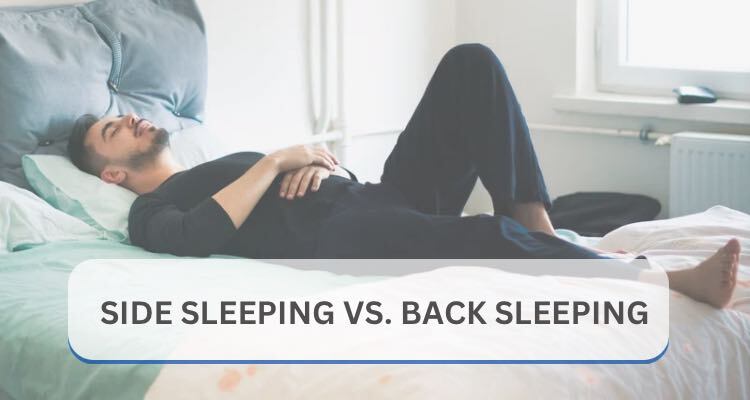
Sleep is essential for every aspect of health, but how you sleep can be just as important as how long you sleep. Two of the most commonly recommended positions for promoting overall wellness are side sleeping and back sleeping. Each offers distinct advantages and potential drawbacks depending on your body, health conditions, and personal comfort.
This guide will compare side and back sleeping across critical categories like spinal alignment, breathing, digestion, skin aging, pain prevention, and more. Whether you're looking to improve your sleep quality or manage a health issue, understanding the differences can help you choose the best position for your needs.
Side Sleeping vs. Back Sleeping
Sleeping Position
Side sleeping involves lying on either your left or right side for the majority of the night.
Common variations include:
- Fetal position: Knees curled toward the chest.
- Log position: Straight body with arms down.
- Yearner position: Arms stretched forward.
- Sprinter position: One leg bent upward, like a running start.
While back sleeping means lying flat on your back with your face upward.
Common variations include:
- Soldier position: Arms down at the sides.
- Starfish position: Arms overhead or outstretched.
Both positions are considered healthier than stomach sleeping, but they impact the body differently.
Spinal Alignment and Posture Support
Side sleeping naturally supports the spine’s curve when paired with the right mattress and pillow. However:
- Shoulders and hips are pressure points.
- A mattress that's too firm or too soft can misalign the spine.
A high-loft pillow and a medium-soft mattress are usually needed to maintain a straight posture from head to tailbone.
Back sleeping, when done correctly, offers the best spinal neutrality:
- The spine, neck, and hips align effortlessly.
- A pillow under the knees can further relieve lower back tension.
However, back sleeping can flatten the spine unnaturally without proper lumbar support, leading to discomfort.
Breathing & Sleep Apnea
Side sleeping significantly improves breathing quality:
- Keeps airways open by preventing tongue collapse into the throat.
- Recommended for individuals with mild to moderate obstructive sleep apnea or heavy snoring.
- Left-side sleeping also improves lung function slightly better than the right side.
Back sleeping can worsen breathing issues:
- Gravity causes the tongue and soft palate to fall backward, obstructing the airway.
- Increases the risk of snoring and apnea episodes, especially without positional aids.
Digestion and Acid Reflux (GERD)
Left-side sleeping is particularly beneficial for digestion:
- Gravity helps stomach contents stay down, reducing nighttime heartburn.
- Improves overall gastric emptying.
Flat back sleeping can worsen acid reflux unless the upper body is elevated:
- Lying flat may allow stomach acid to enter the esophagus.
- Using an adjustable base or wedge pillow can help mitigate this.
Wrinkles
Side sleeping increases the risk of sleep wrinkles on the side of the face pressed against the pillow.
- Compression can deepen nasolabial folds and forehead lines over time.
- Chest wrinkles (décolletage) are also more common in habitual side sleepers.
On the other hand, sleeping on the back protects the skin by minimizing face-to-pillow contact and reduces friction, helping maintain facial symmetry and skin smoothness longer.
Pain Prevention and Comfort
Sleeping on the sides relieves pressure on the lower back. However, when done incorrectly it can cause shoulder and hip pain if the mattress and pillow are not supportive enough.
Sleeping on the back protects the shoulders and hips from compression. But it can also cause lower back pain if the spine flattens against the mattress without proper knee support.
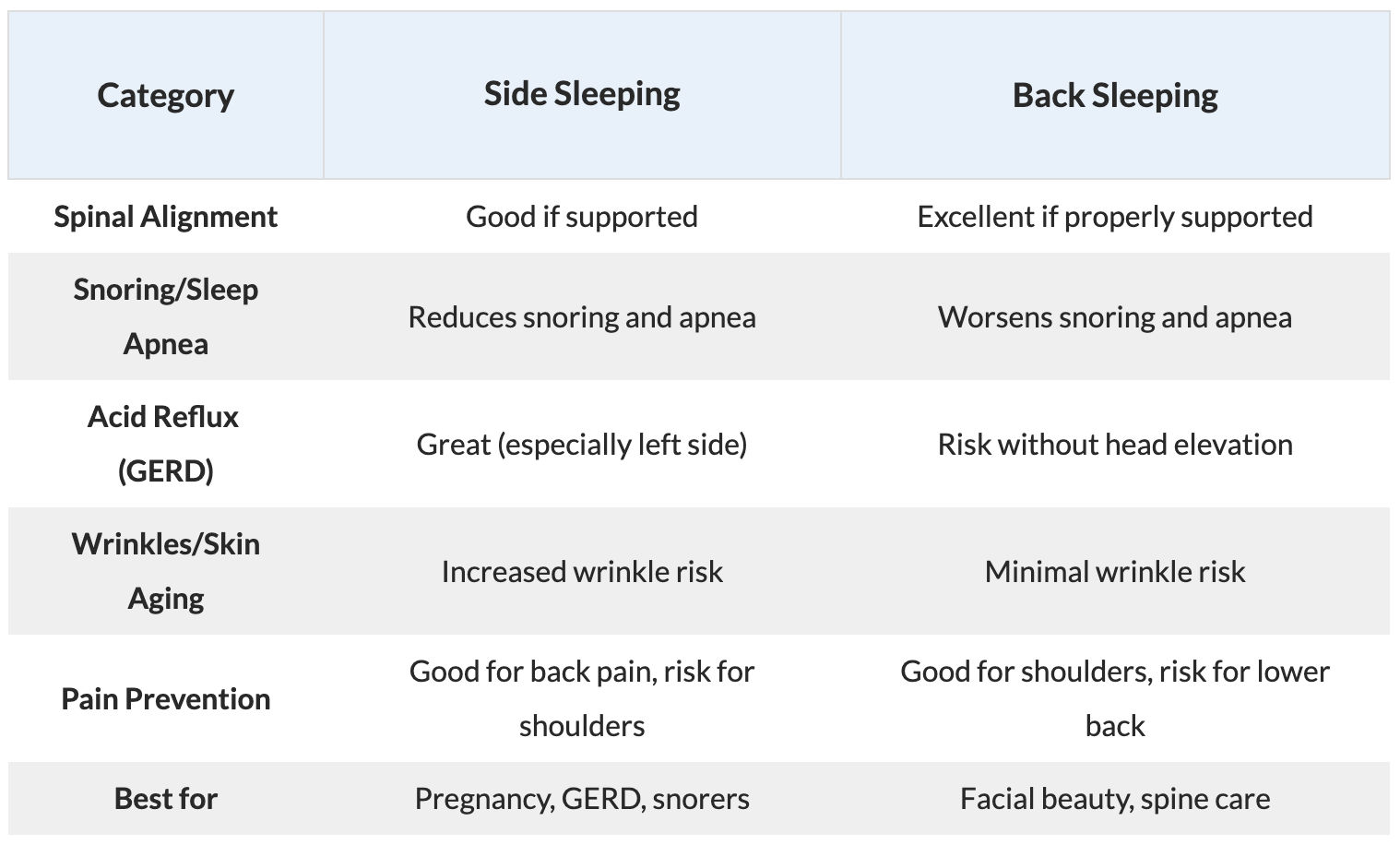
Quick Summary: Pros and Cons Chart
Special Groups: Which Sleep Position Is Recommended?
For Pregnancy
- Left-side sleeping is strongly recommended for better fetal circulation and reduced swelling.
For Heart Conditions
- Mild heart issues: left-side sleeping is usually fine.
- Severe heart failure: right-side sleeping may be better to reduce heart strain.
For Sleep Apnea and Snorers
- Side sleeping is almost always recommended.
- Back sleeping should be avoided unless using a CPAP machine.
For Chronic Back Pain
- Back sleeping with lumbar support can relieve pressure.
- Side sleeping with a knee pillow also benefits lower back pain sufferers.
For Facial Aging Concerns
- Back sleeping is ideal to prevent premature wrinkles.
Which Side Is Better: Left or Right for Side Sleepers?
Left Side:
Improves digestion.
Reduces acid reflux.
Supports lymphatic drainage.
Right Side:
May ease breathing for some heart conditions.
Slightly worsens GERD symptoms.
Common Mistakes to Avoid for Each Position
Side Sleeping Mistakes:
No knee pillow: twists the lower spine.
Wrong pillow height: neck misalignment.
Hard mattresses causes shoulder pain.
Back Sleeping Mistakes:
Using a too-high pillow that pushes the head forward.
No lumbar support causing back strain.
Very soft mattress that collapses at the hips.
Final Verdict: |