Whether you're new to coffee or a seasoned enthusiast, one of the most important factors influencing flavor is the roast level. You've seen the labels: light, medium, dark roast — but what do they really mean? How does roasting coffee affect taste, aroma, body, and even caffeine content?
In this in-depth guide, we’ll break down everything you need to know about light, medium, and dark coffee roasts — from their chemical differences and sensory profiles to ideal brewing methods and storage tips.
Please accept cookies to access this content
What is Coffee Roasting?
Coffee roasting is the process of transforming green coffee beans into the aromatic, flavorful beans we grind and brew. This is done by applying controlled heat, which causes a series of complex chemical reactions inside each bean.
As the temperature rises:
- Moisture evaporates.
- The Maillard reaction and caramelization begin, developing flavor and color.
- The beans expand and crack (first and second crack).
- Aromatic oils emerge, and acidity changes.
In short, roasting doesn’t just darken the bean — it creates the flavor chemistry that makes coffee what it is.
What Are Roast Levels: Light, Medium, and Dark
Roast level is primarily defined by the internal temperature of the bean during roasting and the physical and chemical changes that occur. Each level offers a distinct flavor profile and ideal brew method.
Light Roast:
- Temperature: 356–401°F (180–205°C)
- Other Names: Cinnamon Roast, Half City, Light City
- Characteristics:
- Light brown color, dry surface (no visible oils)
- Retains its origin's flavor (terroir)
- High acidity, light body
- Fruity, floral, citrus, or tea-like notes
- Best For: Pour-over, AeroPress, drip brew
- Who It’s For: Coffee drinkers who enjoy delicate, bright, and nuanced flavors.
Medium Roast:
- Temperature: 410–428°F (210–220°C)
- Other Names: City Roast, American, Full City
- Characteristics:
- Medium brown color
- Slight sweetness and body
- Balanced acidity and bitterness
- Notes of caramel, chocolate, nuts
- Best For: Drip, Chemex, French Press
- Who It’s For: Those who prefer a well-rounded, balanced cup with moderate body and flavor complexity.
Dark Roast:
- Temperature: 437–482°F (225–250°C)
- Other Names: Full City+, Vienna, French, Italian
- Characteristics:
- Dark brown to almost black beans
- Oily surface due to bean structure breakdown
- Lower acidity, heavier body
- Bold, smoky, bittersweet, roasted flavors
- Best For: Espresso, moka pot, cold brew
- Who It’s For: Fans of intense, robust coffee with low acidity and strong presence.
The Science Behind Roast Levels
Roasting coffee involves more than just heating. Each stage influences flavor and aroma in measurable ways.
Maillard Reaction
When heat is applied, amino acids and sugars in the bean react to form new molecules — creating complex flavors, browned color, and aroma.
Caramelization
Natural sugars break down into caramel-like flavors, especially in medium to dark roasts.
First Crack
Occurs around 385°F (195°C). The bean expands, and water vapor causes a popping sound — signaling light to medium roast development.
Second Crack
Around 435°F (224°C), the bean cracks again. Oils start surfacing. Dark roast flavor profiles emerge — often stronger, bolder, and sometimes smoky or bitter.
Caffeine & Moisture
Contrary to myth, light roasts have slightly more caffeine by weight. Dark roasts lose more moisture and mass, but the difference in caffeine is small.
Roast Development: From Green to Fully Roasted Bean
Before coffee ever meets your grinder, it undergoes a dramatic transformation in the roaster — changing in color, size, aroma, texture, and chemistry. Let’s walk through the roast development stages in detail, from raw green beans to the edge of combustion, so you can better understand what defines light, medium, and dark roasts—and everything in between.
1. Green Coffee (75°F / 24°C)
Freshly harvested, unroasted coffee beans are pale green to bluish-green depending on origin. They're dense, grassy-smelling, and full of locked-in potential. At this stage, they contain 10–12% moisture and are entirely undrinkable.
2. Drying Phase (Up to ~320°F / 160°C)
As the roast begins, the beans enter an endothermic phase, absorbing heat to drive off moisture. This stage lasts several minutes depending on the roasting method. Beans turn yellowish and emit aromas of hay, grass, and steam. Internally, the structure begins softening, preparing for expansion.
3. Yellow to Tan Stage (270–345°F / 132–174°C)
The beans transition through various shades of yellow, then tan. A marbled appearance emerges. The smell shifts to toasted grain and fresh bread, signaling the beginning of complex chemical reactions, including Maillard browning — responsible for many of coffee’s foundational flavor compounds.
4. Early Brown Stage (~370°F / 188°C)
The beans begin to brown visibly and emit a richer, nutty aroma. Chaff (the papery skin) loosens and begins to flake off. There's minor bean expansion and widening of the center crack. Roast color starts to give clues about the final flavor direction.
5. First Crack Begins (395–405°F / 202–207°C)
The first crack is a crucial audible marker — similar to popcorn popping. Internal pressure builds until moisture and gas rupture the cell walls, causing the bean to expand. At this point, light roast territory begins. The roast becomes exothermic, and aroma deepens to include toast, light caramel, and floral elements.
City Roast (Light): Ends just after first crack (~400–410°F / 204–210°C). The coffee highlights origin flavor — bright acidity, floral/fruity complexity.
Beans remain dry, and no oil is visible on the surface.
6. Between the Cracks (415–430°F / 213–221°C)
As first crack finishes, the coffee enters a development phase — the space between first and second crack. Here, sugars begin to caramelize, body builds, and acidity starts to mellow.
- City+ to Full City Roast (Medium): Beans darken, aromas become richer. Some bean oils may begin to appear.
- This is a sweet spot for balance — combining origin clarity with mild roast influence.
7. Second Crack Begins (435–445°F / 224–229°C)
The second crack sounds like a faint snapping or crackling. It signals a structural breakdown of cellulose in the bean and the start of visible oil surfacing. Flavors shift from sweet and balanced to smoky, roasted, and bitter.
- Full City+ to Vienna (Medium-Dark to Dark): Beans become darker, with a visible oily sheen.
- Roasty flavors dominate, and acidity declines.
8. Rolling Second Crack (450–465°F / 232–240°C)
Now we're firmly in dark roast territory. Second crack continues, and smoke increases. Oils cover the bean surface, and any distinct origin flavors are muted or lost entirely. This is where the Vienna to French Roast range lies.
- Notes of bittersweet chocolate, charred caramel, and ashy or woody tones begin to appear.
9. French to Italian Roast (470°F+ / 243°C+)
Beyond this point, the roast risks burning. Beans turn charcoal-black, flavor becomes bitter and acrid, and oils can coat equipment or clog grinders.
- Italian/Spanish Roasts often smell of burnt rubber or smoke, and little caffeine or complexity remains.
- This degree is rarely used in specialty coffee.
Sensory Cues: Trust Your Senses
Roast level can be determined by combining visual, olfactory, and audible clues:
- Sight: Color change from pale green to black; surface oil indicates darker roasts.
- Smell: From grassy to toasty, caramel, nutty, then smoky or burnt.
- Sound: First crack means light/medium; second crack indicates dark/very dark roast.
Pro Tip for Home Roasters:
- Want to taste the coffee's origin character? Stop just after the first crack (City or City+).
- Craving body and bitterness? Aim for Full City+ to Vienna.
- Don’t go past second crack unless you're intentionally going for bold, roasty espresso blends.
Light roasts emphasize the bean’s origin, meaning beans from Ethiopia may taste citrusy, while Guatemalan beans may offer floral or berry notes. Medium roasts strike a flavorful balance which is excellent for most daily drinkers. Dark roasts create depth and bitterness, often favored in espresso and milk-based drinks.
Pairing Roasts with Brewing Methods
Choosing the right brew method enhances the flavors of each roast level.
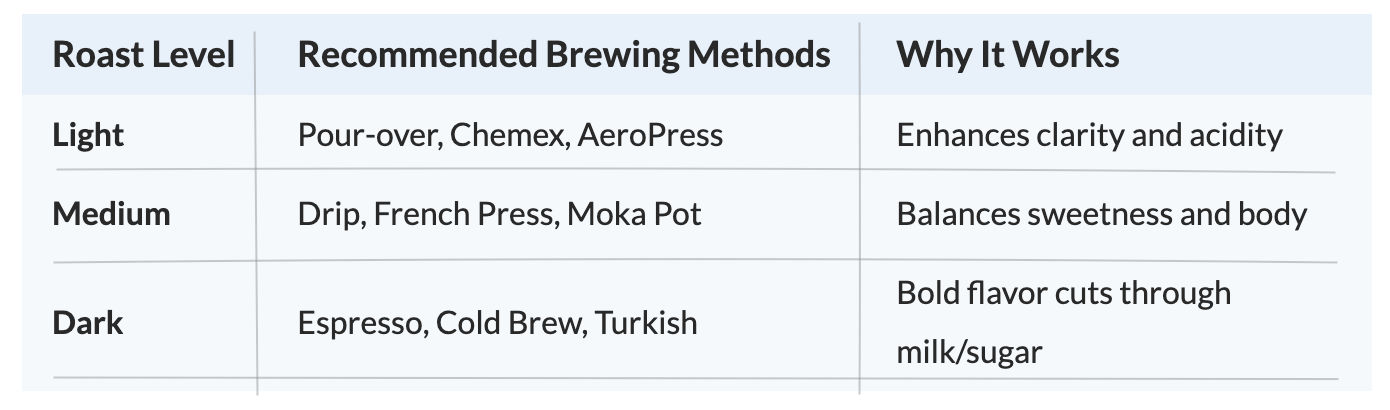
Brewing temperature, grind size, and extraction time all matter. Light roasts typically need a slightly higher brew temp (200–205°F), while dark roasts may benefit from a cooler brew for smoother extraction.
Health Effects by Roast Level
Coffee’s impact on health can vary slightly by roast:
- Acidity: Light roasts have higher perceived acidity, which may affect sensitive stomachs.
- Antioxidants: Both light and medium roasts retain more chlorogenic acid, a key antioxidant.
- Caffeine: Light roasts contain more caffeine per gram, but the difference is small unless measured precisely.
Ultimately, health differences are minimal and vary more by brewing style and quantity than roast level.
How to Choose the Right Roast for You?
Finding your ideal roast comes down to taste preference and brewing habits.
- Prefer bright, fruity coffee? → Try light roast.
- Want balance and sweetness? → Medium roast is for you.
- Crave boldness and low acidity? → Choose dark roast.
If you’re new to coffee or switching from store-bought blends, start with a medium roast sampler. Then try the same origin in light and dark roasts to understand how roasting coffee transforms flavor.
How Roast Affects Storage & Freshness?
Roast level also impacts how coffee should be stored:
- Light roasts degas slower and maintain freshness longer.
- Dark roasts degas quickly and become stale faster due to oil exposure.
To preserve flavor:
- Store in opaque, airtight containers.
- Keep away from light, moisture, and heat.
- Consume within 2–3 weeks of roasting for peak flavor.
Common Roast Problems & How to Fix Them
- Underdeveloped Roast (light): Sour, grassy flavor. Solution: extend roast time slightly.
- Scorched Dark Roast: Bitter, ashy. Solution: lower heat or shorten development time.
- Uneven Roast: Inconsistent color = poor heat distribution. Try a smaller batch size or better agitation during roasting.
If home roasting, keep a roast log: record time, temp, and taste results for consistency.
ConclusionLight, medium, and dark roasts are more than just shades of brown—they represent a spectrum of flavors, experiences, and brewing possibilities. Understanding how roast level affects coffee’s aroma, taste, and body helps you choose the perfect bean for your cup. Whether you're exploring pour-over with a bright light roast or pulling espresso with a bold dark roast, the right roast level makes all the difference. |
Frequently Asked Questions
Is dark roast coffee stronger than light roast?
In flavor, yes. In caffeine, no. Light roasts typically have slightly more caffeine by weight, though the difference is small.
Which roast is best for espresso?
Medium-dark to dark roasts are preferred for espresso because they extract bold flavors and crema.
Is French roast the darkest roast?
French roast is among the darkest, just before Italian. It features oily beans with smoky, charred flavor.
Can I roast coffee at home?
Yes! You can roast beans using a skillet, oven, popcorn popper, or a dedicated home roaster.
How long does roasted coffee stay fresh?
Up to 2–3 weeks after roasting. Light roasts may stay fresh slightly longer than dark.