In today’s ever-evolving skincare world, light-based treatments have emerged as a revolutionary way to rejuvenate and transform your complexion. From Hollywood-inspired red light therapy to versatile LED masks, these devices promise everything from wrinkle reduction and collagen boosting to acne control and improved tone. Yet, the question remains: Which mask is right for your skin?
In this definitive guide, we’re peeling back the layers—merging deep scientific insights with engaging storytelling—to help you navigate the dazzling array of options. Whether you’re chasing a youthful glow, battling stubborn breakouts, or simply curious about the latest trends, read on to discover which device best aligns with your unique skin needs in 2026 and beyond.
Understanding the Terminology: Are They the Same?
Before diving into the science and specifics, let’s clarify the terminology:
- Red Light Therapy Mask: A device that uses specific red light wavelengths (typically 620–750 nm) and often near-infrared light (around 830 nm) to stimulate collagen production, reduce inflammation, and promote healing. Think of it as a focused, targeted tool for anti-aging and skin repair.
- LED Mask: A broader term referring to masks that utilize light-emitting diodes (LEDs) to deliver multiple wavelengths. An LED mask may include red light—but it can also offer blue, green, yellow (amber), and even near-infrared options, addressing diverse concerns from acne to pigmentation.
Key takeaway: All red light therapy masks are LED masks, but not every LED mask is solely dedicated to red light therapy. One is a specialist, and the other is a versatile multitasker. |
The Science Behind the Glow
Both red light therapy and LED masks operate on the photobiomodulation principle—using specific light wavelengths to trigger cellular processes. Here’s how each works its magic:
Red Light Therapy Masks
- Wavelengths: Primarily red (620–750 nm) and near-infrared (around 830 nm).
- Mechanism: These wavelengths penetrate deep into the dermis, stimulating fibroblasts to boost collagen and elastin production. They also help reduce inflammation and improve blood flow, which can lead to smoother, firmer skin.
- Best For: Anti-aging, soothing redness, reducing fine lines, and enhancing skin repair.
LED Masks (Multi-Wavelength Devices)
- Wavelengths & Their Functions:
- Red (620–750 nm): Mirrors the benefits of red light therapy.
- Blue (405–420 nm): Targets acne-causing bacteria and helps regulate oil production.
- Green (515–530 nm): Calms hyperpigmentation and evens skin tone.
- Yellow/Amber (570–590 nm): Soothes sensitive skin and boosts circulation.
- Near-Infrared (830 nm): Works deeper to aid tissue repair and firmness.
- Mechanism: By offering a spectrum of light, these masks provide a customizable approach to target multiple skin concerns in one session.
- Best For: Those juggling acne, pigmentation issues, and overall skin health, thanks to their versatility.
Key Differences at a Glance
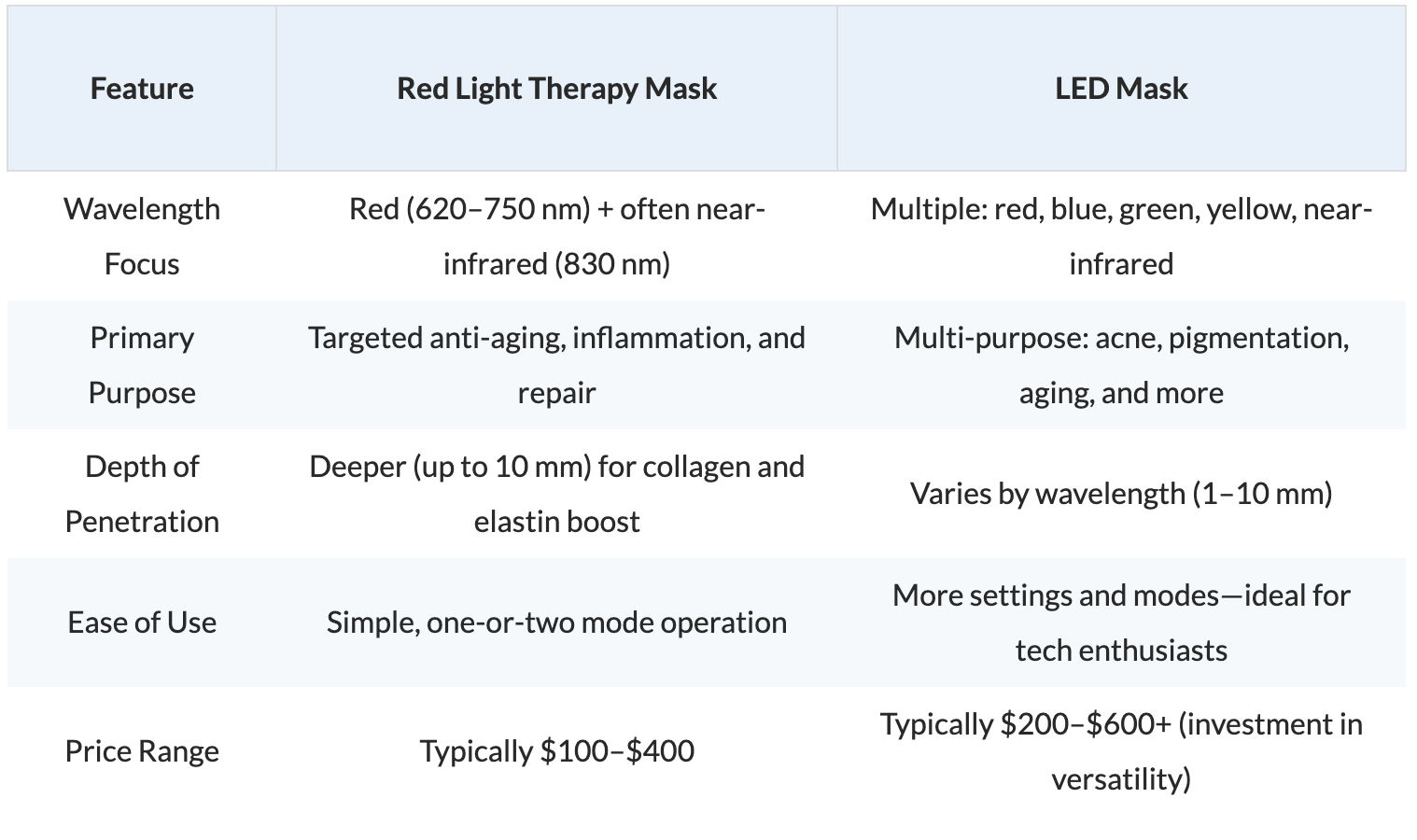
Real-World Results: What to Expect
Neither mask works like a magic wand; consistency is key. Here's a general timeline for glowing results:
- Red Light Therapy Mask:
Results: Smoother texture, reduced redness, and enhanced firmness.
Timeline: Noticeable changes in 8–12 weeks with 3–5 sessions per week (10–20 minutes each). - LED Mask:
Results: Multi-mode benefits with blue light reducing acne in 4–6 weeks, while red and green modes improve texture and tone over 10–12 weeks.
Timeline: Varies by mode and individual skin concerns.
| Pro Tip: To amplify the effects, combine either treatment with a robust skincare routine—cleanser, hydrating serum, and SPF. |
How to Choose: Tailoring Your Glow-Up Game Plan
Consider a Red Light Therapy Mask If…
- Your Concerns: Aging, fine lines, sagging, or persistent redness.
- Your Goal: Deep tissue rejuvenation with minimal fuss.
- Top Pick Example: Omnilux Contour Face—It is known for its 633 nm red and 830 nm near-infrared wavelengths, is FDA-cleared, and is dermatologist-recommended.
- Usage: It is ideal for a consistent routine of 10–20 minutes per session, 3–5 times weekly.
Consider an LED Mask If…
- Your Concerns: A combination of acne, pigmentation issues, and aging.
- Your Goal: Versatility and the ability to customize your treatment.
- Top Pick Example: Dr. Dennis Gross DRx SpectraLite FaceWare Pro – Offers red, blue, and even purple modes for a comprehensive approach.
- Usage: Perfect for experimenting with settings to match evolving skin needs.
Additional Factors:
- Budget: Red light therapy masks are often less expensive than multi‑mode LED devices.
- Time Commitment: Consider how much time you can dedicate to a daily skincare ritual.
- Device Comfort & Design: Look for ergonomic designs (e.g., flexible silicone molds) that ensure a snug fit and maximum comfort during use.
The 2026 Edge: Trends & Innovations
As we look ahead, both red light therapy and LED masks are set to become even more sophisticated:
- Smart Integration: Many devices now feature app-controlled settings, allowing you to track usage, adjust intensities, and personalize treatments.
- Hybrid Features: Some new models combine light therapy with vibration or microcurrent technology for an enhanced spa-like experience.
- Enhanced Safety: Look for FDA-cleared devices with high irradiance (30 mW/cm² or more) to ensure you’re getting effective and safe treatment.
These advancements boost efficacy and make the at-home skincare experience more interactive and personalized.
FAQ: Your Top Questions Answered
Q: How often should I use my light therapy mask?
A: For optimal results, use your mask 3–5 times a week, lasting 10–20 minutes each session. Consistency is key to seeing improvements.
Q: Can I use both a red light therapy mask and an LED mask together?
A: While some users alternate between treatments, it is best to choose one that aligns with your primary skin concern. Consult with a dermatologist if you plan on combining protocols.
Q: Are these masks safe for all skin types?
A: Yes—when used as directed. However, if you have sensitive skin or are on photosensitizing medication, seek advice from a skincare professional before starting treatment.
Q: How soon will I see results?
A: Results vary, but most users notice skin texture and tone improvements within 4–12 weeks of regular use.
Q: Do I need to wear eye protection?
A: Many devices come with built-in eye shields. Always follow manufacturer guidelines to protect your eyes during treatment.
Final ThoughtsBoth red light therapy and LED masks offer powerful benefits, but the “best” choice comes down to your individual skin needs. A red light therapy mask may be ideal if your priority is targeted anti-aging and repair. If you're managing multiple concerns—from acne to pigmentation—an LED mask's versatility could be the key to unlocking your skin's potential. |
Disclaimer
The information provided in this article is intended for general informational purposes only and should not be taken as professional medical advice. While every effort has been made to ensure the accuracy of the content on red light therapy masks and LED masks, individual results may vary. Always consult with a qualified healthcare provider or dermatologist before beginning any new skincare regimen or using any new device, especially if you have underlying health conditions or are on medications that may affect your skin's sensitivity. The opinions expressed here do not necessarily reflect those of affiliated brands or organizations, and neither the authors nor the website accept any responsibility for any adverse effects or outcomes resulting from the use of the products discussed.