
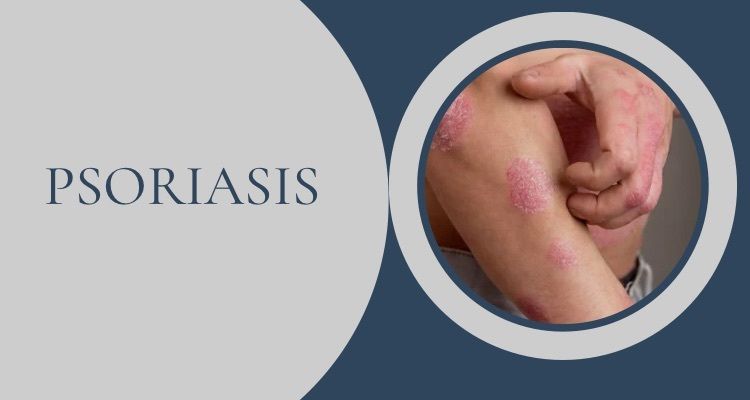
Psoriasis is one of the most common skin conditions, specifically in the colder parts of the world.
We have asked dermatologist Prof. Dr. Mustafa Ozdemir some of the most common questions about living with psoriasis. Here are his answers for you:
1. What is psoriasis?
Psoriasis, called Psoriasis Vulgaris in the medical literature, is a chronic skin disease characterized by thickening and scaling of the skin, the cause of which our genetic and immune systems play a role.
2. What causes psoriasis?
The exact cause of psoriasis is unknown, but many factors can cause the disease. The earlier the disease begins, the greater the familial tendency. The change in our immune system, the reason for which we do not know, causes the overproduction of skin cells. Certain factors cause psoriasis to aggravate. Among these, the application of trauma that will cause skin irritation, psychological stresses, infections, some drugs, alcohol, and smoking are important factors.
3. What are the symptoms of psoriasis?
Psoriasis takes its name from the psoriasis-like color of the scales on the lesions due to the disease. Unlike adults, psoriasis lesions in children are usually more itchy, thin, soft, and scaly. Small oval water drop-like lesions that are widely located on the body are more common in children. In infancy, the disease may start in the diaper area and be mistakenly diagnosed as a diaper rash for a long time. Psoriasis should be considered, especially in cases that do not respond to classical diaper rash treatment. In adults, especially the scalp, knees, and elbows are the starting areas of the disease. In addition, diffuse body involvement, pustular form, joint involvement, and palm and sole involvement are more common in adults than children.
Classical psoriasis lesions with psoriasis-like scales appear only as red, reddish areas in folds such as the armpits and groin. Psoriasis can cause shape and discoloration by involving nails as well as skin and joints, and sometimes it can be the only finding of psoriasis.
4. Are there different types of psoriasis?
There are different types of psoriasis according to the lesion types and the regions where they are located. It has various forms, such as the form involving the palms and soles, Guttate psoriasis, which is usually seen in children, pustular psoriasis with pus-like pimple-like lesions, erythrodermic psoriasis that causes redness throughout the body, psoriatic arthritis when it affects the joints.
5. Who is prone to psoriasis?
Psoriasis is seen in 1-2% of society. While it is more common in cold climates, it is less common in the equatorial belt. The familial tendency is generally high in those who begin early. It usually starts before the age of 40.
6. What are the treatments for psoriasis?
Since the cause of psoriasis is not known precisely, a full curative treatment still needs to be available today. However, there are a wide variety of treatment methods that significantly improve the patient's quality of life. Treatment methods vary considerably according to the patient's age, gender, type of disease, area of involvement, and prevalence.
In the treatment of psoriasis, topical agents are applied to the surface of the skin; systemic agents are administered in the form of oral tablets or into the skin/muscle; phototherapy, known as artificial sunlight therapy, and biological agents are used. Biological agents are the latest drugs developed in the treatment of psoriasis. They are often used in case of resistance to other treatments. These treatment methods can be used alone or in combination. In addition, natural water resources (such as Kangal fish spas) and various herbal treatments are used as alternative treatments in the treatment of psoriasis. In order to protect the health of the patient, it is of great importance that these alternative treatment methods are performed under the supervision of a doctor.
Psoriasis patients should know that no treatment method will completely eliminate the disease from the body, no matter what treatment method is used. Patients who fall into the hands of people or institutions that promise to comprehensively treat patients with various medical or paramedical methods, whose content and how they are treated are not clear, may endanger their lives due to damage in many organs such as the liver and kidney, depending on the methods applied, as well as financial losses.
7. What should people know about psoriasis facial products?
In particular, facial care products that will not irritate the skin should be preferred. Facial care products containing acids such as retinoic acid, salicylic acid, and lactic acid should be used under the supervision of a doctor.
8. What should people avoid when buying products for psoriasis?
Psoriasis is a serious disease. You can only buy and use free products for moisturizing purposes. Do not buy any product on your own or with the advice of a non-doctor without the advice of a doctor.
9. What should people pay attention to in products for facial psoriasis?
Products containing cortisone should be avoided. Products containing cortisone can cause skin thinning, acne, and hair growth in long-term use. In face cleaning products, products suitable for sensitive skin should be taken, and moisturizers should be used regularly. Anti-aging creams, especially those containing acidic products, should be used under the advice and supervision of a doctor, as they can cause skin irritation.
.






Share Your Opinion, Please