

When selecting the perfect pair of sunglasses, it's not just about style – factors like UV protection and polarization are crucial for eye health and visual comfort. Let's delve into the differences between UV protection sunglasses and polarized sunglasses to make an informed choice.
What are UV Protection Sunglasses?
1. Purpose:
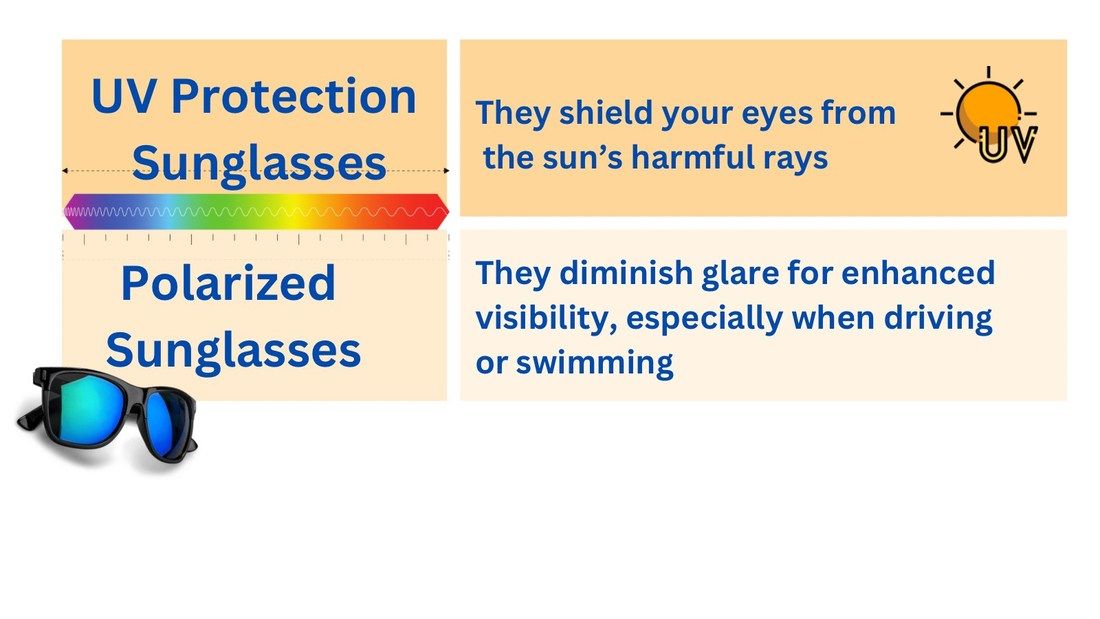
UV rays from the sun pose potential risks to our eyes and skin. UV protection in sunglasses aims to mitigate these risks.
2. Function:
Special coatings on the lenses of UV protection sunglasses filter out or block the majority of harmful ultraviolet rays, acting as a barrier between your eyes and the sun.
3. Benefits:
Long-term exposure to UV rays can lead to conditions like cataracts and macular degeneration. UV-protected sunglasses help prevent or reduce the risk of eye-related issues.
 Polarized Vs. UV Sunglasses
What are Polarized Sunglasses?
1. Purpose:
Polarized sunglasses are designed to address the nuisance of glare from surfaces like water, snow, and roads.
2. Function:
Equipped with a special polarizing filter, these sunglasses effectively block horizontally polarized light, reducing glare and enhancing overall visibility.
3. Benefits:
Ideal for activities such as driving, fishing, and skiing, polarized sunglasses significantly improve visual comfort by minimizing glare. They offer clearer vision in environments where reflected light can be a hindrance.
What is the Difference Between UV and Polarized Sunglasses?
1. Function:
UV: UV protection primarily focuses on blocking harmful UV rays and safeguarding the eyes from potential damage.
Polarized: Polarized sunglasses, on the other hand, are designed to reduce glare from reflected light, providing enhanced visual clarity.
2. Situations to Use:
UV: UV protection is essential for overall eye health and can be beneficial in various environments and conditions.
Polarized: Polarized sunglasses excel in situations where glare reduction is paramount, making them valuable for water activities, driving, and other glare-prone scenarios.
3. Coating:
UV: UV protection is often achieved through specialized coatings on the lenses that block or absorb UV rays.
Polarized: Polarized sunglasses feature a polarizing film that selectively filters horizontally polarized light to reduce glare.
What are the best UV sunglasses?
The best UV sunglasses offer 100% protection against both UVA and UVB rays, ensuring your eyes are fully shielded from harmful sun exposure. Look for polarized lenses to reduce glare, and opt for wraparound frames for maximum coverage. Quality brands like Ray-Ban, Oakley, and Maui Jim are popular choices for superior UV protection.
Conclusion,
In the market, many sunglasses offer a comprehensive solution by combining both UV protection and polarization. When selecting sunglasses, consider your specific needs, preferences, and the intended use. Striking a balance between eye health and visual comfort ensures you make a well-informed and stylish choice for your next pair of shades.




Share Your Opinion, Please