Did you know that your skin is the largest organ of your body, playing a crucial role in your overall health? It not only acts as a protective barrier against infections and harmful ultraviolet (UV) radiation but also helps regulate body temperature, eliminate waste through perspiration, synthesize vitamin D, and store essential water and fat reserves.
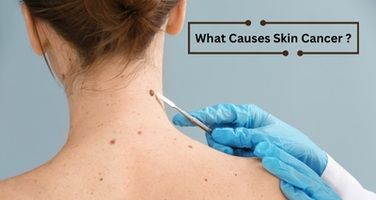
Despite its protective functions, the skin can be vulnerable to cancer. Over the past 40 years, changes in our exposure habits to both natural and artificial UV radiation have significantly increased the risk of developing skin cancer. In fact, skin cancer is the most common type of cancer in the United States, with over 5 million cases diagnosed annually. This type of cancer, primarily caused by UV exposure, is now a major health concern. Besides UV radiation, other factors like genetic predisposition and certain environmental exposures can also contribute to the risk.
What are the types of skin cancer?
There are several types of skin cancer, each with its own characteristics and levels of severity. The two most common types are:
Carcinomas:
Carcinomas are the most common skin cancers. They generally occur after the age of 50, on exposed areas of the body (face, neck, shoulders, forearms, legs, etc.). They are most often due to excessive and chronic sun exposure.
Carcinomas are easily curable in the majority of cases. However, some of them, called “squamous cell carcinomas”, can cause distant lesions (metastases) if they are not removed in time. Therefore, a wound that does not heal or a pimple/scab that persists and/or changes should lead you to seek medical advice.
Basal Cell Carcinoma (BCC):
- Description: BCC is the most common form of skin cancer, accounting for about 80% of all skin cancer cases.
- Appearance: It often appears as a waxy bump, a flat lesion, or a scar-like area that might be flesh-colored or brown.
- Growth: BCC grows slowly and rarely spreads (metastasizes) to other parts of the body.
- Risk Factors: Mainly caused by long-term exposure to UV radiation from sunlight.
Squamous Cell Carcinoma (SCC):
- Description: SCC is the second most common type of skin cancer.
- Appearance: It usually appears as a firm, red nodule or a flat lesion with a scaly, crusted surface.
- Growth: SCC can grow more rapidly than BCC and may spread to other parts of the body if not treated.
- Risk Factors: Also primarily caused by UV exposure, but can also develop from long-term exposure to carcinogenic chemicals or radiation.
Melanoma:
- Description: Melanoma is much rarer than carcinoma but it is the most serious of skin cancers, due to its high metastatic potential, that is to say its ability to spread quickly to other parts of the body. The increase in the number of cutaneous melanomas since the 1980s is the consequence of increasing exposure to ultraviolet (UV) radiation. Melanoma can be located anywhere on the body, including the scalp.
- Appearance: It often starts as a change in an existing mole or as a new, unusual growth. Melanomas can be brown, black, pink, red, purple, blue, or white.
- Growth: Melanoma can grow quickly and become life-threatening if not caught early.
- Risk Factors: Risk factors include intense, intermittent sun exposure (often leading to sunburn), having many moles, fair skin, a family history of melanoma, and genetic predisposition.
Other, less common types of skin cancer include:
Merkel Cell Carcinoma (MCC):
- Description: MCC is a rare and aggressive form of skin cancer that develops in the Merkel cells located in the skin’s top layer.
- Appearance: It appears as a firm, painless nodule on the skin, often red, purple, or blue.
- Risk Factors: Includes UV exposure, a weakened immune system, and being over 50 years old.
Kaposi Sarcoma:
- Description: This cancer develops in the cells that line lymph or blood vessels and often appears as red or purple patches on the skin or mucous membranes.
- Risk Factors: More common in people with weakened immune systems, such as those with HIV/AIDS, or those taking immune-suppressing drugs.
Understanding these different types of skin cancer can help in recognizing early signs and seeking timely treatment.
Is skin cancer preventable?
While not all cases of skin cancer are completely preventable, many risk factors can be significantly reduced with proactive measures. Here are some strategies to help prevent skin cancer:
1. Limit UV Exposure:
- Avoid Peak Sun Hours: Stay out of the sun between 10 a.m. and 4 p.m., when UV rays are strongest.
- Seek Shade: Use umbrellas, trees, or other forms of shade when outdoors.
- Avoid Tanning Beds: Tanning beds expose you to harmful UV radiation.
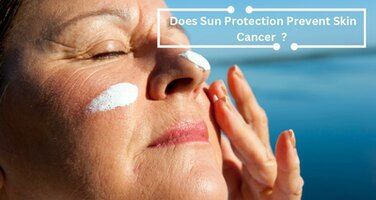
2. Use Sun Protection:
- Wear Sunscreen: Apply a broad-spectrum sunscreen with an SPF of at least 30. Reapply every two hours, or more often if swimming or sweating.
- Protective Clothing: Wear long-sleeved shirts, long pants, and wide-brimmed hats. Clothes with UV protection are also available.
- UV Sunglasses: Protect your eyes and the sensitive skin around them with sunglasses that block 100% of UV rays.
3. Regular Skin Examinations:
- Self-Exams: Regularly check your skin for new growths, changes in existing moles, or any unusual changes. The "ABCDE" rule can help you identify signs of melanoma: Asymmetry, Border irregularity, Color variation, Diameter larger than 6mm, and Evolving size, shape, or color.
- Professional Exams: Have your skin checked by a dermatologist annually or more frequently if you are at higher risk.
4. Be Informed About Risk Factors:
- Family History: Be aware if skin cancer runs in your family.
- Personal History: If you have had skin cancer before, you are at a higher risk for recurrence.
- Skin Type: Fair skin, light hair, and eye color, and a history of sunburns increase your risk.
5. Healthy Lifestyle Choices:
- Avoid Smoking: Smoking can increase the risk of squamous cell carcinoma.
- Healthy Diet: Eating a balanced diet rich in antioxidants can help support skin health.
By adopting these preventive measures, you can significantly reduce your risk of developing skin cancer. However, early detection remains crucial, so regular skin checks and being aware of changes in your skin are essential.
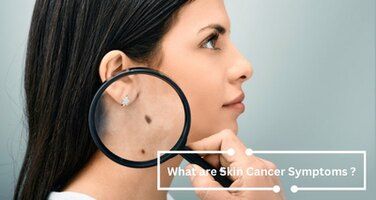
What are the symptoms of skin cancer?
Early detection of skin cancer significantly improves prognosis and treatment outcomes. Despite encouraging survival statistics, it's crucial to remain vigilant and not underestimate the potentially lethal nature of this disease.
While it’s important not to panic over every abnormality, regular self-examinations and professional check-ups are essential, especially after the age of 50. Annual consultations with a dermatologist are recommended to monitor and detect any skin abnormalities as early as possible.
Skin Cancer Symptoms to Watch For:
- Non-Healing Wounds: Small wounds or sores that do not heal.
- Nodules: Pink or red nodules on the skin.
- Scabs: Persistent scabs that do not resolve.
- Shiny Patches: Areas of skin that appear shiny.
- Spots: Brown or pink spots that appear on the skin.
- Changing Moles: Moles that change in size, shape, or color.
- Sensations: Burning or itching sensations, even without visible lesions.
It's essential to remember that cancer is a progressive anomaly and can manifest in various ways depending on the individual. Regular self-inspection involves observing and feeling your skin to understand its usual appearance and texture, including all its unique features (moles, scars, etc.). The key is to recognize what is "usual" for your skin so that any changes or abnormalities can be detected early.
In the event of noticing any abnormalities or changes, it’s important to consult a dermatologist. A professional can assess the cause of the phenomenon and determine whether it might be indicative of a cancerous pathology.
How is skin cancer diagnosed?
The diagnosis of skin cancer is usually made following a consultation with a dermatologist, motivated by the presence of a suspicious abnormality.
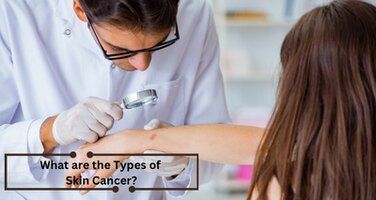
The practitioner carries out a complete visual skin examination using a dermatoscope in front of any potentially suspicious lesion, and a questionnaire seeking to collect clues about the malignant potential of the anomaly. Usually, a biopsy is performed if there is the slightest doubt. For good reason, since skin cancers are located on superficial tissues of the body, biopsy, which consists of taking cells from the suspicious lesion, is relatively easy to perform and without danger for the patient.
During the biopsy, a small piece of skin is taken to be sent to a laboratory, where it is subjected to pathological examination. A specialist, the pathologist, will then examine the cells taken under a microscope. Based on their anatomy, he can determine if they are cancerous, but also learn more about the type of cancer involved and the best way to manage it.
FAQs
How to identify skin cancer?
The skin is an organ and as such can declare cancer according to different criteria: change in appearance or color of a spot on the skin or a mole which until then did not change; injury that does not heal or where the wound reappears; red patches on rough and/or scaly skin, skin that oozes, bleeds or crusts over a sore or mole; areas without pigmentation that resemble scars; abnormal-looking masses on the skin; If you experience any of these symptoms, it is important to consult a dermatologist.
What is the diagnostic method for suspected skin cancer?
Take a sample of the suspected skin for testing (skin biopsy). Your doctor may swab the suspicious skin for laboratory testing. A biopsy helps determine if you have skin cancer and, if so, what type of skin cancer you have.
Is skin cancer hereditary?
To the extent that skin cancer is largely linked to the quality of the skin, the presence of moles, the fragility of the skin, we consider that a person with a history of someone who has declared skin cancer, will be 2 to 3 times more likely to develop melanoma. Around 10% of people reporting skin cancer have a family history.
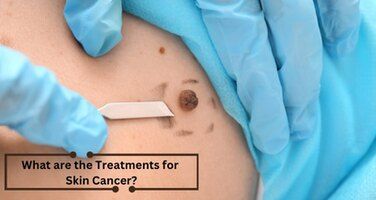
What is the most common treatment for skin cancer?
Surgery is the main treatment for most skin cancers. For patients with basal cell or squamous cell carcinomas, a dermatologist or other qualified physician can perform the procedure on an outpatient basis under local anesthesia.
What is a dermatoscope?
The dermatoscope is a portable tool allied to the dermatologist, which allows him to visualize skin lesions and any suspicious anomaly as closely as possible, to make a diagnosis as best as possible.

Sources:
- Skin Cancer Foundation: https://www.skincancer.org/
- WHO: https://www.who.int/news-room/questions-and-answers/item/radiation-ultraviolet-(uv)-radiation-and-skin-cancer?gad_source=1&gclid=CjwKCAjw1920BhA3EiwAJT3lSRGAjWI5Q6f_V6iTTl34__rP__JoW23FpV26dwd6GnyqWbQ-KxYeDRoCs5YQAvD_BwE#
- Cancer Council: https://www.cancer.org.au/cancer-information/types-of-cancer/skin-cancer