

A natural ingredient with multiple virtues, argan (or argan) oil has been used by Berber women for centuries. Very nourishing, this vegetable oil can be applied to the skin, nails, and hair. In particular, it helps maintain dense, supple and shiny hair.
So where does this oil come from exactly? What are the benefits of argan oil on hair? And how to use it?
The benefits of argan oil on hair
What is argan oil?
Argan oil comes from the kernel of the fruit of the argan tree, a tree which grows mainly in the south-west of Morocco (in the Souss plain). This is the reason why we also sometimes speak of “Moroccan oil”. The practices and know-how associated with argan oil are today registered as UNESCO Intangible Cultural Heritage.
A vegetable oil, produced in Morocco
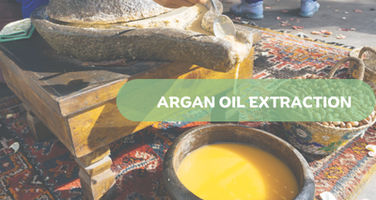
The manufacture of argan oil is an artisanal activity, traditionally reserved for Berber women (within cooperatives). Using ancestral methods, they delicately extract the almonds contained in the stone of the tree fruit. These “almonds” are crushed and transformed into a paste. This paste is then mixed and kneaded with lukewarm water to obtain an oil: argan oil.
If the almonds are roasted before use, the argan oil is intended for food use. Very nutritious, it can be recognized by its dark color and its nutty taste. When the almonds are not roasted, argan oil is used for cosmetic or therapeutic purposes. Lighter, it can be applied to the skin, nails, and hair.
An oil with many benefits
Also nicknamed “liquid gold”, this prized oil has multiple nutritional qualities and numerous therapeutic and cosmetic properties. Argan oil contains several components with many benefits: essential fatty acids (omega 6 and 9), vitamin E (tocopherols), vitamin A and antioxidants.
Today, there are argan oils of different qualities on the market. To be sure you are using the best possible product, you must first turn to a cold-pressed, unrefined vegetable argan oil. For the oil to retain all its virtues, its extraction must be carried out using mechanical millstones with low rotation: this prevents the temperature from exceeding 60°C.
Argan oil should also be stored in a tinted glass bottle, undeodorized and unscented. The scent of argan oil should be reminiscent of that of toasted hazelnuts and sesame (without the oil giving off too strong an odor).
What are the benefits of argan oil on hair?
Rich in fatty acids, vitamin E, and antioxidants, argan oil is known for its nourishing and regenerating properties. Deep hydration, fight against signs of aging, hair loss defense, and repair of damaged hair... The benefits of vegetable argan oil on hair are numerous.
Moisturize and protect hair
Throughout the year, hair is exposed to several external elements that can damage it. The heat of the hairdryer or curling iron, the UV rays of the sun, the dry cold and the wind, the salt water of the sea or the chlorinated water of the swimming pool, the mechanical attacks of a hairbrush unsuitable or poorly made shampoo, the application of chemical treatments (coloring, straightening, bleaching)... Frequent and repeated, all these small attacks can degrade the keratin and the hydrolipidic film which protect the hair and regulate its hydration. Dehydrated, hair becomes dull, dry, and frothy.
Rich in fatty acids, argan oil is an ideal treatment to rehydrate and strengthen the hair against these external attacks. It can in fact be used as a preventative measure, to coat the hair and limit the impact of external agents on the hair fiber (especially for naturally dry and dehydrated hair). Applied after exposure to the sun, argan oil also helps repair damaged and split ends.
Nourish hair deeply and redefine curls
To remain supple, shiny, and easy to comb, hair also needs nutrition (in addition to good hydration). Produced by the scalp, it is sebum which ensures the protection of the hair fiber. This fatty substance coats the hair and protects it against various daily attacks. If sebum is not produced in sufficient quantity and the hair lacks nutrition, it becomes dry, dull, and rough. Lengths become brittle and split ends.
Argan oil deeply nourishes and regenerates hair, from roots to ends. It acts at the heart of the hair fiber. Applied regularly, it keeps hair soft and silky, shiny, and easy to comb.
Argan oil also helps to better structure hair curls. Because of its shape and texture, curly, frizzy or kinky hair generally has naturally raised and more open cuticles than straight hair. More porous, curly hair regulates its hydration less well and reacts more easily to humidity (with the appearance of characteristic “frizz”). By combating this lack of hydration, argan oil helps soften and reshape the curls of wavy, curly or frizzy hair.
Restore strength and vitality to hair
In addition to its moisturizing and nourishing properties, argan oil is also known for its revitalizing action on the hair bulb. It helps strengthen the hair fiber and restore volume and strength to dull and tired hair.
Applied with a gentle massage on the scalp (using light circular movements), it helps stimulate blood microcirculation, cell renewal, and keratin production. The main component of hair, this fibrous protein ensures the structure, strength, and elasticity of the hair. This type of treatment helps promote hair growth and slow down hair loss.
Argan oil can finally be used to revive the shine of colored or highlighted hair.
How to use argan oil on hair
How to use it?
Moisturizing, nourishing, and repairing... The benefits of argan oil on hair are numerous. But how to use this precious oil? When and how to put argan oil on your hair? And how to use argan oil to rehydrate dry hair?
Before shampoo
Argan oil can be applied to the hair a few minutes before shampooing, to repair brittle and split ends. A few drops of oil are applied to the entire length of the hair, strand by strand.
After a few minutes of application, simply use a classic shampoo (preferably gentle, to preserve the hair's hydrolipidic film). The hair should finally be rinsed with lukewarm water. This type of treatment can be performed once or twice a week.
For supple and shiny hair every day, it is also possible to simply add a few drops of argan oil to your usual shampoo.
In mask
To provide maximum benefits to the hair, argan oil can also be used as a mask. This type of treatment deeply repairs malnourished hair, regenerates its lipid barrier and protects it against external aggressions.
Used as a mask, argan oil must be applied strand by strand, from the roots to the ends of the hair. After a deep scalp massage, the hair should be wrapped in a warm damp towel. The argan oil mask can be left in place for about an hour, or overnight (for even more benefits on the hair). Then simply wash and rinse your hair well (using a mild, sulfate- and paraben-free shampoo). It may sometimes be necessary to shampoo twice in a row.
As a conditioner
Argan oil can also be applied to the hair after shampooing, to make it shinier and easier to comb (detangling action). Simply pour a few drops of oil into your hands (be careful not to use too much), then gently comb damp hair with your fingers. The oil should be distributed evenly throughout the hair.
To benefit from its nourishing and repairing benefits on the hair, it is also possible to use argan oil just after exposure to the sun (or a bath in salt or chlorinated water). To do this, simply apply a few drops of oil to the entire hair, then comb or brush the hair to distribute it evenly along the lengths.
For oily hair, it is best to use jojoba oil. Argan oil can indeed tend to weigh them down.
Other uses of argan oil
Known for its many benefits on hair, argan oil can also be used on other parts of the body:
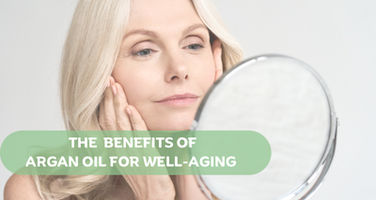
- On the skin: it deeply hydrates the skin of the face and body. Rich in antioxidants, it is also an effective anti-aging treatment. It helps fight the signs of skin aging and improves the elasticity of the skin;
- On fingernails and toenails: argan oil helps to tone and deeply nourish nails.
Is argan oil good for your hair?
Yes, argan oil is excellent for hair care. It's rich in essential fatty acids, antioxidants, and vitamin E, providing nourishment to the hair. Argan oil can help moisturize and condition the hair, reduce frizz, add shine, and improve overall hair health.
Do I put argan oil on wet or dry hair?
Argan oil can be applied to both wet and dry hair, but each method serves a different purpose. Applying argan oil to damp or wet hair helps lock in moisture and can enhance the effectiveness of other hair products. On dry hair, it can be used as a finishing touch to tame frizz and add shine. Experiment with both to see which method works best for your hair type and styling preferences.
How often should I use argan oil on my hair?
The frequency of argan oil use depends on your hair type and its specific needs. For most people, using argan oil 2-3 times a week is a good starting point. However, if you have very dry or damaged hair, you may use it more frequently. It's essential not to overdo it, as using too much oil can make the hair greasy.
Who should not use argan oil on hair?
Argan oil is generally safe for most hair types, but individuals with oily hair may want to use it more sparingly to avoid excessive oiliness. If you have allergies to nuts, it's crucial to check for any adverse reactions when using argan oil, as it is derived from the nuts of the argan tree. As with any new hair product, a patch test is advisable, especially for those with sensitive skin or allergies.
Always remember to use a small amount of argan oil initially and adjust the quantity based on your hair's response. If you have specific concerns about your hair or scalp, consulting with a hair care professional or dermatologist can provide personalized advice.




Share Your Opinion, Please