When you’re paying a premium for Manuka honey, understanding the difference between monofloral and multifloral Manuka Honey types is essential. Both types meet the Ministry for Primary Industries (MPI) standards, but differ in purity, potency, and intended use. Here’s what you need to know before you buy.
What Does Monofloral and Multifloral Manuka Honey Mean?
Monofloral Manuka honey is derived predominantly from the nectar of one flower, belonging to the Leptospermum scoparium (mānuka tree). It must pass specific chemical and DNA marker tests to qualify.
Multifloral Manuka honey also contains native botanic diversity but includes nectar from multiple floral sources. It passes MPI standards but doesn't reach the higher purity thresholds required for monofloral designation.
Standards & Authenticity
The Ministry for Primary Industries (MPI) standard requires five key markers—four chemical markers and one DNA indicator—to confirm authenticity. Both monofloral and multifloral Mānuka must meet these criteria, but monofloral honey must exceed thresholds in two of them.
Potency, Health Benefits & Grading
- MGO Levels: Monofloral Mānuka consistently delivers higher methylglyoxal levels, responsible for its potent antibacterial effects.
- UMF Rating: The Unique Mānuka Factor is only applied to monofloral Mānuka and reflects strength, purity, and authenticity. If you see UMF labeling, it’s definitely monofloral.
Flavor, Texture & Sensory Profile
Monofloral Mānuka tends to taste rich, earthy, slightly bitter, and has a dense, creamy texture. On the other hand, Multifloral Mānuka offers a softer, smoother flavor with complex floral notes, versatile in culinary uses.
Production, Sourcing & Environmental Factors
Monofloral Mānuka is often harvested from remote regions dominated by mānuka blooms, requiring careful hive placement and seasonal timing. Multifloral varieties, on the contrary, result when bees forage more broadly or when honey is blended post-harvest.
Price & Value Considerations
Due to its higher purity and testing requirements, monofloral Mānuka commands a premium price. Multifloral is a more budget-friendly option with still valuable bioactive properties.
Which Should You Choose? Monofloral or Multifloral
For strong therapeutic use, choose monofloral Mānuka with high UMF (e.g., 15+). For everyday culinary or mild wellness use, multifloral Mānuka offers subtle benefits and better value. Look for MPI certification, UMF licensing, or MGO rating to ensure authenticity.
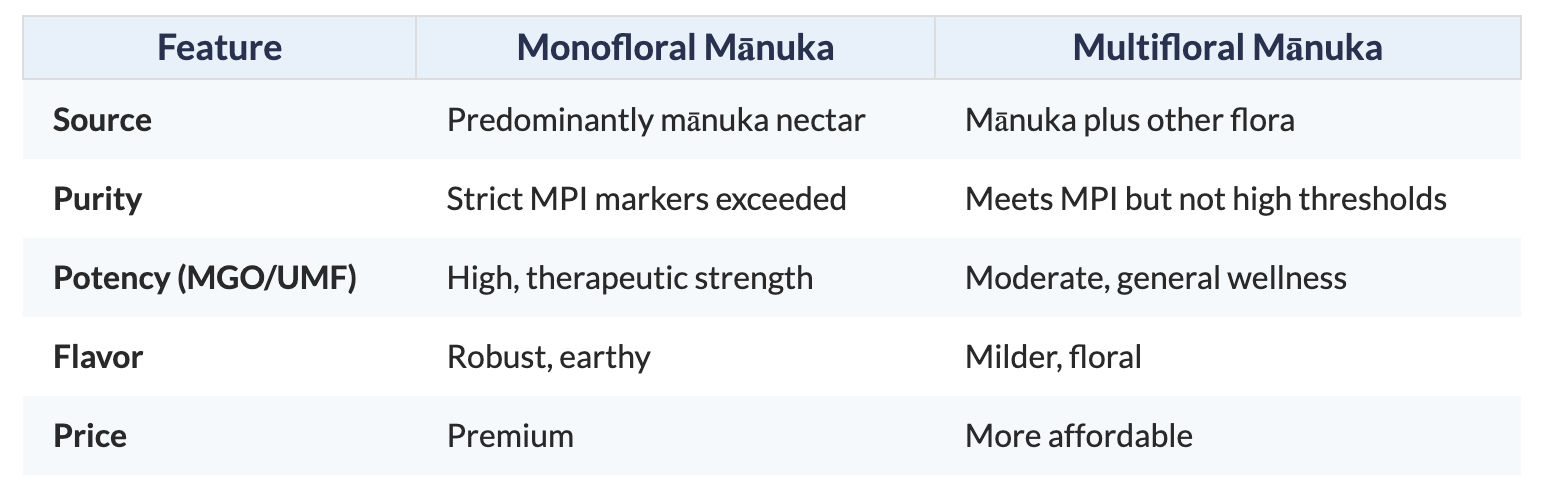
Comparison Table:
Monofloral vs. Multifloral Manuka
ConclusionThe choice between monofloral and multifloral Mānuka depends on your goals—whether therapeutic potency or everyday enjoyment. Understanding the MPI standards, UMF ratings, and MGO levels ensures a confident, informed purchase. Choose wisely, and savor the true essence of Mānuka honey. |