Mānuka honey isn’t just another jar on the shelf—it’s graded for potency, purity, and purpose. Choosing between UMF 10+, 15+, or 20+ can feel confusing, but the number directly impacts what the honey can do for your health, skin, or immune system. This guide breaks it all down.
Understanding UMF in Manuka Honey: What the Numbers Mean
UMF (Unique Mānuka Factor) is an internationally recognized quality certification that measures the concentration of three key markers:
- MGO (methylglyoxal)
- DHA (dihydroxyacetone),
- Leptosperin.
These markers are responsible for Mānuka honey’s unique antibacterial and therapeutic properties.
In simple terms, the higher the UMF number, the stronger the antibacterial potency. Here's a quick reference:
- UMF 10+: Moderate potency (≈ 263+ MGO)
- UMF 15+: High potency (≈ 514+ MGO)
- UMF 20+: Very high potency (≈ 829+ MGO)
UMF 10+: Best for Daily Wellness
UMF 10+ is the ideal strength for regular consumption and general support of immune health, gut balance, and sore throat relief. It’s strong enough to offer benefits over raw honey but not overly medicinal in flavor or price.
Common uses:
- Mixing with warm lemon water
- Daily teaspoon for immunity
- Adding to smoothies or tea
UMF 15+: For Coughs, Skin, and Immune Boosting
UMF 15+ is considered “medicinal grade” and strikes a balance between potency and affordability. It’s commonly used for more acute health needs—like soothing a persistent cough, improving skin flare-ups, or boosting recovery during cold and flu season.
Common uses:
- Soothing sore throats and coughs
- Topical application on acne or eczema
- Short-term immune support
UMF 20+: Targeted Therapeutic Use
This is the highest grade generally available to consumers and is best reserved for intensive or therapeutic use. UMF 20+ offers the strongest antibacterial activity and is often chosen for:
- Wound care and skin infections
- Supporting ulcer or digestive healing
- Chronic immune issues or persistent health conditions
Due to its strength and cost, it’s typically used sparingly and under guidance from a practitioner when treating specific concerns.
How to Decide What’s Right for You?
Choosing a UMF grade depends on your purpose and budget: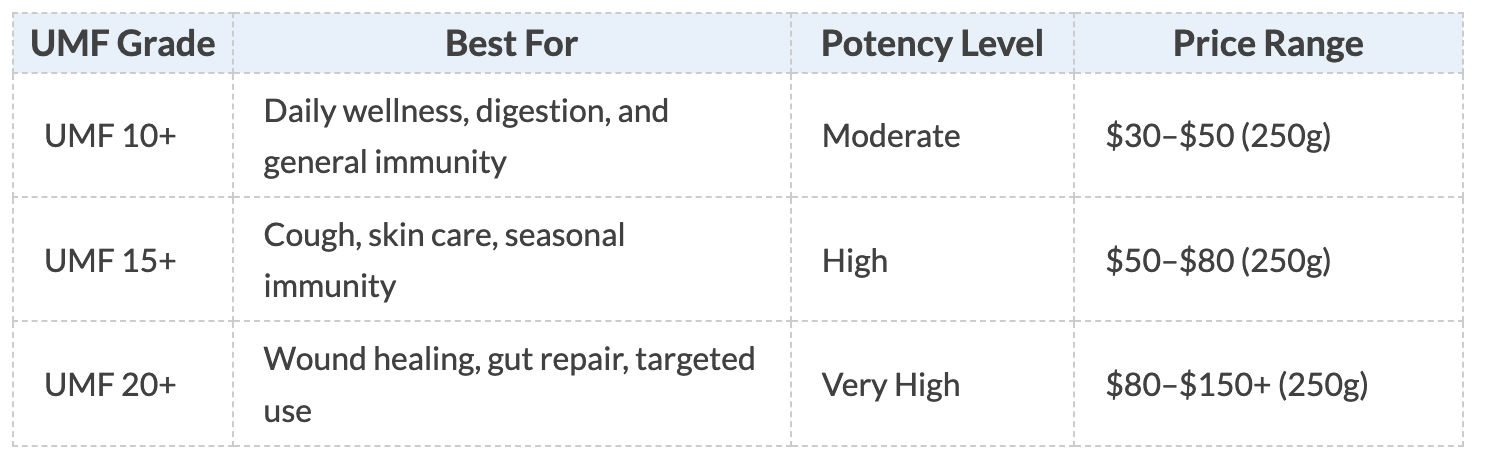
UMF vs. MGO: Know the Difference
Some brands display MGO (methylglyoxal) instead of UMF. While both indicate potency, UMF is broader—it includes MGO along with two additional bioactive compounds. If you see only “MGO 514,” that’s roughly equivalent to UMF 15+—but it lacks the full certification process of UMF.
Look for the official UMF Honey Association logo to ensure authenticity, purity, and strength. It guarantees:
- Lab-tested MGO, DHA, and Leptosperin levels
- Genuine Leptospermum scoparium (Mānuka) nectar
- No added sugars or heat damage
Final ThoughtsIf you're new to Mānuka honey, UMF 10+ is a great place to start. Those seeking stronger immune support or skin healing should consider UMF 15+. And for high-potency therapeutic needs, UMF 20+ delivers the highest benefit—but also comes at a premium price. Always choose certified brands and use Mānuka honey purposefully—not just as a sweetener, but as a functional food. |