When investing in Manuka honey, understanding its true cost means looking beyond the sticker price. Potency—measured through UMF or MGO ratings—directly influences price. This guide breaks down how much you should pay per potency level, what factors drive cost, and how to choose wisely.
Understanding Potency Measurements
UMF (Unique Manuka Factor) is a comprehensive standard that gauges antibacterial strength, combining methylglyoxal (MGO), dihydroxyacetone (DHA), and leptosperin levels. MGO rating alone measures methylglyoxal concentration (mg/kg). A commonly used conversion is:
- MGO 263 ≈ UMF 10
- MGO 514 ≈ UMF 15
Choosing between UMF and MGO depends on how deep you want to go into quality validation.
Manuka Honey Retail Pricing by Potency
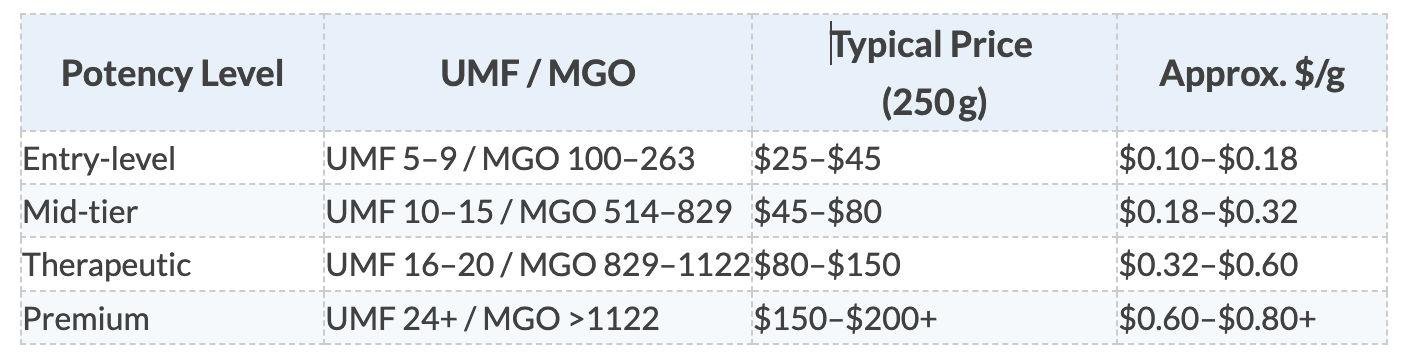
Current market prices for 250 g jars of Manuka honey vary significantly:
- UMF 5–9 / MGO 100–263: ~$25–$45
- UMF 10–15 / MGO 514–829: ~$45–$80
- UMF 16–20 / MGO 829–1122: ~$80–$150
- UMF 24+ / MGO >1122: $150–$200+
Cost-Per-Gram Insights
Using sample averages:
- UMF 10 ($60 for 250g) → $0.24/g
- UMF 15 ($90 for 250g) → $0.36/g
- UMF 20 ($130 for 250g) → $0.52/g
- UMF 24+ ($180 for 250g) → $0.72/g
Potency increases cost per gram, but precise ratios help you balance value against therapeutic goals.
Why Does Higher Potency of Manuka Honey Cost More?
- Scarcity: Limited Mānuka blooms and short flowering season.
- Harvesting complexity: Remote and seasonal apiary operations.
- Testing & certification: UMF and MPI compliance add layers of cost.
- Brand and traceability: Transparent batches come at a premium.
Pricing Comparison Table
How to Choose the Right Manuka Honey Potency for You?
Match potency to purpose:
- For everyday use, UMF 5–10 offers good value.
- For immune support or wound care, UMF 15–20 is well worth the cost.
- Reserve UMF 24+ for medical-grade needs when potency justifies the higher price.
Always verify UMF or MGO levels and choose certified brands for real value.