Honey has been used for coughs for centuries. Modern trials now show real—if modest—benefits for reducing cough frequency and improving sleep in upper-respiratory infections. This guide explains what the science says, how to dose safely for adults and children, how Manuka honey fits in, and when to see a clinician.
Across multiple randomized trials and meta-analyses, honey outperforms “usual care” or placebo for short-term cough relief in common colds, especially for night-time symptoms. Parents report better sleep for children, and adults often find an evening dose soothing. Guidelines in primary care now include honey among first-line self-care options for acute coughs in people over one year of age.
There are two key takeaways:
- Benefits include fewer and less severe coughs and better sleep over a few nights during an upper-respiratory infection.
- Honey does not treat pneumonia, asthma flares, or other serious illnesses—and it doesn’t replace antibiotics when those are clinically indicated.
Evidence quality ranges from low to moderate; effects are clinically meaningful for many families, with an excellent safety profile when used appropriately.
Dosing & timing (adults and children)
There is no official “medical dose.” Use small, sensible portions and focus on timing.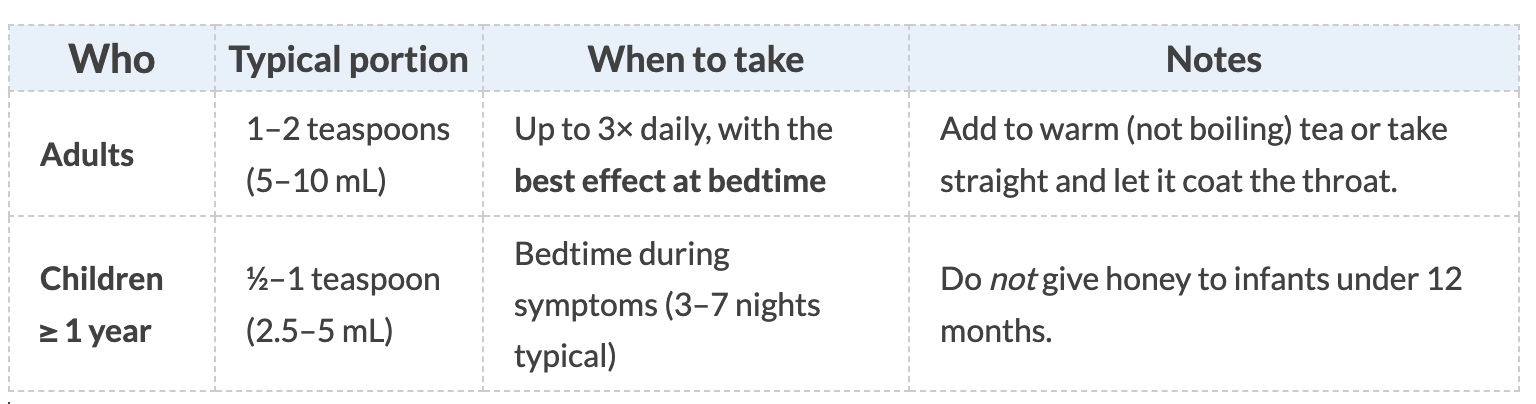
Is Manuka honey better than regular honey?
Manuka honey is unique because it contains high levels of methylglyoxal (MGO), a compound linked to non-peroxide antibacterial activity. Reputable jars carry a UMF™ grade that summarizes MGO and other markers. However, clinical cough studies and primary-care guidelines evaluate “honey” as a group and do not show that Mānuka specifically outperforms other honeys for cough relief. Think of Mānuka as a premium, standardized option—not a requirement for benefit.
Choosing a UMF/MGO strength
Pick a grade for practicality—not to justify bigger spoons:
- UMF 5–10+ — everyday soothing and value.
- UMF 10–15+ — popular middle ground during a sore throat or cold.
- UMF 20+ — high potency, usually chosen for short-term or topical goals; not necessary for most coughs.
Higher UMF means stronger activity in the jar, not fewer sugars per serving. Portion sizes stay modest.
Best ways to take honey for the throat
For night-time cough, contact time matters. Let the honey move slowly across the throat. These options are effective and simple:
- Straight from the spoon: take your portion and allow it to coat the throat; sip plain water afterward to protect teeth.
- Warm lemon-ginger infusion: brew, cool to warm, then stir honey in last.
- Tea pairing: black or green tea can be soothing; avoid boiling temperatures to preserve quality.
- Lozenges or sprays: choose reputable brands; evidence is extrapolated from liquid honey studies.
Who should avoid Manuka honey?
- Infants under 12 months: never give honey (risk of infant botulism).
- Known allergy to honey or bee products.
- Diabetes/prediabetes: manage as a fast carbohydrate; keep servings small and pair with meals.
When to see a clinician?
- Cough lasting > 3–4 weeks, or recurring
- High fever, chest pain, shortness of breath, wheeze, blood in sputum
- Dehydration, confusion, or severe lethargy
- Infants, older adults, or people with chronic disease who are getting worse
Honey is compatible with most OTC cough remedies. Do not delay urgent care for serious symptoms.
Buying tips: getting authentic Mānuka
To avoid counterfeits and get what you pay for, check for:
- The UMF™ mark with license number and an MGO value
- New Zealand origin and a batch number or QR code linking to lab tests
- Sealed packaging and a realistic price for the stated grade
Bottom lineHoney, Manuka included, can ease coughs and sore throats for short-term colds, especially at bedtime. Keep portions small, choose any quality honey you enjoy (Manuka adds standardization), and seek medical care if symptoms persist or worsen. |
FAQs
Does honey really work for coughs?
Several trials show honey reduces cough frequency and severity and improves sleep over a few nights in URTIs. It’s a reasonable first-line self-care option for people over one year old.
What dose of Manuka honey should I use?
Adults typically take 1–2 teaspoons up to a few times per day, with the best effect at bedtime. Children over one year can take ½–1 teaspoon at bedtime. Infants under one should never be given honey.
Is Manuka honey stronger for coughs?
Mānuka is more standardized for antibacterial activity (UMF/MGO), but guidelines and trials do not prove it’s superior to other honeys for cough relief. Choose it if you value standardization and taste.
Can I take honey with hot tea?
Yes—let the tea cool to warm first and stir honey in last to preserve quality. Sipping slowly increases contact time with the throat.