Manuka honey has a reputation for lasting practically forever, yet jars still carry “best-before” dates and sometimes turn thick or grainy. This guide explains what “expire” really means for honey, how Mānuka’s potency (UMF/MGO) changes with time, why crystallization happens, the safest way to return it to a silky state, and the few situations when you should throw a jar out.
Does Manuka Honey Expire? The Short Answer
No, Manuka honey doesn’t “expire” in the same way fresh foods do. Properly produced honey is naturally low in moisture, acidic, and rich in compounds that inhibit microbes. Given that it's sealed and stored well, Manuka honey remains safe for years.
What the date (Best Before) on the lid usually signals is the best flavor and declared potency, not a hard safety cutoff.
Rule of thumb: If it smells and tastes like honey, shows no signs of gas, sourness, or mold, and hasn’t been contaminated with water or food, it’s generally fine to eat—even past the best-before date. |
How long does Manuka Honey Last?
Most reputable brands print a best-before date of 2–5 years from packing. That’s a quality promise aligned with lab testing at the time of bottling. In practice, unopened jars kept cool and dark can remain pleasant much longer. Once opened, shelf life depends on how you handle the jar: clean, dry spoons; lid on; away from heat and steam.
What Shortens the Shelf Life of Manuka Honey?
- Moisture ingress (wet spoons, steam from kettles, condensation)
- High storage temperatures and direct sunlight
- Long exposure to air/oxygen (loose lids, decanting into wide containers)
What preserves Manuka Honey?
Manuka honey is preserved very well under the following conditions:
- Keep it in a cool, dark pantry (≈ 15–20 °C / 59–68 °F)
- Make sure the lid is closed promptly and tightly
- Use clean, dry utensils; no double-dipping
Manuka chemistry & potency over time (DHA/ MGO)
Manuka’s signature antibacterial strength is strongly associated with methylglyoxal (MGO), which forms naturally from dihydroxyacetone (DHA) present in fresh nectar. After harvest, DHA slowly converts to MGO. That means a jar’s MGO—and thus its labeled strength (UMF/MGO)—can increase during early storage, stabilize, and then gradually decline if kept for very long or exposed to heat.
Several quality indicators help you judge a batch:
- MGO (mg/kg): the primary potency metric printed on many labels.
- UMF™ grade: a composite system that considers MGO along with other markers (e.g., leptosperin) and freshness indicators.
- HMF & diastase: general markers of honey freshness and heat—excessive HMF suggests undesirable heating or old stock.
Because labels reflect lab results at packing, brands increasingly print batch numbers or QR codes so you can view up-to-date testing. If potency matters for your use case, choose smaller jars and rotate stock within a year or so of first opening.
Crystallization 101 and why Manuka feels different?
Crystallization is a natural process where some of the honey’s sugars (mainly glucose) form tiny crystals. It does not mean the honey is spoiled. In fact, many creamed honeys are intentionally crystallized to a fine, spreadable texture.
Manuka often feels dense, creamy, and gel-like (a property called thixotropy) rather than gritty. This texture varies by batch, storage temperature, and time. Refrigeration speeds crystal formation; moderate pantry temperatures slow it and keep crystals finer.
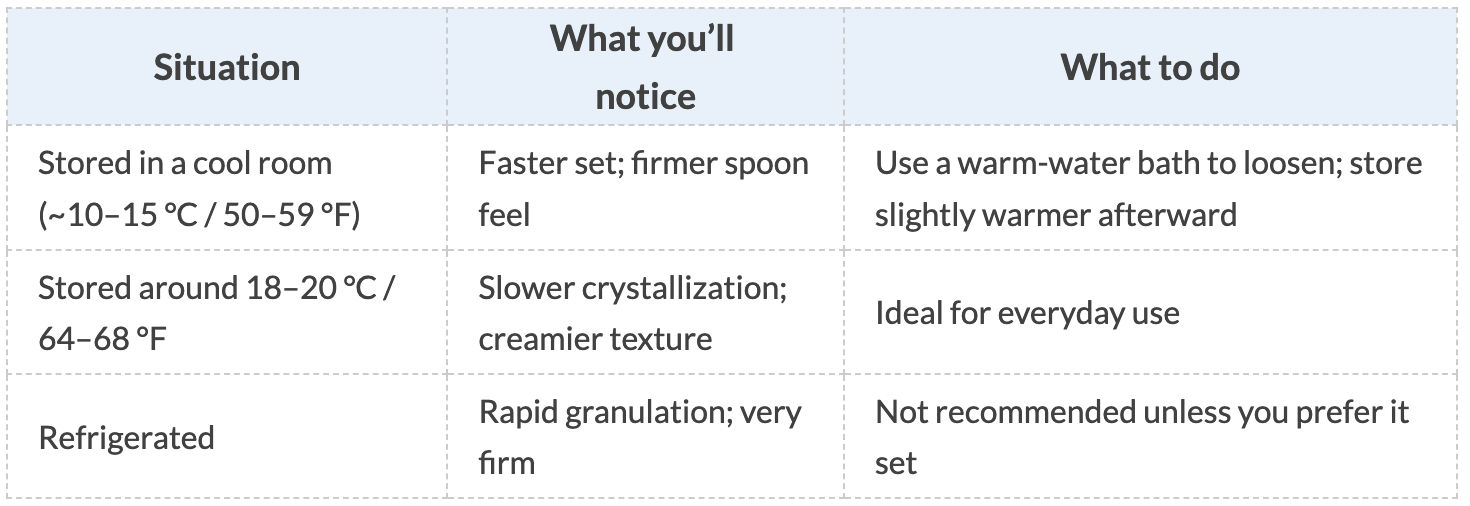
How to de-crystallize Manuka honey without damaging its quality?
The goal is to gently warm honey so the crystals dissolve, while preserving enzymes and avoiding quality loss.
Method: warm-water bath (best practice)
- Place the closed jar in a bowl or pot of warm water (about hand-hot; aim roughly 35–40 °C / 95–104 °F).
- Leave for 15–30 minutes. Swirl the jar or stir with a clean, dry spoon.
- Repeat short warming cycles if needed. Keep water comfortably warm, not scalding. (Avoid boiling water and avoid microwaving the jar.)
Other options (use with care)
- Low oven with door ajar: Place the jar in an oven-safe dish and set the oven to the lowest setting; monitor closely.
- Gentle sunlight warmth: Short periods only; don’t leave in hot direct sun or a hot car.
| Tip: To slow re-crystallization, store the jar slightly warmer after liquefying, keep the lid tight, and avoid introducing seed crystals (e.g., granules from another jar). |
Storage: Make your jar last longer
Think “cool, dark, dry.” The best place to store Manuka honey is in a pantry, away from sunlight and stovetop heat. Honey is hygroscopic—it pulls in moisture from the air—so a tight lid and dry spoon matter more than most people realize.
Do:
- Keep at ~15–20 °C (59–68 °F) if possible
- Use clean, dry utensils and close the lid promptly
- Decant small amounts for travel; keep the main jar sealed
Don’t:
- Store near ovens, kettles, or sunny windows
- Dip a wet spoon into the jar
- Microwave the whole jar (hot spots can overheat honey)
Spoilage, fermentation & when to discard
Spoilage in properly stored honey is rare, but it can happen if moisture gets in or the honey is severely overheated. Use your senses:
- Sour or alcoholic aroma, fizzing, or visible bubbles that persist: likely fermentation, it's best to discard.
- Discard if you see visible mold (uncommon, but possible if water was introduced).
- Unpleasant off-flavors after heat abuse → quality is compromised; safest to discard.
Crystallization, firmness, lighter/darker color, or a thin layer of foam from packing are not spoilage signs by themselves.
Troubleshooting quick guide
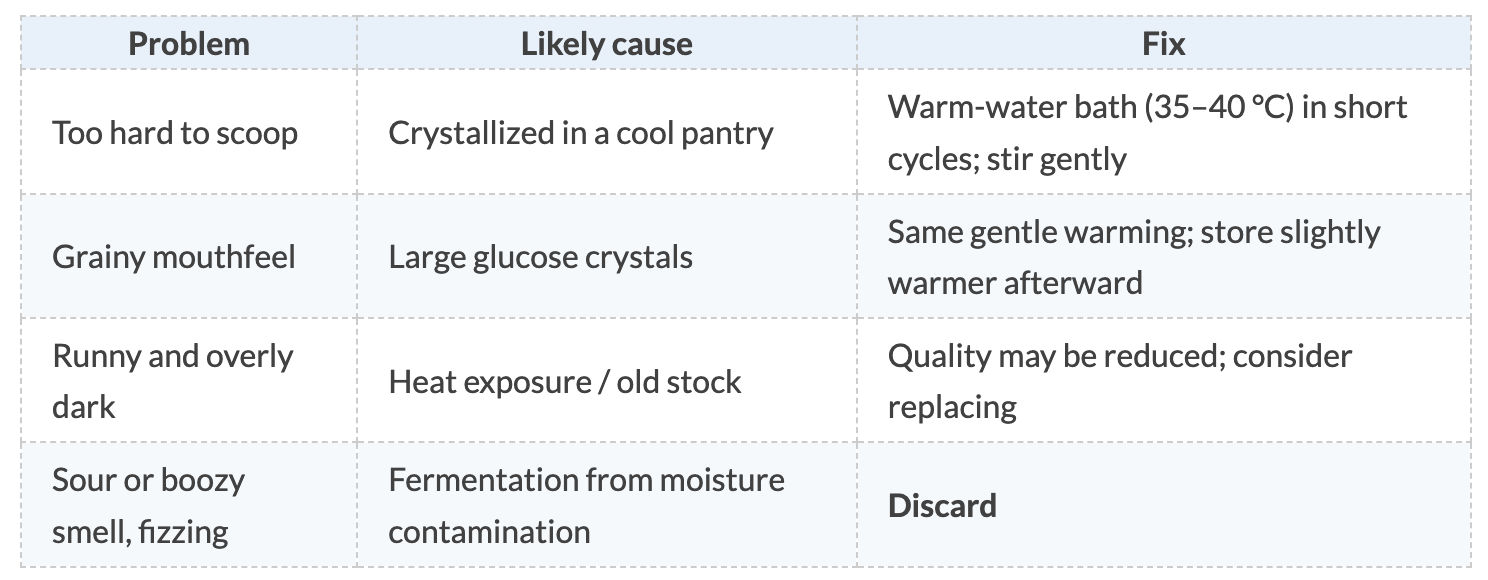
Bottom line,Manuka honey, if stored well, stays safe and delicious for a very long time. Crystallization is normal and reversible with gentle warmth. If you rely on labeled potency, buy the right jar size, store it in a cool, dark place, and use it within a sensible window. Discard only if you detect fermentation or visible mold. |