
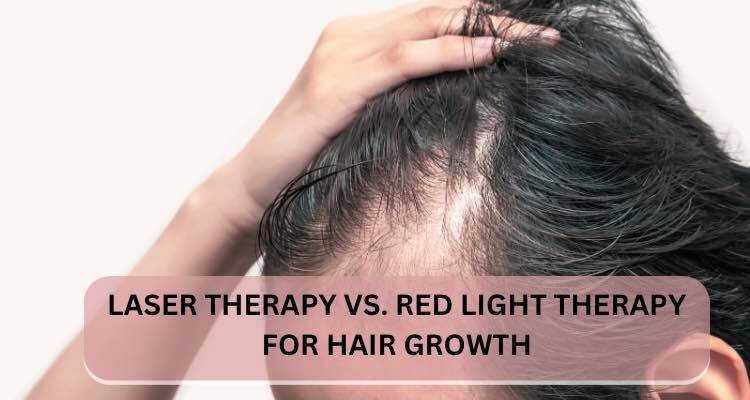
Hair loss is a common concern affecting millions worldwide. With the rise of non-invasive treatment options, laser and red light therapy have gained popularity as potential solutions. Understanding the differences between these therapies is crucial for individuals seeking effective hair growth treatments. This article provides a comprehensive comparison to help you make an informed decision.
Key Takeaways:
|
Jump Ahead:
- About Hair Loss
- What Is Laser Therapy?
- What Is Red Light Therapy?
- Comparing Laser Therapy and Red Light Therapy
- Efficacy and Results
- Safety and Side Effects
- Who Should Choose Which Therapy?
- Conclusion
- Additional Resources
Understanding Hair Loss:
Common Causes of Hair Loss
Hair loss can result from various factors:
- Genetics (Androgenetic Alopecia): The most common cause, leading to pattern baldness.
- Hormonal Imbalances: Conditions like thyroid disorders can affect hair growth.
- Nutritional Deficiencies: Lack of essential nutrients like iron and protein.
- Stress and Environmental Factors: Physical or emotional stress can trigger hair thinning.
Types of Hair Loss
Understanding the type of hair loss is essential for selecting the appropriate treatment.
- Androgenetic Alopecia (Pattern Baldness):
- Affects both men and women.
- Characterized by a receding hairline and thinning crown in men and diffuse thinning in women.
- Alopecia Areata:
- An autoimmune disorder causing patchy hair loss.
- Hair often falls out in small, round patches.
- Telogen Effluvium (also called hair shedding):
- Temporary thinning due to stress, illness, or hormonal changes.
- Hair follicles enter the resting phase prematurely.
- Traction Alopecia:
- Resulting from hairstyles that pull on the scalp.
- It can become permanent if not addressed.
- Scarring Alopecia:
- Permanent loss due to scarring from injury or medical conditions.
- Hair follicles are destroyed and replaced with scar tissue.
Hair Loss Types Benefiting from Red Light Therapy
Red Light Therapy is most effective for non-scarring types of hair loss:
- Androgenetic Alopecia:
- Studies show significant improvement in hair density and thickness.
- Stimulates cellular activity in hair follicles.
- Telogen Effluvium:
- It may accelerate recovery by promoting follicle health.
- It helps return hair follicles to the growth phase.
- Alopecia Areata:
- Emerging research indicates potential benefits.
- It may modulate the immune response to reduce hair loss.
Early Intervention Is Key: Starting treatment at the onset of hair loss increases the likelihood of positive results.
What Is Laser Therapy?
Laser therapy, specifically Low-Level Laser Therapy (LLLT), uses lasers to stimulate hair follicles.
- Mechanism of Action:
- It uses coherent light to penetrate the scalp.
- Increases blood flow and cellular energy (ATP production).
- Promotes hair follicle growth and reduces inflammation.
- Technology and Devices:
- Laser caps, combs, and helmets are equipped with laser diodes.
- Devices emit light at specific wavelengths (usually 650-900 nm).
- Clinical Evidence:
- Multiple studies demonstrate increased hair density and thickness.
- FDA-cleared devices for treating androgenetic alopecia.
What Is Red Light Therapy?
Red light therapy uses non-coherent red light to stimulate cellular function.
- Mechanism of Action:
- Emits red light (630-700 nm) absorbed by mitochondrial chromophores.
- Enhances cellular respiration and energy production.
- Stimulates hair follicle activity and growth.
- Devices Used:
- LED panels, lamps, and helmets.
- Often combined with near-infrared light for deeper penetration.
- Scientific Validation:
- Research supports its efficacy in promoting hair regrowth.
- Safe for home use with minimal side effects.
Comparing Laser Therapy and Red Light Therapy
Similarities:
- Light Wavelengths: Both therapies use light to stimulate hair follicles.
- Non-Invasive: Treatments are painless and require no downtime.
- Accessibility: Available for home use and professional settings.
- Mechanism: Enhance cellular activity and promote hair growth.
Differences:
Light Source
| Laser Therapy: |
|
| Red Light Therapy: |
|
Penetration Depth
| Laser Therapy: |
|
| Red Light Therapy: |
|
Treatment Protocols
| Laser Therapy: |
|
| Red Light Therapy: |
|
Device Availability and Cost
| Laser Therapy Devices: |
|
| Red Light Therapy Devices: |
|
Efficacy and Results
- Laser Therapy:
- Studies show a 39% increase in hair growth after 16 weeks.
- Visible results typically appear after 3-6 months.
- Red Light Therapy:
- Users report increased hair thickness and density.
- Results may be noticeable after 2-4 months.
Factors Influencing Results:
- Individual response to treatment.
- Severity and type of hair loss.
- Consistency of use.
| Tip: Combine Red light therapy devices with proven topical hair loss medication (such as Minoxidil) to enhance and accelerate hair growth. |
Safety and Side Effects
Both therapies are considered safe with minimal side effects.
- Common Side Effects:
- Mild scalp irritation or redness.
- Temporary headaches in rare cases.
- Precautions:
- Follow manufacturer guidelines.
- Avoid overuse to prevent potential skin irritation.
Contraindications:
- It is not recommended for individuals with photosensitivity disorders.
- Consult a healthcare provider if pregnant or taking photosensitizing medications.
Who Should Choose Which Therapy?
Laser Therapy May Be Suitable For:
- Individuals with moderate to severe androgenetic alopecia.
- Those seeking deeper scalp penetration.
- Users willing to invest in higher-cost devices.
Red Light Therapy May Be Suitable For:
- Early-stage hair loss sufferers.
- Individuals with sensitive scalps.
- Budget-conscious users seeking affordable options.
Consultation Is Crucial:
- A healthcare professional can provide personalized advice.
- Consider combining therapies with other treatments like minoxidil.
What is the Best Laser Hair Growth Device to Use in 2025?
The best laser hair growth device for 2025 will combine cutting-edge technology with convenience and proven results, setting a new standard in hair restoration. Devices like the CapillusX+ Laser Cap are anticipated to lead the pack with advanced cooling mechanisms for enhanced comfort during treatments, paired with 312 laser diodes for maximum follicle stimulation. Similarly, the HairMax LaserBand 82, renowned for its speed and hands-free design, continues to evolve, promising shorter treatment times without compromising effectiveness. With AI-powered progress tracking and app integration becoming standard, 2025’s standout devices will not just treat hair loss but revolutionize how users engage with their hair regrowth journey.
Conclusion
Both laser therapy and red light therapy offer promising solutions for hair growth. Understanding their differences helps tailor treatment to individual needs.
- Laser Therapy: Ideal for deeper penetration and severe hair loss.
- Red Light Therapy: Suitable for early-stage hair loss and sensitive scalps.
LLLT Devices Disclaimer
Low-Level Laser Therapy (LLLT) devices for hair growth are classified by the U.S. Food and Drug Administration (FDA) as Class II medical devices, requiring 510(k) clearance.
Before purchasing any LLLT product—whether it’s a laser cap, helmet, or comb—please take the following steps:
- Verify FDA Clearance: Confirm that the device has received proper FDA clearance.
- Check the FDA 510(k) Database: Use the FDA’s database to validate clearance status.
- Understand Private-Label Arrangements: Some brands operate under private-label agreements using the original manufacturer’s clearance.



Share Your Opinion, Please