Manuka honey is famous for its rich taste and well-studied antibacterial activity, but it’s still sugar. The art is finding a portion that fits your goal without blowing past your daily sugar budget. This guide explains how much to take, how often, when it helps most, and when to avoid it—without the hype.
Why the Amount of Manuka Honey Matters?
With Manuka honey, potency and portion are easy to confuse. A higher UMF™ (or MGO) tells you about antibacterial strength, not calories. One teaspoon of Mānuka and one teaspoon of regular honey deliver about the same sugars and energy—the difference is the activity in the jar, not the sugar on the spoon. That’s why the right dose starts with your goal, then fits inside your added-sugar allowance.
UMF vs MGO: Where Strength Fits In
UMF is a quality mark that rolls several lab markers together (including methylglyoxal, or MGO). MGO alone tells you the concentration of one compound. For dosing, think of UMF/MGO as the strength setting. Portions don’t get larger just because the grade is higher; you choose a grade that suits the job and keep the serving sensible.
- UMF 5–10+ works well for daily use and taste.
- UMF 12–15+ is a practical “therapeutic” middle ground for throat comfort and periodic skin use.
- UMF 20+ is high-potency and usually reserved for short-term or topical goals. Whatever you choose, the spoon size stays modest.
Portions at a Glance
These ranges keep things practical for most people. Adjust to your needs and total daily sugar intake.
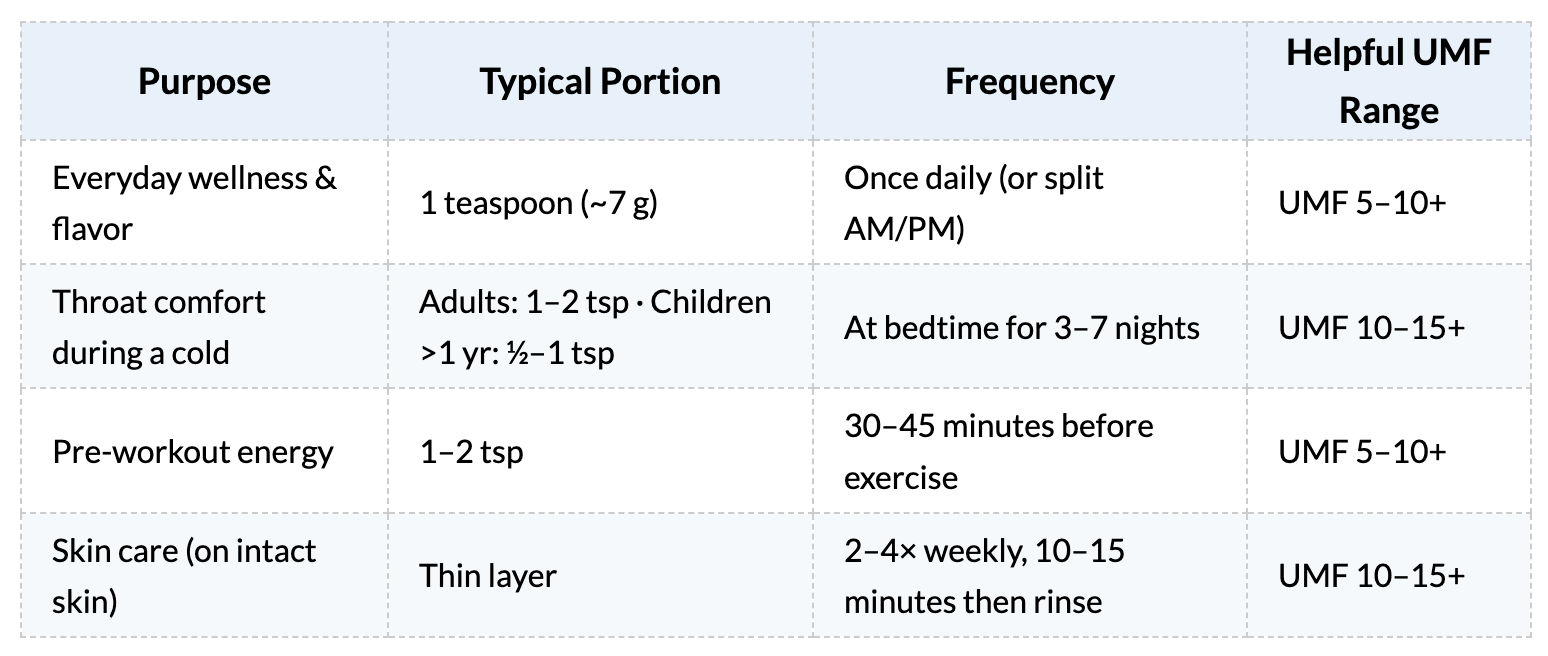
Sugar math: ~1 tsp honey = 6 g sugars (~21 kcal). ~1 Tbsp (3 tsp) = 17 g sugars (~64 kcal).
Daily Limits: Keep Honey Inside the Budget
For most adults, a reasonable cap for added sugars is about 25–36 g per day (roughly 6–9 teaspoons of sugar from all sources). One teaspoon of honey uses up about one “sugar teaspoon” from that allowance. If you’re already drinking sweetened beverages or eating desserts, plan your honey around those choices—or cut something else to make room.
How to Build Your Dose?
Start with your goal, then layer in timing and potency:
- Everyday ritual: One teaspoon each morning stirred into warm (not boiling) lemon water, tea, or yogurt is a sensible baseline. Try this for two weeks before changing anything.
- Bedtime cough: Take your portion slowly, let it coat the throat, then sip water. This helps comfort at night without sticking to teeth.
- Before training: One to two teaspoons, 30–45 minutes before a workout, can top up carbs without causing a heavy stomach. It still counts toward your daily sugar total.
- Skin days: When your goal is skin, the most reliable results come from how you apply it, not how much you eat. Use a thin layer of higher-UMF Mānuka on clean, dry skin for 10–15 minutes, then rinse.
Special Cases: Kids, Diabetes, IBS & Pregnancy
- Infants under 12 months: never give honey—period. The risk of infant botulism is the reason. From the first birthday onward, small bedtime amounts can be soothing during coughs.
- Diabetes or prediabetes: treat honey like any fast carbohydrate. Keep portions small, pair with meals, and watch your glucose response. If you’re tightly restricting sugars, consider topical use instead of eating it.
- IBS/low-FODMAP: honey contains excess fructose. Many people tolerate ≤1 teaspoon at a time; test your own tolerance.
- Pregnancy & breastfeeding: as a food, honey is generally fine; the same sugar limits apply. For open wounds or burns, choose sterile, medical-grade honey dressings and follow clinical advice.
Bottom linePick a purpose, choose a sensible strength, and keep the spoon small. Mānuka works best when it fits your day and your sugar budget. |