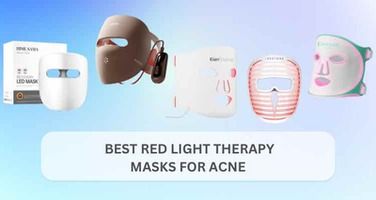
If you’re curious about specific at-home LED devices, be sure to check out our Best Red Light Therapy for Acne guide for top recommendations.
Acne affects around 85% of adolescents and a significant number of adults, prompting many to explore alternatives to traditional creams, oral medications, and antibiotics. LED light therapy is a promising, non-invasive approach to managing breakouts. This article details how LED therapy works for acne, summarizes scientific findings, compares at-home and professional devices, and provides practical tips to help you decide if it’s right.
Looking for specific recommendations? Don't miss our Best Red Light Therapy for Acne article for top-rated devices that blend red and blue wavelengths for maximum effectiveness.
Key Takeaways
|
Who Can Benefit Most? & Who Should Exercise Caution?
Who Can Benefit
- Mild to Moderate Acne Sufferers: Studies show notable improvements in acne severity for those with mild to moderate breakouts.
- Individuals Seeking Drug-Free Options: LED therapy is non-invasive and chemical-free, making it appealing for those wary of antibiotics or harsh topical treatments.
- People Who Prefer Home-Based Treatments: With the rise of FDA-cleared devices, sessions can be administered conveniently at home.
Who Should Exercise Caution
- Severe Acne or Cystic Acne Patients: You may need prescription treatments or professional care first. LED can be a supplemental therapy but may not be sufficient on its own.
- Those on Photosensitizing Medications: Drugs like isotretinoin (Accutane) can make skin more light-sensitive. Consult a dermatologist before starting LED therapy.
- Pregnant or Nursing Individuals: Limited research exists on LED therapy during pregnancy or lactation. Always seek medical advice first.
What Is LED Light Therapy and How Does It Work for Acne?
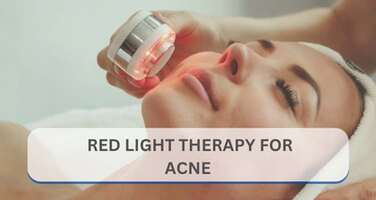
LED (Light-Emitting Diode) therapy exposes the skin to specific wavelengths of light—commonly blue (400-450 nm) and red (620-750 nm)—to address various skin conditions. For acne:
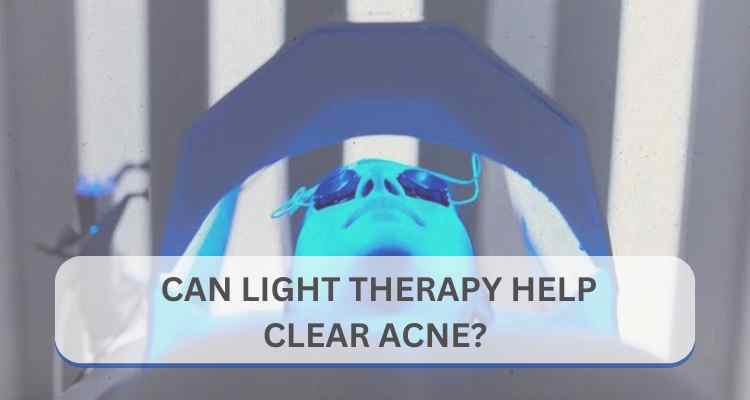
- Blue Light targets Propionibacterium acnes, the bacteria associated with breakouts. Inducing a photochemical reaction helps kill the bacteria and prevents new blemishes.
- Red Light penetrates deeper to soothe inflammation, decrease redness, and potentially stimulate collagen production, helping repair acne-damaged skin.
Many at-home and professional devices now combine both wavelengths for a dual-action approach that simultaneously addresses bacterial overgrowth and inflammation.
Scientific Evidence: What Research Says
Multiple studies and meta-analyses provide insights into LED therapy’s effectiveness for acne:
- 2022 Meta-Analysis
Utilization of light‐emitting diodes for skin therapy
Evaluated 31 studies and found a standardized mean difference of -2.42, indicating a significant reduction in acne severity. Low heterogeneity (I² = 17%) suggests robust, consistent results. - 2019 Systematic Review
Blue-Light Therapy for Acne Vulgaris
Reported mixed results for blue light alone, highlighting the improved efficacy when combined with red light. - 2021 Meta-Analysis
Application of red light therapy for moderate‐to‐severe acne vulgaris
Showed no significant difference between red light therapy and traditional methods for inflammatory lesions. Reinforces the idea that combination treatments (blue + red) may be most beneficial.
While evidence strongly suggests a benefit for mild to moderate acne, results vary by study design, severity of acne, and individual skin biology. Larger-scale, long-term trials comparing LED therapy with first-line treatments are still needed for definitive conclusions.
Consistency Is Key: Usage and Complementary Skincare
Recommended Use
- Frequency: Most at-home devices suggest 2-3 weekly sessions for 10-30 minutes each.
- Duration: Results often take 4-8 weeks of consistent use.
- Maintenance: Some users continue regular weekly sessions to sustain improvements.
Complementary Skincare
- Use a gentle cleanser to keep pores clear without irritating the skin.
- Opt for non-comedogenic moisturizers and sunscreen to prevent dryness and sun damage.
- If you have prescription topicals or oral medications, talk to a dermatologist about combining them with LED therapy for enhanced results.
Types of LED Light: Blue vs. Red
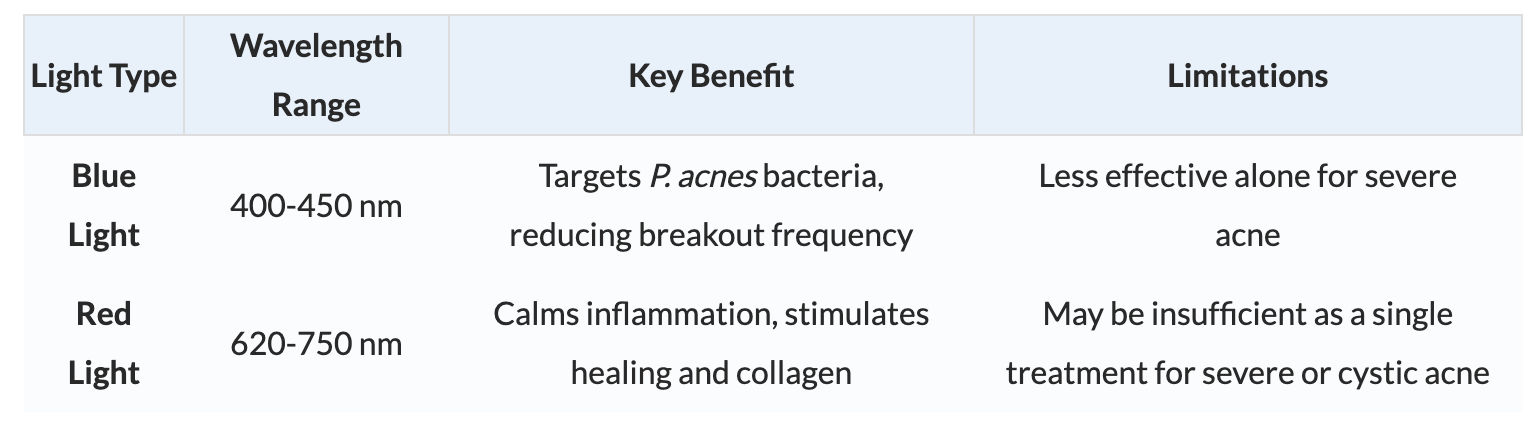
The bottom line is that blue and red are better together. Most evidence indicates that using both wavelengths yields the best improvements for acne.
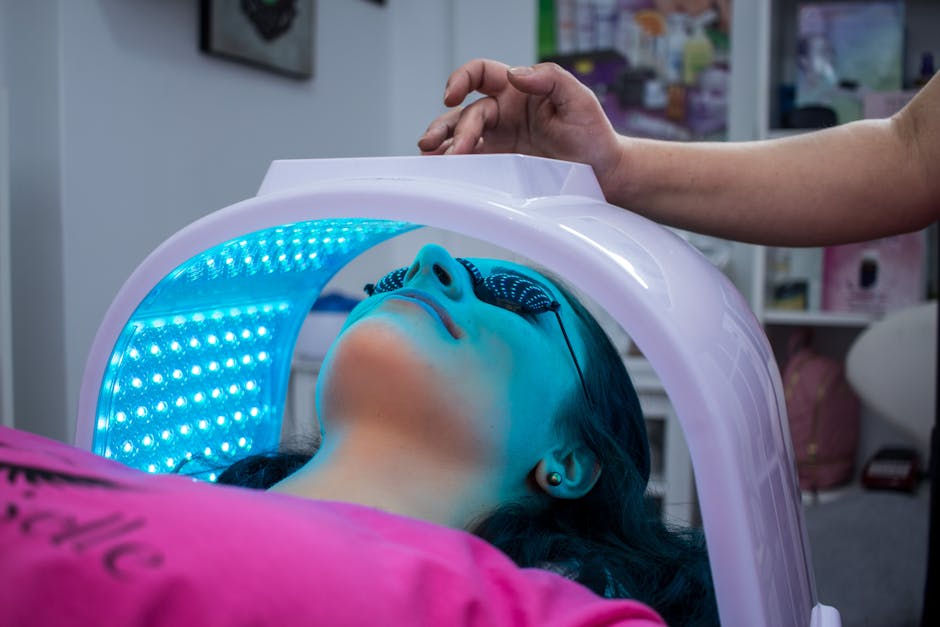
FDA-Cleared Devices: At-Home vs. Professional
At-home devices labeled as “FDA-cleared” have been reviewed for safety and intended use, but they are not “FDA-approved” in the same sense as pharmaceutical drugs.
At-Home Devices
- Cost: $200–$1,000+ (one-time purchase)
- Power: Lower intensity, user-friendly designs
- Convenience: Use anytime in your own home
Professional Treatments
- Cost Per Session: ~$60–$80 or more, with multiple sessions needed
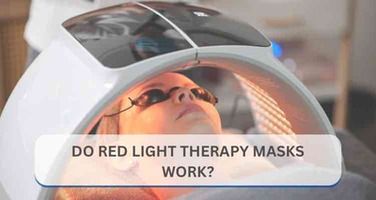
- Power: Higher, medical-grade equipment often available in dermatologists' offices
- Results: May be faster, but require appointments and ongoing visits
Unexpected Detail: Cost & Ongoing Maintenance
It can surprise some users that maintenance is necessary even after initial improvements:
- At-home devices: To prevent new breakouts, you’ll likely need to continue sessions (often 1-2 times per week).
- Professional treatments: Multiple sessions spaced over weeks or months can get costly.
Frequently Asked Questions
- Does LED light therapy hurt or damage the skin?
LED therapy is generally painless and non-ablative. Mild redness is possible but typically fades quickly. - How soon can I expect to see results?
It varies, but many see improvements after 4-8 weeks of consistent use. Severe acne may take longer or require additional treatments. - Can I use LED therapy if I’m already on prescription acne medication?
Often, yes. But if you’re on a photosensitizing medication like isotretinoin, consult your dermatologist first. - Is LED therapy safe for all skin types?
It’s generally safe and suitable for most skin types. Still, patch testing or seeking professional advice is wise if you have sensitive skin or a history of photosensitivity. - What about eye safety?
Wear protective goggles. Some brands have had recalls for eye safety concerns, so always follow manufacturer instructions.
Conclusion
LED light therapy shows promise in reducing acne breakouts, with blue light targeting the bacteria that cause blemishes and red light soothing inflammation. Research and clinical experience indicate it’s most effective for mild to moderate acne, but you’ll need consistency and realistic expectations—it’s not typically a single-session cure. Whether you opt for an FDA-cleared at-home device or professional office treatments, LED therapy can be a valuable addition to your skincare routine.
Disclaimer
This information is for educational purposes only and not a substitute for professional medical advice. Always consult a qualified healthcare provider regarding any skin concerns or before starting new treatments, especially if you have severe acne or take photosensitizing medications.
Sources:
- Utilization of light‐emitting diodes for skin therapy: Systematic review and meta‐analysis (2022)
- Blue-Light Therapy for Acne Vulgaris: A Systematic Review and Meta-Analysis (2019)
- Application of red light therapy for moderate‐to‐severe acne vulgaris: A systematic review and meta‐analysis (2021)
- LED Light Therapy: How It Works, Colors, Benefits & Risks
- Light Therapy for Acne: Can Phototherapy Help Keep Clear Skin?
- LED lights: Are they a cure for your skin woes?
- Blue light therapy for acne: Benefits, side effects, and costs
- FDA-Cleared vs. FDA-Approved LED Light Therapy?