The best home espresso machine should deliver stable temperature, controlled pressure, and repeatable milk steaming without turning your kitchen into a science lab. For context, the Specialty Coffee Association (SCA) publishes performance specs and test methods for semi-automatic and automatic espresso machines (the same foundations used in barista competitions), with a strong emphasis on temperature stability and pressure control.
Why Buy a Home Espresso Machine?
- Consistent café results: Modern PID controls and dual-boiler/HX designs keep brew temps in the ideal range, helping you hit your target ratio and flavor profile more often. (Squarespace)
- Better milk texture at home: Upgraded steam circuits and wands make silky microfoam plausible in a small kitchen—no barista diploma required. (Rancilio Group)
- Real choice of workflow:
- Manual (lever): ritual and full control of pressure/flow.
- Semi-auto: you grind, dose, and tamp; the machine manages water delivery.
- Super-auto: beans-to-cup convenience with one-touch milk drinks. (Bon Appétit)
What Makes a Great Home Espresso Machine?
| Key Spec / Feature | Why It Matters |
|---|---|
| Temperature Stability (PID) | Tight control of brew water temperature - more consistent extraction. Look for PID-controlled boilers or thermoblocks. |
| Pressure & Pre-infusion | Around 9 bar at the puck with a gentle pre-infusion or soft infusion improves evenness and reduces channeling. (Modern machines let you tune this.) |
| Boiler Type | Single-boiler = budget/compact; HX (heat-exchanger) = brew/steam in parallel; dual-boiler = best temp control and simultaneous brew/steam. |
| Milk System | For cappuccinos/latte art, prioritize steady steam and a pro-style wand. For super-autos, prefer simple, easy-to-clean milk systems. |
| Footprint & Warm-up | Smaller kitchens benefit from compact bodies and faster heat-up; premium designs are achieving both. |
| Serviceability & Warranty | Prosumer machines with accessible parts and 2-5-year coverage reduce lifetime cost. |
The Best Home Espresso Machines of 2026
1- Best Manual (Lever) — Flair 58
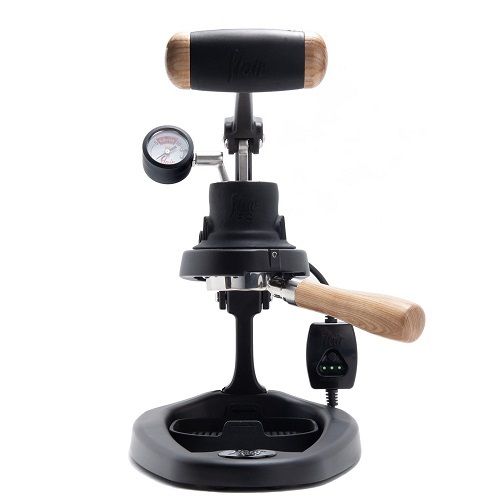 |
Why you’ll love it:
|
2- Best Beginner Semi-Auto (All-in-One) — Breville Barista Express Impress
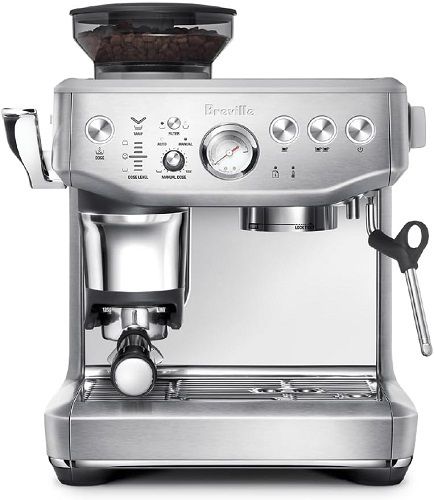 |
Why you’ll love it: The Barista Express Impress removes two big pain points—dosing and tamping. Its integrated grinder has 25 steps, and the machine auto-calculates dose for consistency; the assisted tamp presses with a steady ~22 lb and finishes with a tidy barista-style twist. You still control grind and yield, but the machine helps you repeat a good shot.
|
3- Best Prosumer Dual-Boiler — Rancilio Silvia Pro X
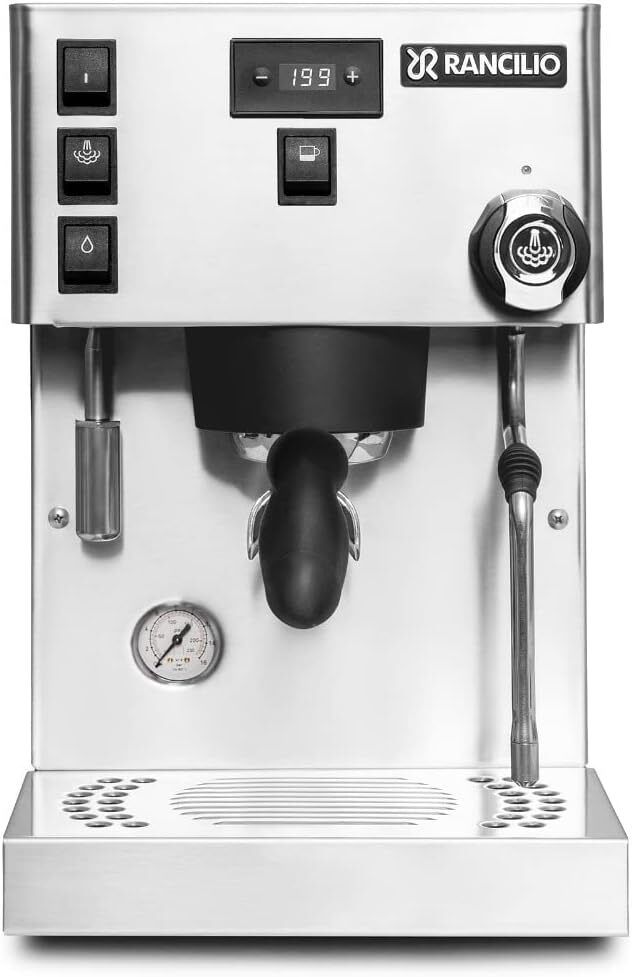 |
Why you’ll love it: The Silvia Pro X brings café architecture home: true dual boilers (brew + steam), dual PIDs for to-the-degree control, and soft pre-infusion that tames channeling. It’s a compact stainless steel workhorse capable of simultaneous brewing and steaming, a big jump from classic single-boiler “Silvia” models.
Pros you’ll notice:
Trade-offs:
Best for: Enthusiasts stepping into prosumer territory who want repeatable café-grade shots and milk performance. |
4- Best “Small but Premium” Semi-Auto — Gaggia Classic Pro
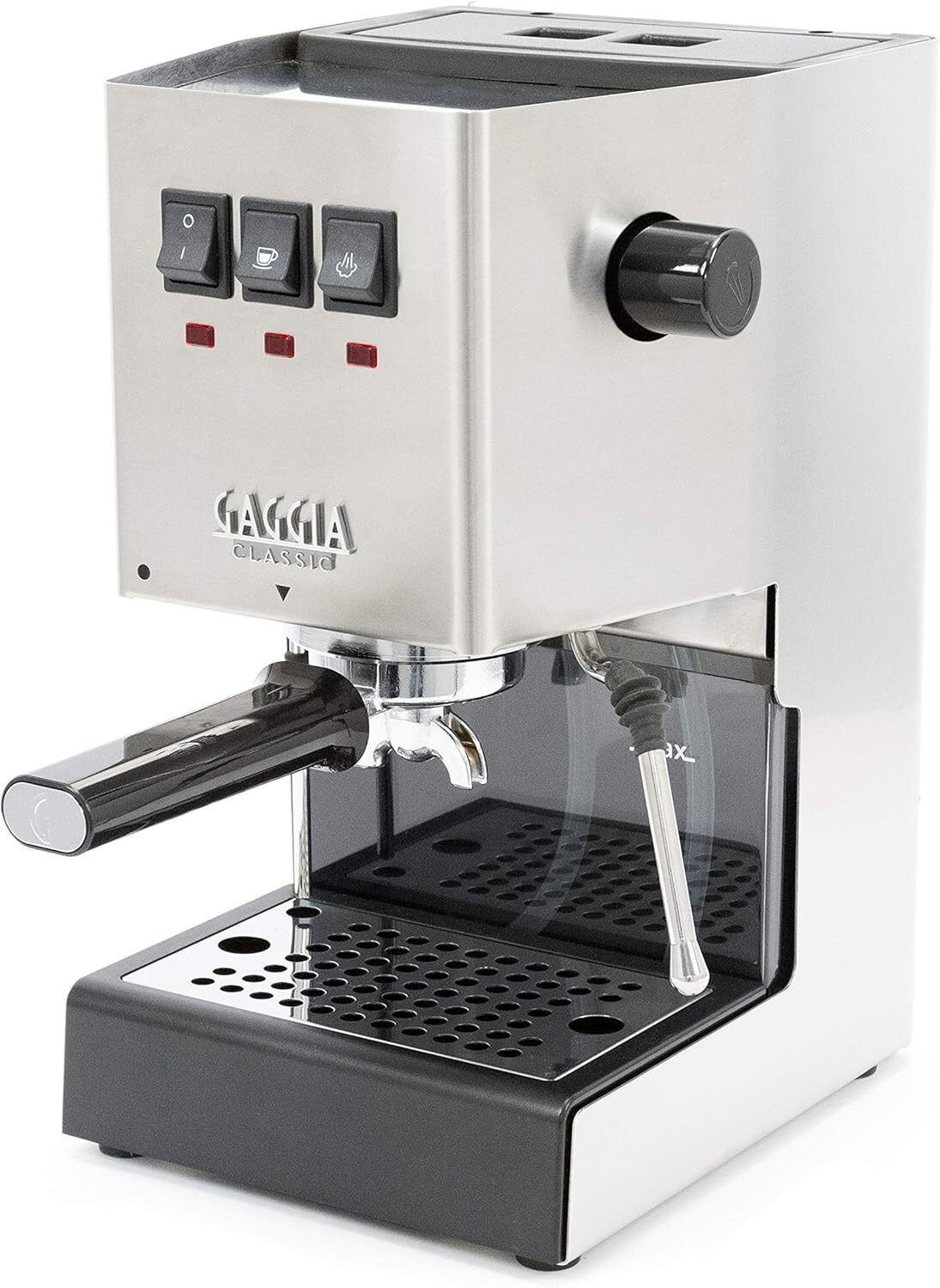 |
Why you’ll love it: Legendary reputation among coffee enthusiasts for offering near café-quality espresso in a compact, affordable package. Simple, sturdy, and easy to repair—often lasts a decade or more with proper care. A great “gateway” machine for those who want to get serious about espresso without jumping into prosumer prices. Pros:
Cons:
Best for: Espresso lovers who want quality on a smaller budget without going plastic-heavy. |
5- Best Value Super-Automatic — Philips 3200 LatteGo (EP3241/54)
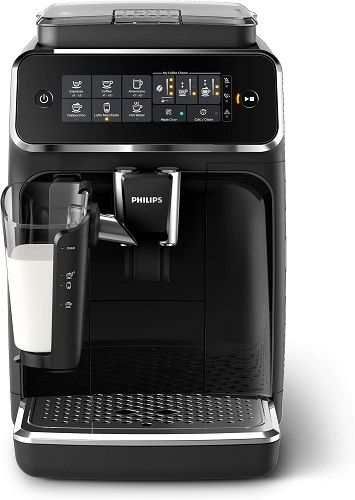 |
Why you’ll love it: The Philips 3200 LatteGo prioritizes ease. The LatteGo milk system is just two parts, no tubes, and Philips says it can be rinsed clean in about 15 seconds. You still get 12-step ceramic grinder adjustment and one-touch cappuccino/latte presets—perfect for busy households.
Pros you’ll notice:
Trade-offs:
|
6- Best Premium Super-Automatic — JURA Z10 (Hot & Cold Extraction)
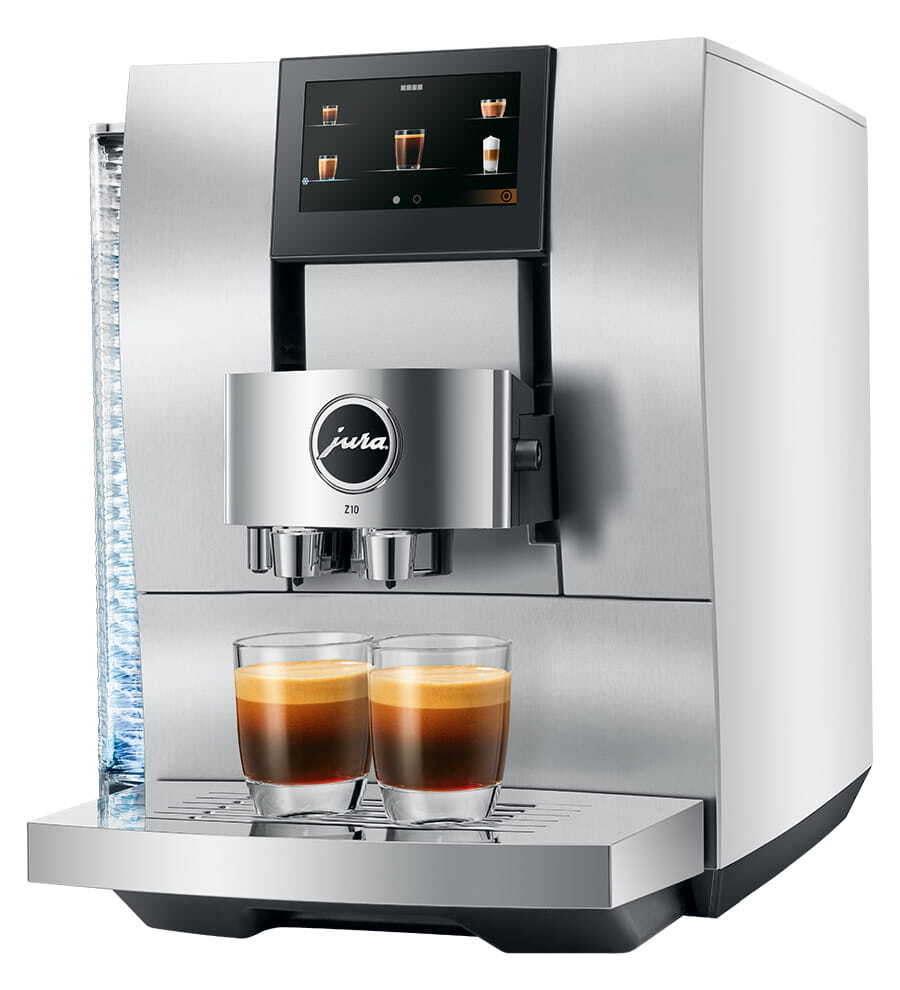 |
Why you’ll love it: The JURA Z10 adds a party trick—cold-extracted coffee at the touch of a button—thanks to its electronically controlled Product Recognizing Grinder (P.R.G.), which adapts grind size on the fly. It also offers ~40 specialties, automatic cleaning cycles, and that high-gloss Jura fit and finish.
Pros you’ll notice:
Trade-offs:
Best for: Luxury one-touch convenience and the widest drink menu, including cold extraction. |
How to Get Better Espresso at Home?
- Grinder first: A consistent burr grinder has a greater influence on flavor than a machine class. Calibrate for yield (e.g., 1:2 ratio—18 g in → 36 g out) and time (~25–35 s) to start.
- Mind your water: Use filtered water that’s not too hard; follow your machine’s filtration/descaling guidance to protect boilers and taste.
- Use pre-infusion: Gentle wetting (manual or automated “soft” pre-infusion) helps reduce channeling and promotes even extraction.
- Steam technique: For latte art, keep the tip near the surface to introduce microbubbles, then bury to roll the whirlpool and polish.
Bottom Line
Choose the workflow that matches how you actually drink coffee and let your grinder, water, and routine do the rest. |