One good set, fewer bad pans—cook faster, cleaner, and with less guesswork.
Quick Picks:
|
What Makes a “Most-Kitchens” Cookware Set?
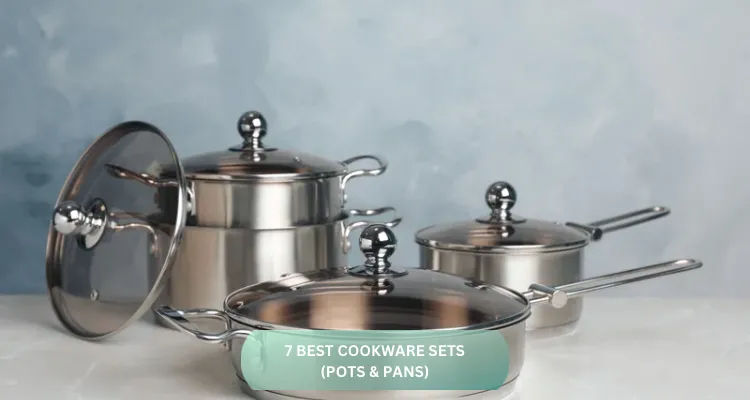
- Fully clad stainless steel or hard-anodized aluminum for even heating and better browning. Tri-ply and 5-ply clad stainless steel remain the safest all-around default for most home cooks because they handle searing, simmering, and stovetop-to-oven cooking well.
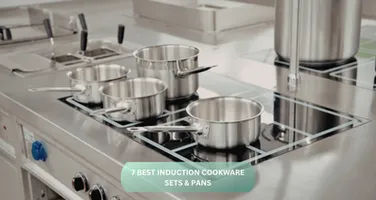
- Induction compatibility if you want future-proofing. Many top cookware sets now work on gas, electric, and induction, which matters even if you do not own an induction range yet.
- Useful piece count, not filler. The best sets include the real workhorses: a 10-inch skillet, 2 saucepans, a sauté pan or Dutch oven, and a stockpot.
- Oven-safe handles and lids so the set can finish pasta bakes, braises, and roast work without pan-swapping.
- A material that matches your cooking style. Stainless is best for all-purpose use, ceramic nonstick is easiest for eggs and cleanup, and enameled cast iron excels at retention but is heavier and slower.
Best Cookware Sets Editors and Testers Keep Recommending
1. Best overall for most kitchens: All-Clad D3 Everyday 10-Piece Set
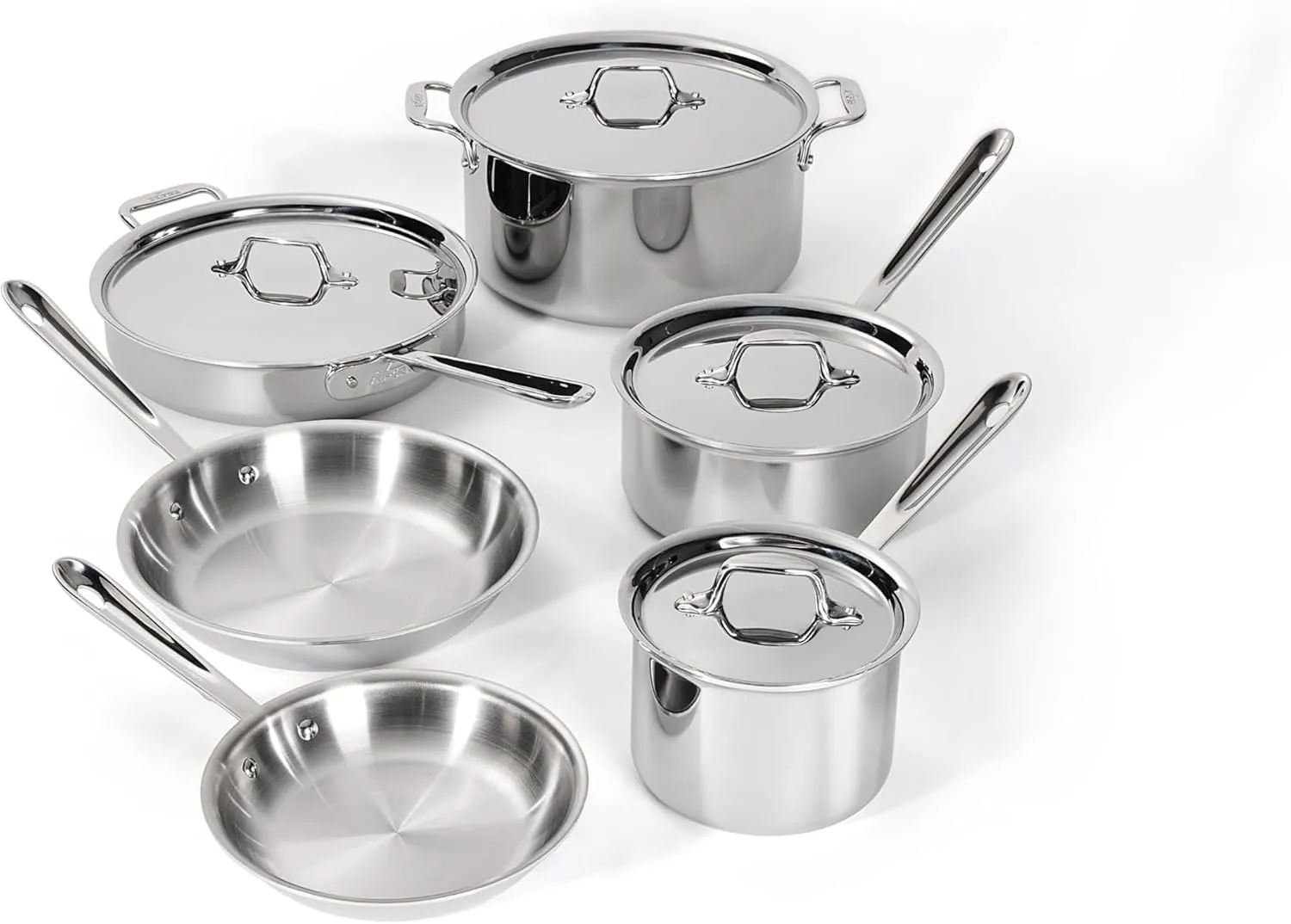 |
| All-Clad’s D3 Everyday set is the closest thing to the default “buy it once” cookware recommendation for home cooks who want stainless. It gives you the core pieces most kitchens actually use without wasting space on filler items. |
2. Best value stainless set: Tramontina Tri-Ply Clad Stainless Steel Set
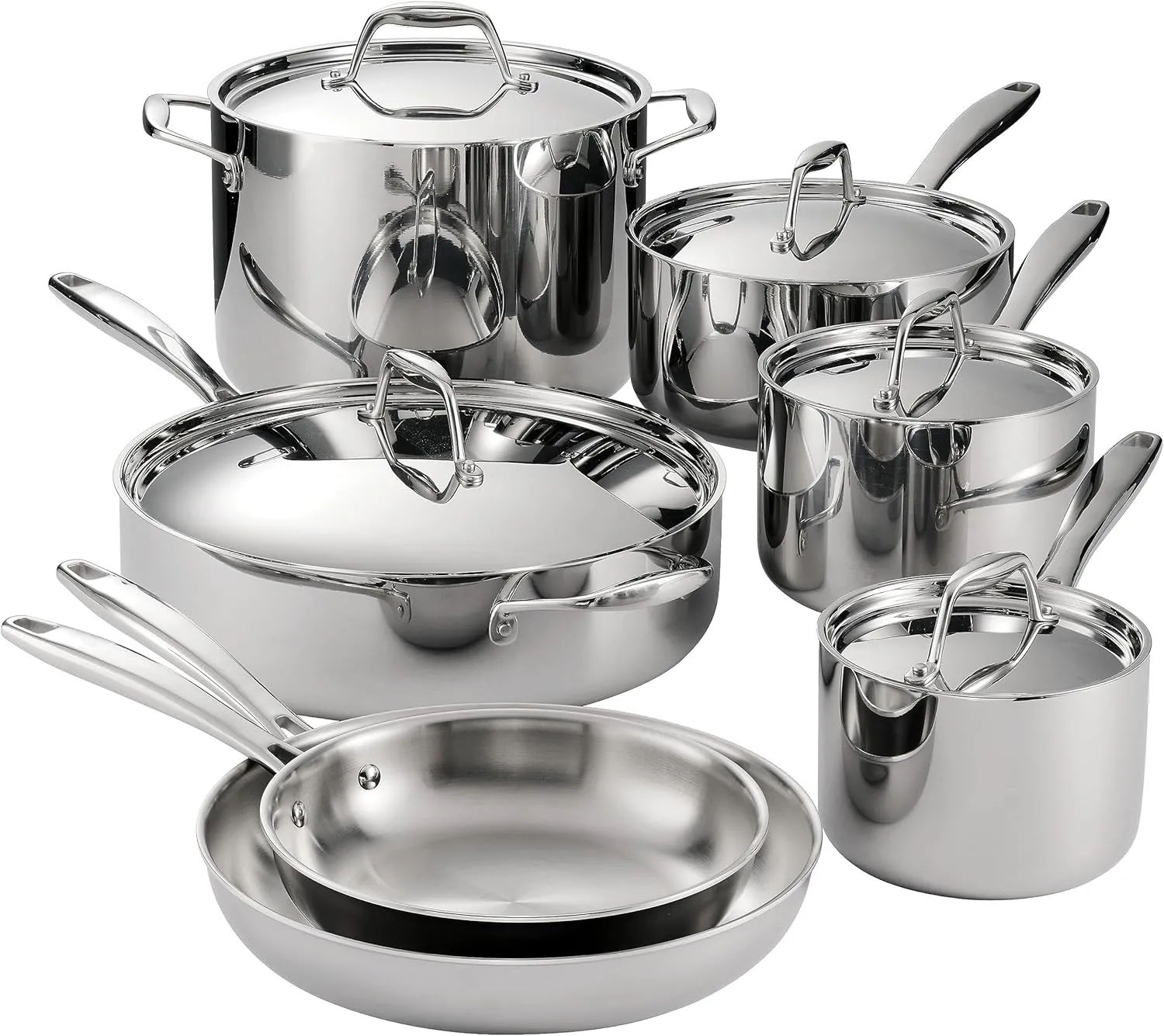 |
| Tramontina remains one of the easiest value recommendations because it delivers true tri-ply stainless steel performance without premium-brand pricing. It is a strong choice for shoppers who want long-term utility at a lower cost. |
3. Best upgrade for serious home cooks: Made In Stainless Clad Set
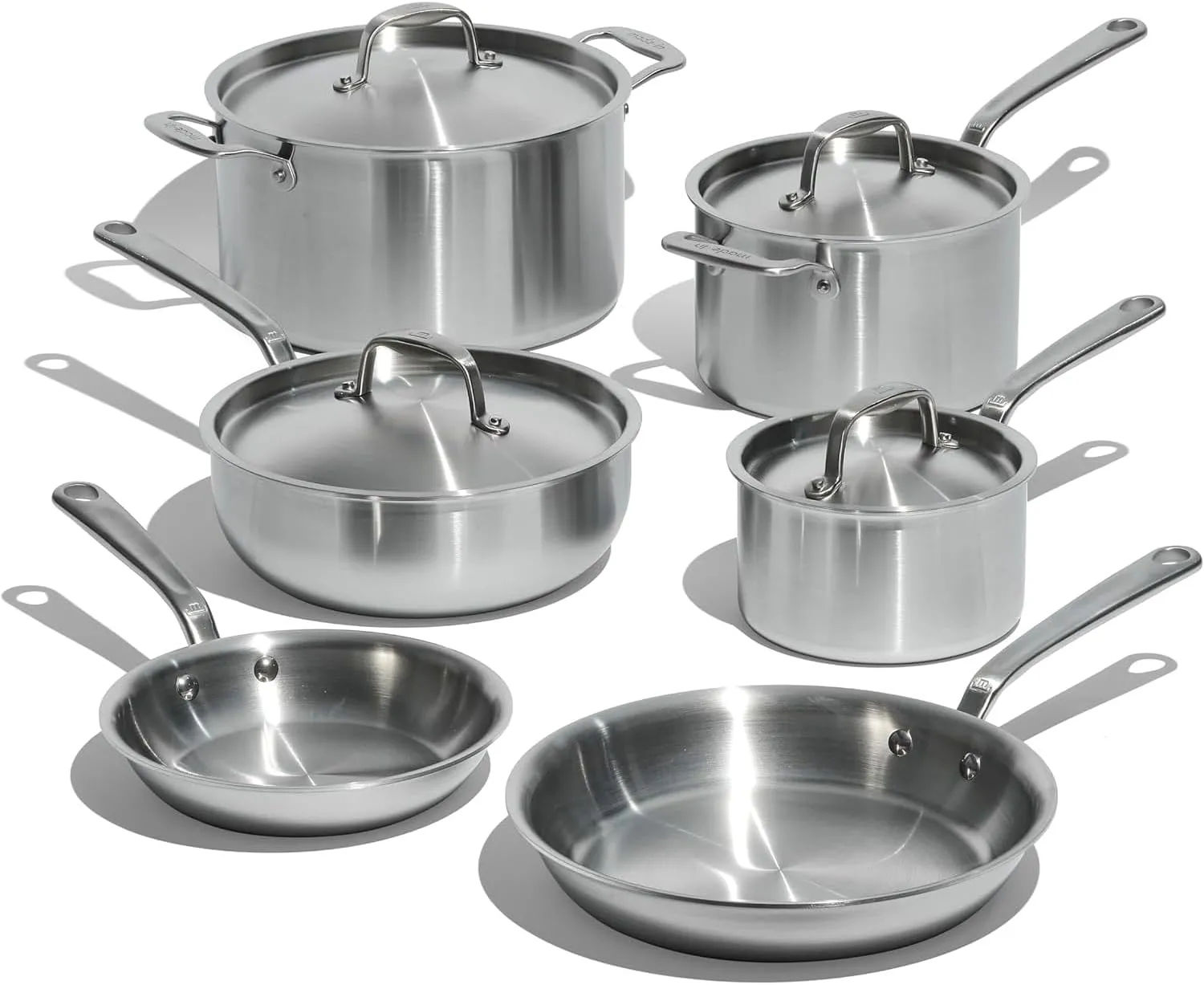 |
| Made In’s stainless set leans more chef-forward, with thicker clad construction and a more premium feel. It is a strong pick for enthusiastic home cooks who want a more elevated cooking experience. |
4. Best budget-friendly full starter set: Cuisinart MultiClad Pro 12-Piece Set
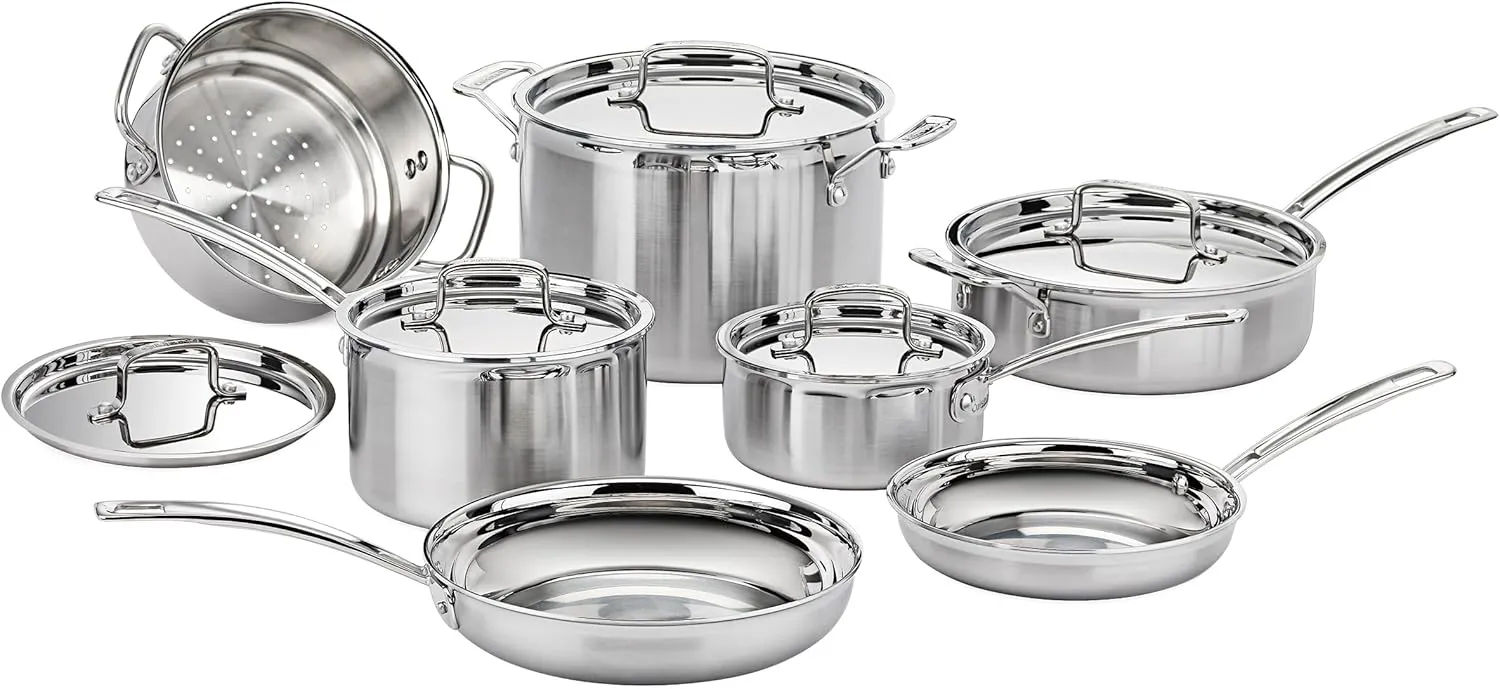 |
| Cuisinart MultiClad Pro is still one of the strongest low-cost entries into stainless cookware. It works especially well for new households, first apartments, and anyone building a functional kitchen from scratch. |
5. Best ceramic nonstick set for easy cleanup: GreenPan Valencia Pro Ceramic Nonstick Set
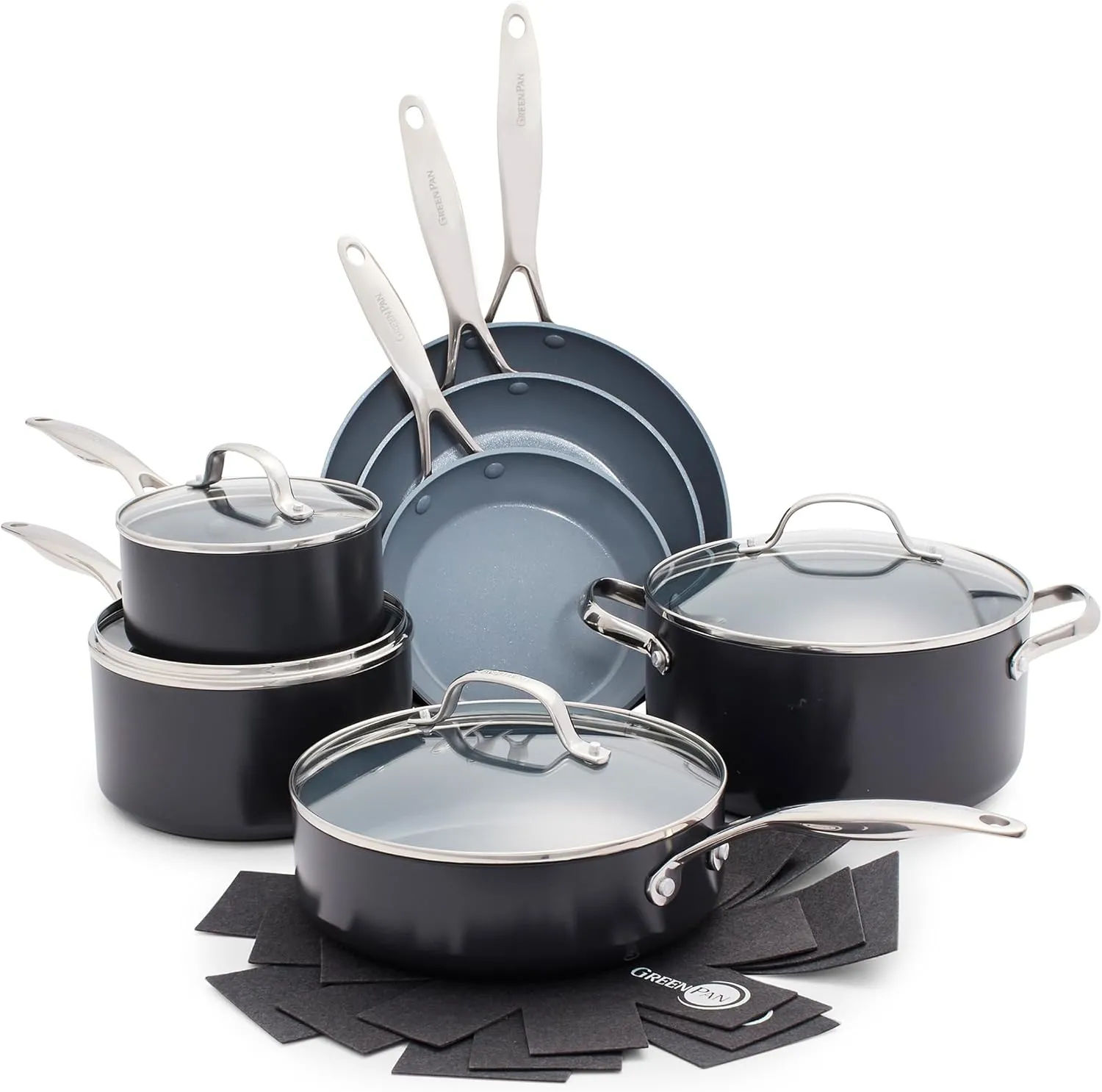 |
| GreenPan Valencia Pro stands out for its ceramic nonstick surface, user-friendly cleanup, and broad compatibility. It is one of the best options for people who cook sticky foods often and want less maintenance. |
6. Best ceramic set for style-first kitchens: Caraway Deluxe Non-stick Cookware Set
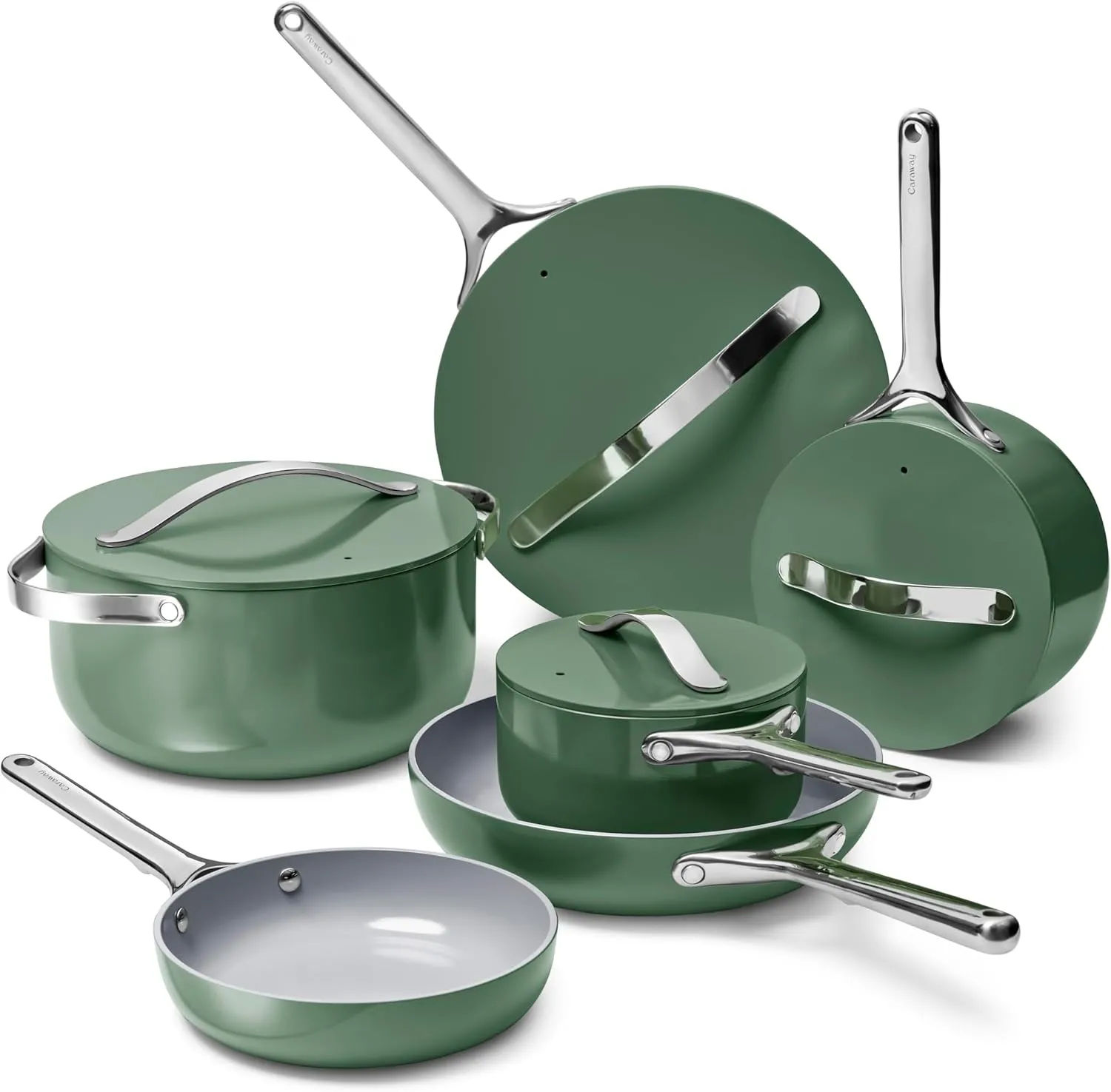 |
| Caraway stays popular because it blends ceramic nonstick ease with strong design appeal and built-in storage organization. It is especially attractive for modern kitchens where aesthetics matter as much as function. |
7. Best luxury stainless set: Le Creuset Classic Stainless Steel Set
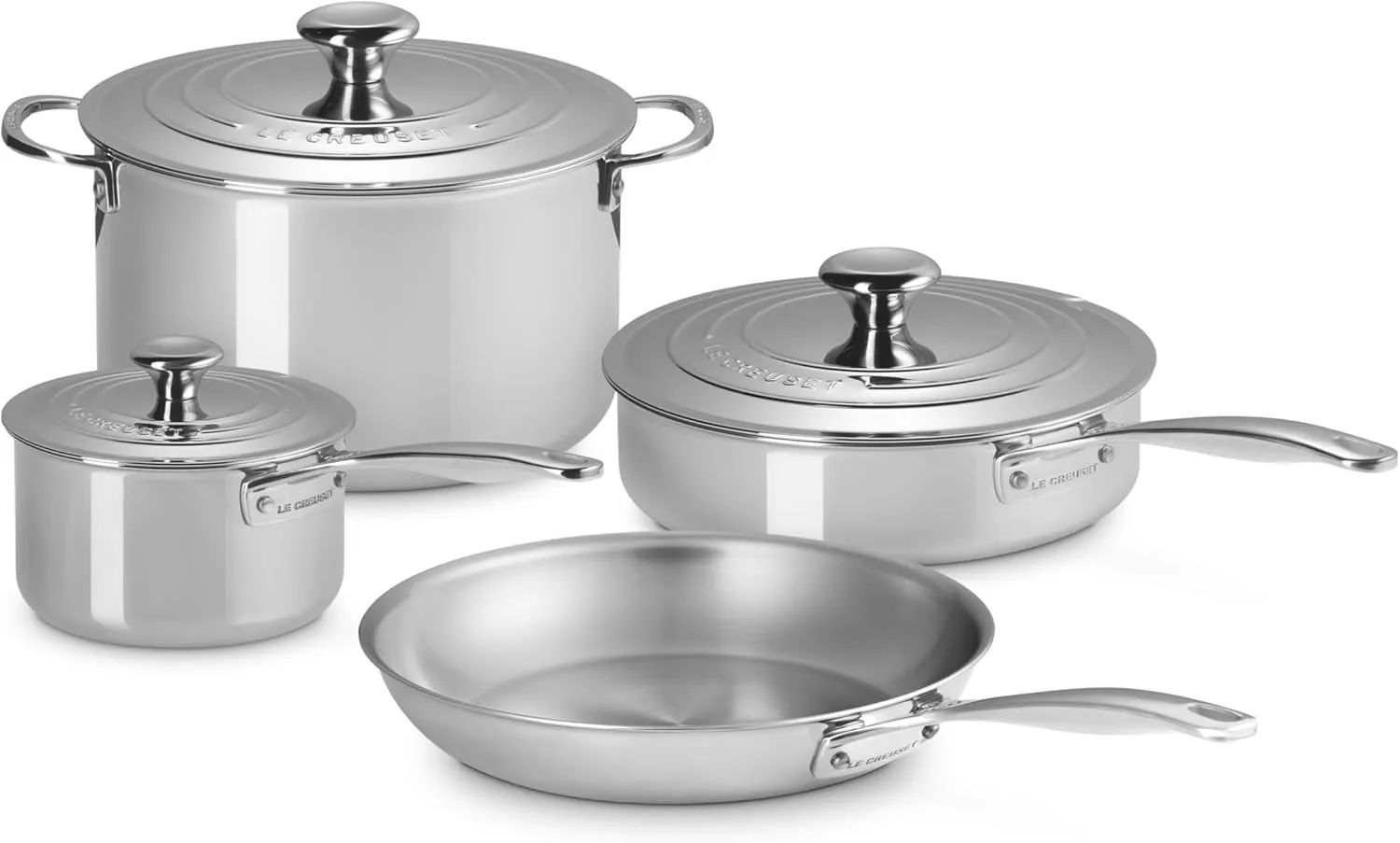 |
| Le Creuset’s Classic Stainless set offers premium finishing, durable clad construction, and a more polished luxury feel than typical mid-range stainless collections. It is ideal for buyers who want performance with premium presentation. |
Cookware Material Cheat-Sheet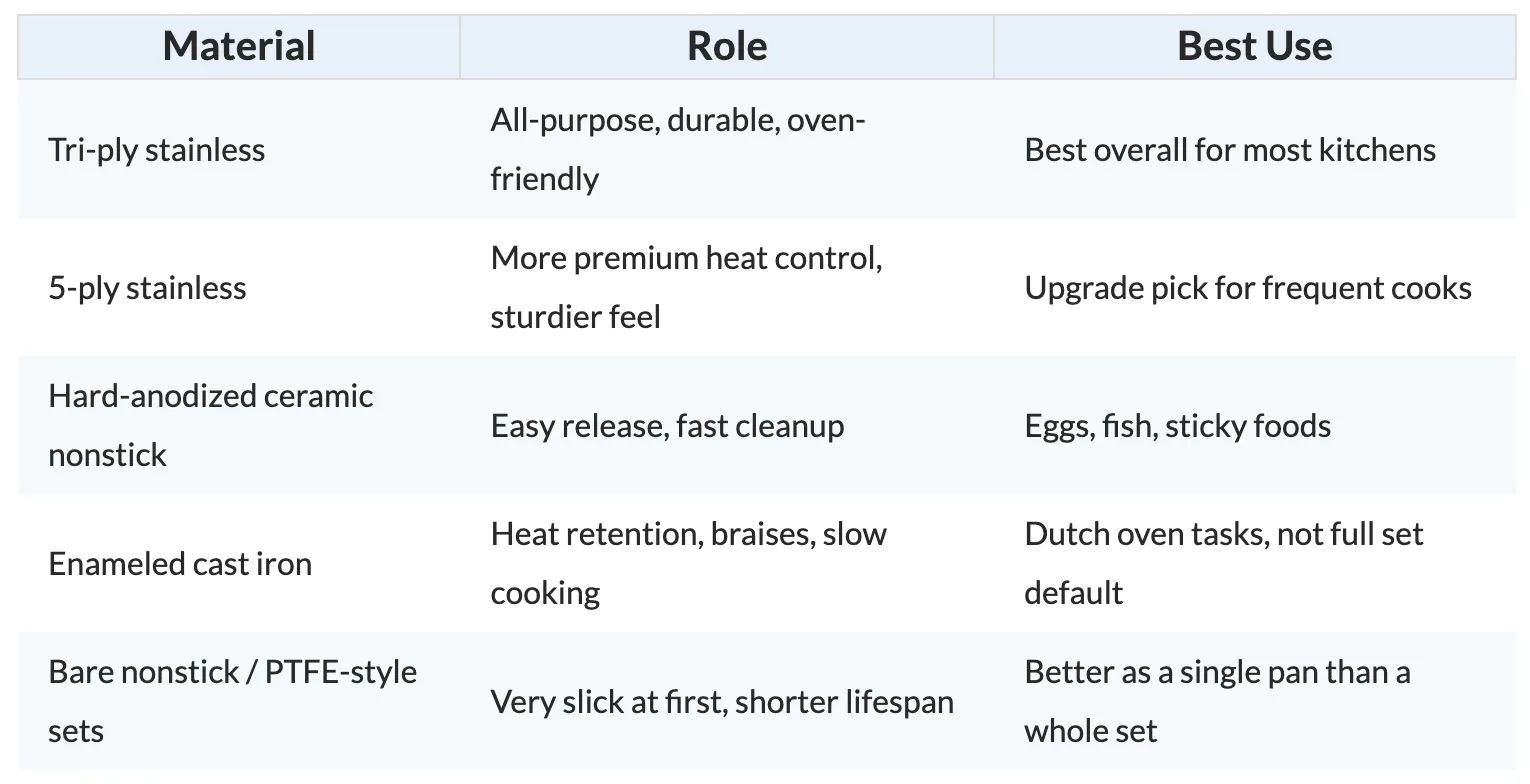
Stainless-clad cookware remains the best long-term default because it handles high heat and lasts longer than coated sets, while ceramic sets win on ease but usually sacrifice some lifespan.
FAQs
What is the best cookware set for most kitchens?
For most households, a tri-ply stainless steel set is the best all-around choice because it handles browning, boiling, sautéing, oven use, and daily cooking better than most coated sets.
Is stainless steel better than ceramic nonstick?
For longevity and versatility, yes. For easy food release and cleanup, ceramic nonstick is easier. Most serious home cooks are better served by stainless as the core set and ceramic as a supplemental pan.
How many pieces should a cookware set have?
Usually, 8 to 12 pieces is the sweet spot. That is enough for a skillet, saucepans, a sauté pan, and a stockpot without paying for filler pieces you will not use.
Are ceramic cookware sets really non-toxic?
Many ceramic cookware brands market their lines as PFAS-free, but the bigger real-world consideration is coating lifespan and long-term performance, not just the label.
Do I need an induction-compatible cookware set?
Not strictly, but it is smart future-proofing. Many of the best current sets already support gas, electric, and induction, so there is little downside in choosing one that does.