Fresh grafts need time to anchor—but once your surgeon gives the green light, minoxidil can help reduce post-operative shedding and speed up visible regrowth. The best choice after a hair transplant for most patients is 5% minoxidil foam (no propylene glycol → lower irritation risk), applied first to the native hair and, when cleared, to transplanted zones. Below are the top picks, timelines, and application steps, based on dermatology guidance and best practices in hair restoration.
2026 Quick Picks
|
Why Use Minoxidil After a Hair Transplant?
- Offsets telogen effluvium: Early clinical experience suggests that initiating minoxidil after surgery can reduce shedding and promote earlier visible growth.
- 5% outperforms 2%: Randomized trials in androgenetic alopecia demonstrate higher hair counts and faster response with 5% vs 2% solutions.
- Protects native hair: Transplanted follicles are DHT-resistant, but surrounding native hairs aren’t; minoxidil helps maintain overall density.
When Can You Start (FUE/FUT)?
- Conservative approach: Start around 2–4 weeks post-op—after the scabs have fallen off and the skin has calmed down.
- Earlier protocols (select clinics): Some start between 5–7 days and as early as 48–72 hours post-op under direct medical supervision.
Your surgeon may advise starting with native hair first, then expanding to graft zones once fully healed.
The Best Formulations (Who They Fit)
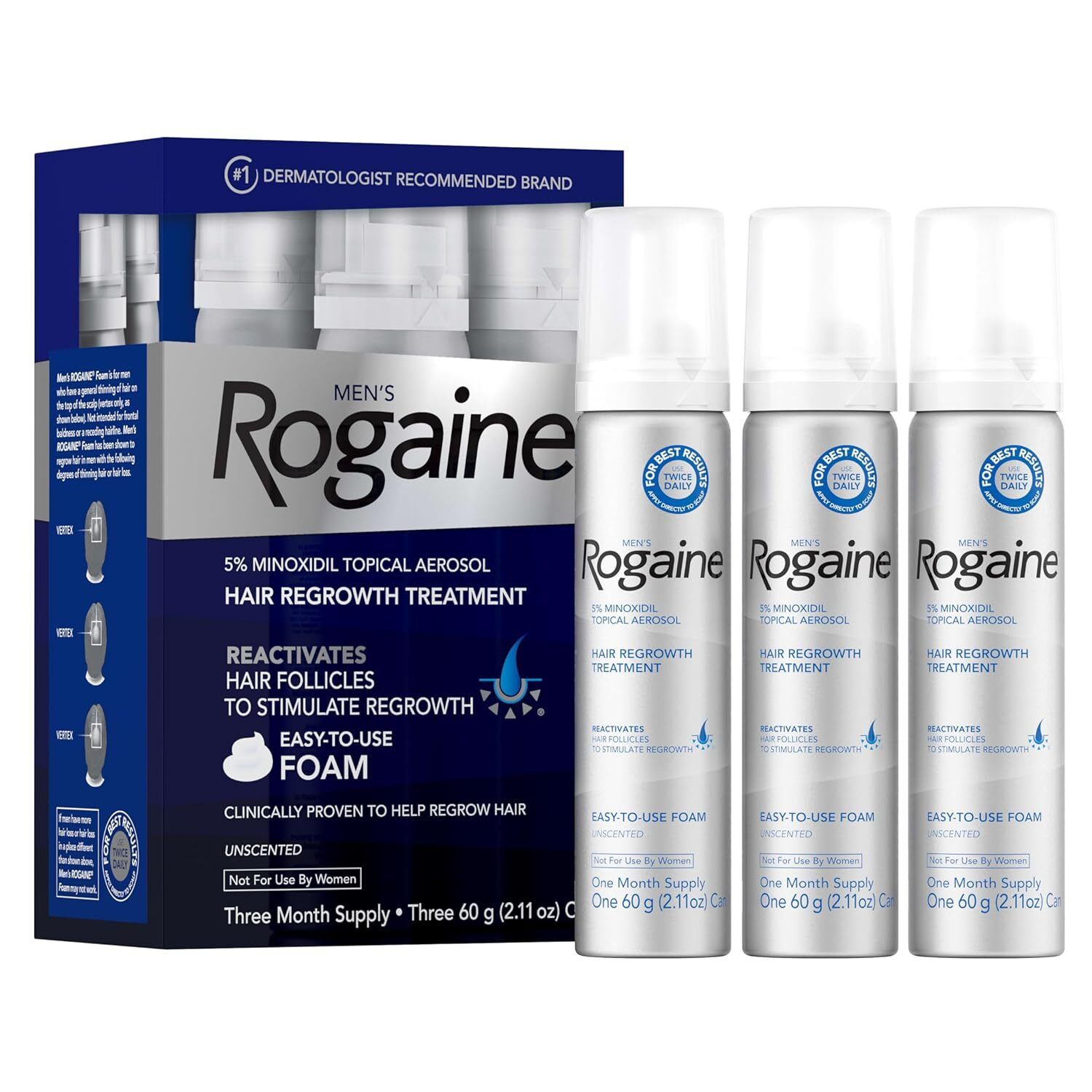
1- 5% Foam (Rogaine)
 |
|
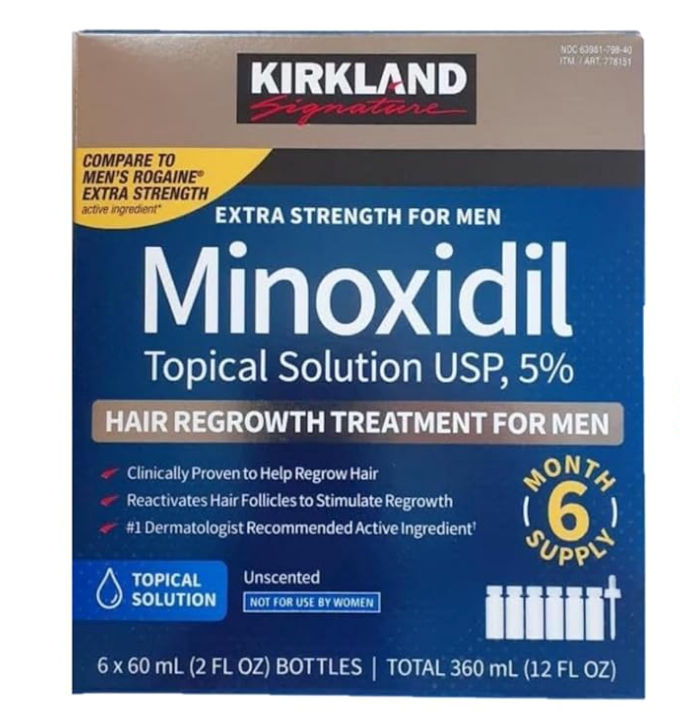
2- 5% Solution (Kirkland / Generic)
 |
|
3- Women's Rogaine for Sensitive Scalps
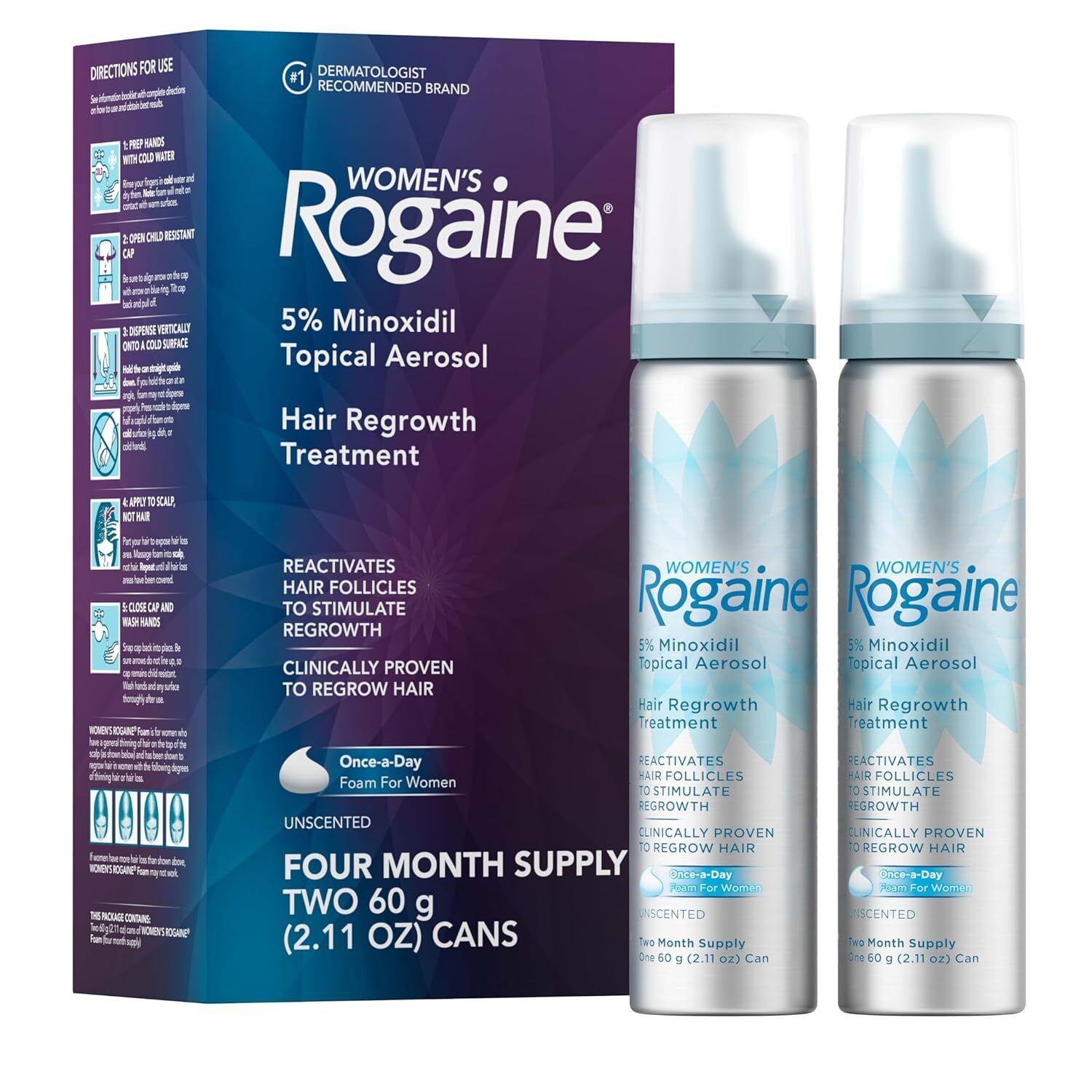 |
Who Should Use Women’s Rogaine (Minoxidil) After a Hair Transplant:
|
How to Apply Minoxidil After a Transplant (Once Cleared)
- Confirm healing: Apply only to a dry, healed scalp (no open crusts/oozing).
- Zones: Start with native hair if advised; add transplanted zones when your surgeon approves.
- Dosing: Foam: about half a capful; Solution: 1 mL per application.
- Technique: Dab and spread gently with fingertip pads—no scrubbing or aggressive massage.
- Absorption: Avoid hats, sweating, or washing for ~4 hours after application.
- Consistency: Use daily for 6–12 weeks before evaluating results; peak cosmetic gains typically appear within 6–12 months.
Side Effects & Safety
- Topical: Itching, flaking, redness; rarely headaches or palpitations. Foam is often better tolerated than liquid immediately post-op.
- Oral (LDOM): Possible edema, tachycardia, low blood pressure—requires physician screening and follow-up.
- Adjuncts: Low-level laser therapy (LLLT) may be used as an adjunct for growth and healing—only if your surgeon clears it.
FAQs
Do I have to use minoxidil forever after a transplant?
No, but stopping usually allows native hair to resume thinning. Many surgeons recommend long-term minoxidil (and/or finasteride, where appropriate) to preserve overall density.
Foam or liquid—what’s better after surgery?
Both deliver 5% minoxidil. Foam is typically better tolerated early because it avoids propylene glycol, a common irritant.
When will I see results?
With consistent use, early changes may be noticeable within 2–4 months, with more pronounced results by 6–12 months.
Can minoxidil prevent “shock loss”?
Small, earlier studies and clinical experience suggest that minoxidil may reduce shedding and promote earlier visible growth when initiated soon after surgery. Timing is clinic-specific—follow your surgeon’s protocol.
Final TakeawayFor most post-transplant patients, the best first choice is 5% minoxidil foam once your surgeon clears you—practical, simple, and gentler on healing skin. If your scalp tolerates it and you want to save money, a 5% solution works well—just be sure to monitor for irritation. If topicals aren’t an option, discuss low-dose oral minoxidil with your doctor. Pick the format you’ll use consistently and pair it with your clinic’s long-term medical plan to protect native hair around your grafts. |
Medical Disclaimer
This article is for educational purposes only and is not a substitute for professional medical advice. Follow your surgeon’s instructions on when and how to start minoxidil after your hair transplant. Individual risks and timelines vary.