Coffee is more than a morning ritual — it's a deeply rooted global culture, a multi-billion-dollar industry, and a drink shaped by nature, geography, and human hands. At the core of every cup are the coffee beans, and not all beans are created equal.
In this comprehensive guide, we’ll explore the major types of coffee beans: Arabica, Robusta, Liberica, and Excelsa, along with their origins, flavor profiles, farming needs, and more. Whether you’re a barista, a home brewer, or simply curious about your coffee, this article will help you understand what’s in your cup and why it matters.
Please accept cookies to access this content
What are Coffee Beans?
Despite the name, coffee beans aren't technically beans. They're the seeds of the fruit of the Coffea plant, which grows in tropical regions around the world. Each coffee cherry typically contains two seeds (beans), though some produce only one—a mutation known as a peaberry.
The differences between coffee beans come down to:
- Species of the coffee plant
- Geographic origin
- Processing method
- Roast level
In this article, we'll focus on the species of the bean—the most fundamental factor that shapes coffee’s flavor, strength, aroma, and even cost.
Types of coffee beans and characteristics
There are over 120 identified species of Coffea, but only a handful are commercially cultivated. The 4 types of coffee beans you'll encounter are:
- Arabica (Coffea arabica)
- Robusta (Coffea canephora)
- Liberica (Coffea liberica)
- Excelsa (Coffea excelsa) – now classified as a variety of Liberica
Let’s break them down.
1. Arabica: The Most Popular Coffee Bean
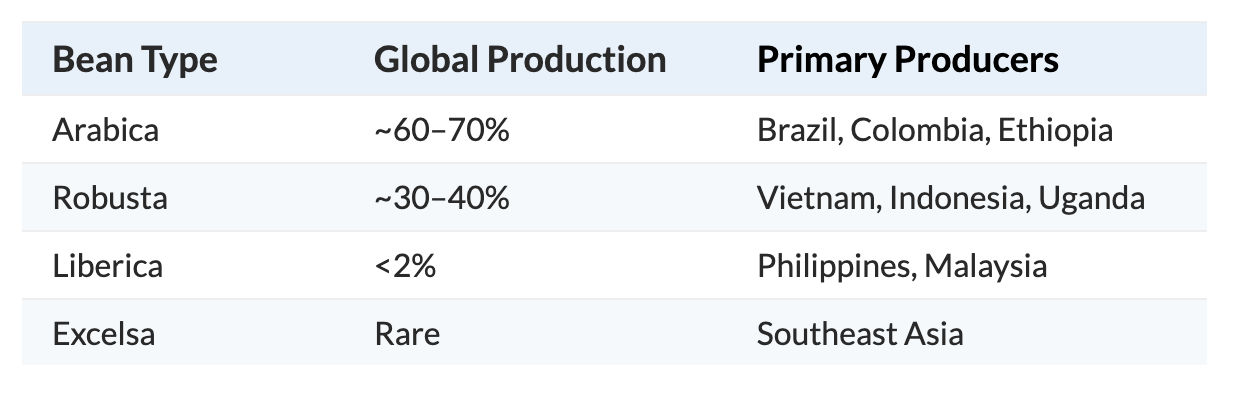
Coffea arabica accounts for around 60–70% of the world’s coffee production. It’s grown in higher altitudes, prefers cooler climates, and is more delicate than other types.
Key Characteristics:
- Origin: Native to Ethiopia; now grown in Latin America, East Africa, Asia
- Altitude: Typically grown between 3,000–6,000 feet (900–1,800 meters)
- Flavor Profile: Smooth, sweet, and complex with notes of fruit, florals, chocolate, or nuts
- Acidity: Higher than Robusta; offers a bright, crisp taste
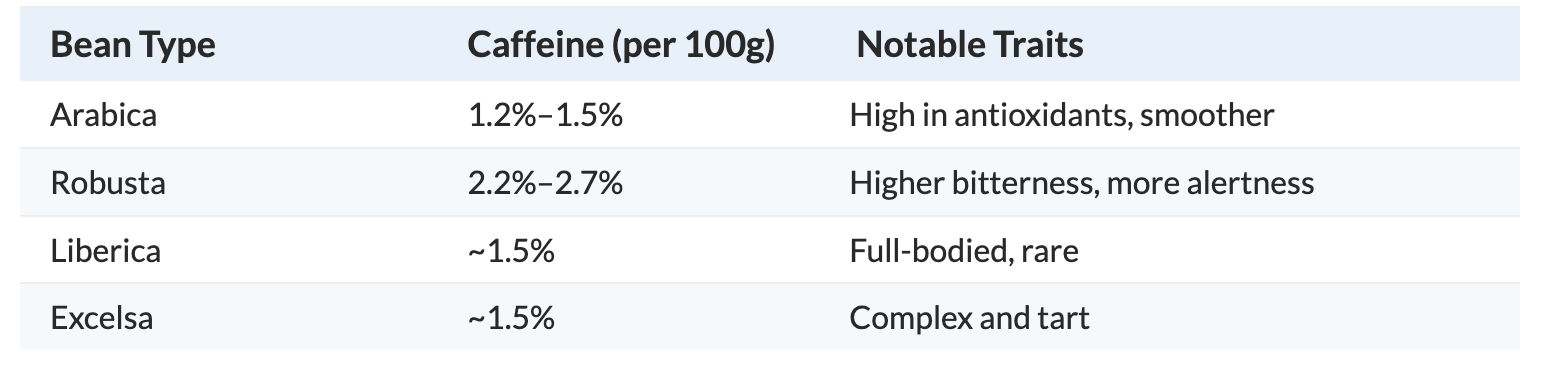
- Caffeine: 1.2%–1.5%
- Price Point: Higher due to labor-intensive cultivation and delicate growing conditions
Popular Arabica Varietals:
- Geisha (Gesha): Originated in Ethiopia, made famous in Panama. Extremely floral and aromatic; one of the most expensive coffees in the world.
- Maragogipe: Known as "elephant beans" due to their large size. Delicate flavor, often used in specialty blends.
- Bourbon and Typica: Two foundational Arabica lines that many modern varietals are bred from.
| Why Choose Arabica? If you value complexity, aroma, and smoothness in your coffee, Arabica is your best bet. It’s commonly used in specialty coffee, single-origin brews, and high-end cafes. |
2. Robusta: Bold, Strong, and Resilient
Coffea canephora, more commonly known as Robusta, makes up about 30–40% of global production. It’s hardy, pest-resistant, and thrives at lower altitudes with higher temperatures.
Key Characteristics:
- Origin: Central and West Africa; widely grown in Vietnam, Brazil, Indonesia
- Altitude: Grows well at 600–2,400 feet (200–800 meters)
- Flavor Profile: Strong, earthy, nutty, and bitter with less sweetness
- Acidity: Lower than Arabica
- Caffeine: 2.2%–2.7% (almost double that of Arabica)
- Price Point: Generally cheaper and easier to produce
Best Uses:
- Common in espresso blends for added body and crema
- Heavily used in instant coffee due to affordability
- Increasingly being used in specialty markets for its bold flavor
| Why Choose Robusta? Choose Robusta for its strong caffeine kick and full-bodied flavor. It's perfect if you enjoy darker, more bitter coffee or want a potent espresso base. |
3. Liberica: The Rare and Exotic Bean
Coffea liberica represents less than 2% of the world’s coffee. It’s an unusual variety with a very distinctive flavor and large, irregularly shaped beans.
Key Characteristics:
- Origin: West Africa; now grown mainly in the Philippines, Malaysia, and Indonesia
- Flavor Profile: Woody, smoky, fruity, and floral with a full body
- Acidity: Medium to low
- Caffeine: Approximately 1.5%–1.8%
- Bean Size: Larger and more asymmetrical than Arabica or Robusta
In the Philippines, Liberica is known as Barako coffee, a cultural staple among locals.
| Why Choose Liberica? Liberica is for adventurous coffee drinkers who want to experience something completely different. Its unique taste is polarizing—some love it, others don’t—but it offers a bold, unforgettable cup. |
4. Excelsa: The Layered and Complex Bean
Once considered a separate species, Excelsa is now classified as a variety of Liberica. It accounts for only a small percentage of global coffee but has carved out a niche following.
Key Characteristics:
- Origin: Southeast Asia
- Flavor Profile: Tart, fruity, with dark roast undertones; adds complexity to blends
- Caffeine: ~1.5%
- Bean Traits: Oval and somewhat elongated, like Liberica
| Why Choose Excelsa? Excelsa is often used in blends to add depth, balance, and flavor complexity. It bridges the gap between light and dark roasts, making it an exciting bean for those who like layered flavor experiences. |
Coffee Bean Types & Notable Traits
What is a Peaberry?
A peaberry isn’t a separate type of bean, but rather a rare mutation where only one seed grows inside the cherry instead of two. Peaberries make up about 5% of a harvest and are often separated due to their unique shape and roast behavior.
Flavor Profile:
- Brighter acidity
- More concentrated sweetness
- Smooth body
Peaberries are often prized and sold at a premium.
Bean Type vs. Roast vs. Brew: What’s the Difference?
While bean type sets the foundation, roast level and brewing method also impact flavor and strength.
Coffee Roast Levels
- Light Roast: Retains original bean flavors (ideal for Arabica)
- Medium Roast: Balanced flavor and body
- Dark Roast: Stronger, bolder, less acidic (often used with Robusta)
Brewing Pairings
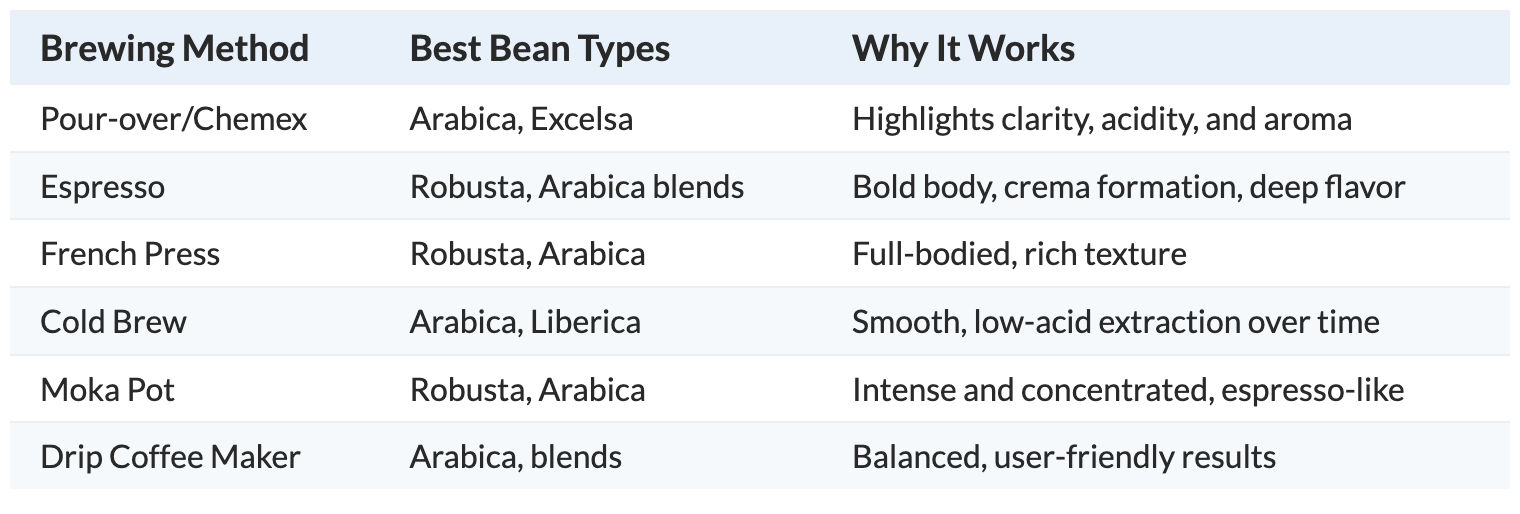
- Arabica: Best for pour-over, Chemex, drip coffee
- Robusta: Ideal for espresso, moka pot, or French press
- Liberica & Excelsa: Great for adventurous blends, cold brew, or full immersion methods
Sustainability & Farming Considerations
Arabica is a fragile type of coffee bean. It requires shaded environments and higher altitudes, which makes it vulnerable to climate change and disease. On the other hand, Robusta is more resilient and produces higher yields, which may make it more sustainable long-term. Whereas Liberica and Excelsa coffee beans have potential for future climate resilience. However, they lack commercial infrastructure.
Farmers are increasingly exploring hybrid varietals and climate-smart agriculture to preserve both quality and quantity in a warming world.
Coffee Bean Market Overview
 Specialty roasters are starting to embrace Robusta and Liberica for unique flavor profiles and sustainability, breaking long-standing biases.
How to Choose the Right Coffee Bean for You?
Picking the right coffee bean isn’t just about following trends—it’s about understanding your own taste, health needs, lifestyle, and brewing preferences. Here’s a more detailed guide to help you navigate the options and choose the perfect bean:
Flavor Preference
Ask yourself: What taste do I enjoy the most?
Flavor is arguably the most important factor when choosing coffee. Each bean species has a distinct flavor profile, influenced by its natural compounds, the soil it’s grown in, and how it's processed and roasted.
☕ Arabica: Fruity, Sweet, and Elegant
- Best For: Those who enjoy a smooth, complex cup with layered aromas.
- Tasting Notes: Floral (like jasmine), fruity (berries, citrus), chocolatey, nutty.
- Why Choose It: Arabica is known for its refined, nuanced flavors and lower bitterness. It’s the go-to choice for specialty coffee lovers and those sensitive to harsh or bitter tastes.
☕ Robusta: Bold, Bitter, and Powerful
- Best For: Fans of strong, dark coffee with an intense body and lingering finish.
- Tasting Notes: Earthy, nutty, woody, bitter dark chocolate.
- Why Choose It: Robusta is ideal for espresso drinkers, lovers of high-caffeine coffee, and those who prefer a punchy, intense flavor. It's also great if you like your coffee with milk or sugar, as the boldness cuts through creaminess.
☕ Liberica: Smoky, Floral, and Unusual
- Best For: Adventurous coffee drinkers seeking a unique and exotic flavor.
- Tasting Notes: Smoky, woody, floral, with occasional fruity or jackfruit-like hints.
- Why Choose It: If you find Arabica too mild and Robusta too bitter, Liberica offers a wild card—it’s a love-it-or-hate-it experience, but one worth trying.
☕ Excelsa: Tart, Fruity, and Layered
- Best For: Those who enjoy complex, multi-dimensional brews.
- Tasting Notes: Tart cherry, mild roastiness, light body with a wine-like finish.
- Why Choose It: Often used in blends, Excelsa adds depth and intrigue to a cup—great for those who enjoy coffees that evolve from first sip to finish.
Caffeine Tolerance: How Much Kick Do You Want?
Caffeine content varies significantly between bean types. If you’re sensitive to caffeine, or if you drink several cups a day, it’s essential to choose wisely.
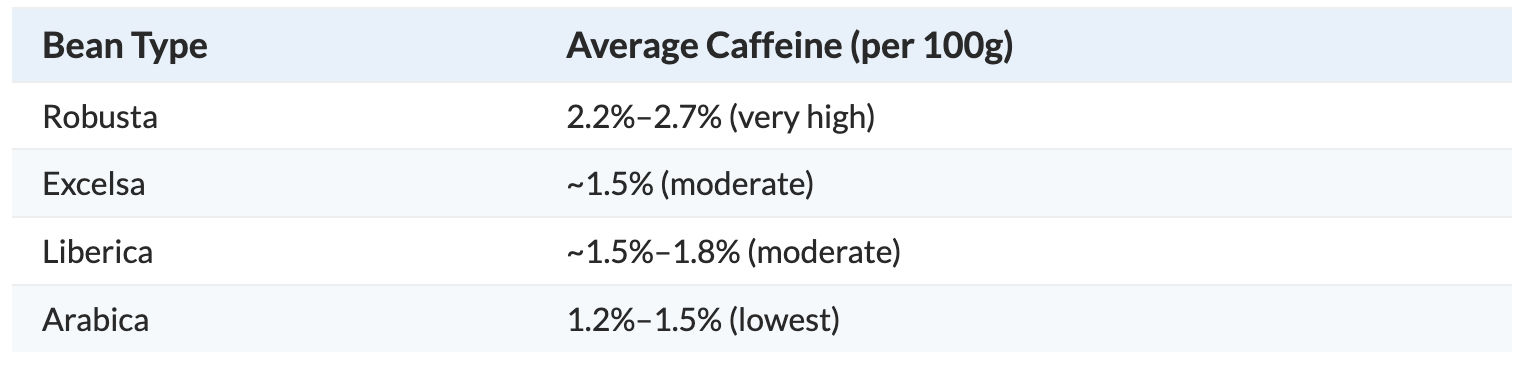
- Go for Arabica if you want a smoother cup with less jitteriness.
- Choose Robusta if you want an energy boost or rely on coffee to stay alert.
- Liberica and Excelsa offer a good middle ground.
| 💡Tip: Darker roasts don’t always mean more caffeine—bean type matters more than roast level when it comes to your caffeine intake. |
Coffee Beans Brewing Methods
Different coffee beans perform better with specific brewing methods. Matching the bean type to your brewing style can elevate your coffee experience.
| 💡Tip: If you're just starting out with specialty coffee, Arabica beans and a simple pour-over setup are great for exploring subtle flavors. |
ConclusionThe world of coffee beans is as rich and diverse as the drink itself. From the floral elegance of Arabica to the dark strength of Robusta and the wild notes of Liberica and Excelsa, every bean has a story, a place, and a purpose. Understanding the types of coffee beans helps you brew better, buy smarter, and appreciate every sip a little more. |
FAQs: Types of Coffee Beans
Is Robusta or Arabica better?
Arabica is preferred for its smooth, complex flavor and lower bitterness, while Robusta is stronger, more bitter, and higher in caffeine. Arabica is generally considered higher quality, but Robusta suits those who enjoy bold, intense coffee or espresso blends.
What type of coffee bean is the best?
Arabica is widely considered the best coffee bean due to its smooth, aromatic flavor and lower bitterness. It's the top choice in specialty coffee. However, the “best” bean depends on personal taste, caffeine preference, and brewing method.
Is Nescafé Robusta or Arabica?
Most Nescafé blends use a mix of Robusta and Arabica beans. Robusta provides strength and higher caffeine, while Arabica adds smoother flavor. Premium Nescafé lines, like Gold or Azera, often contain more Arabica.
Which coffee brands use Robusta?
Brands known for using Robusta include Nescafé, Lavazza (in some blends), Death Wish Coffee, and Vietnamese brands like Trung Nguyên. Robusta is common in espresso and instant coffees for its strong flavor and crema-producing qualities.
Is Davidoff Arabica or Robusta?
Davidoff coffee primarily uses 100% Arabica beans, selected from high-altitude regions. Their blends focus on smoothness, aroma, and refined flavor rather than the stronger, more bitter profile of Robusta.
What are the 12 types of coffee?
The 12 popular coffee types include espresso, americano, latte, cappuccino, macchiato, flat white, cortado, mocha, ristretto, lungo, affogato, and cold brew. These vary in strength, milk content, and preparation method.
How many types of coffee beans in the world?
There are over 120 known coffee bean species, but only four are commercially important: Arabica, Robusta, Liberica, and Excelsa. Most global coffee production comes from Arabica and Robusta.